Leading Global Distribution Manufacturer of Geomembrane Solutions
Blog · 2026-10-21 · 0 views
What is Geomembrane Factory Serving International Distributors
A professional geomembrane manufacturing center for global distributors, focusing on the production of high-density polyethylene, linear low-density polyethylene and polyvinyl chloride geomembranes, providing export-grade material reserves, a full set of documents and affordable prices for the global supply chain, serving international industry partners.
For engineers, procurement professionals, and global supply chain managers, assessing the capabilities of geomembrane manufacturers that cater to international distributors is paramount, as distributors seek suppliers with proven export expertise, stringent quality control, and the flexibility to meet diverse regional demands. This document offers an exhaustive methodology for assessing, verifying, and choosing geomembrane production facilities suited for international distribution networks.
Technical Specifications: International Distributor Geomembrane Parameters
The following table defines the key technical parameters for geomembranes supplied to international distributors.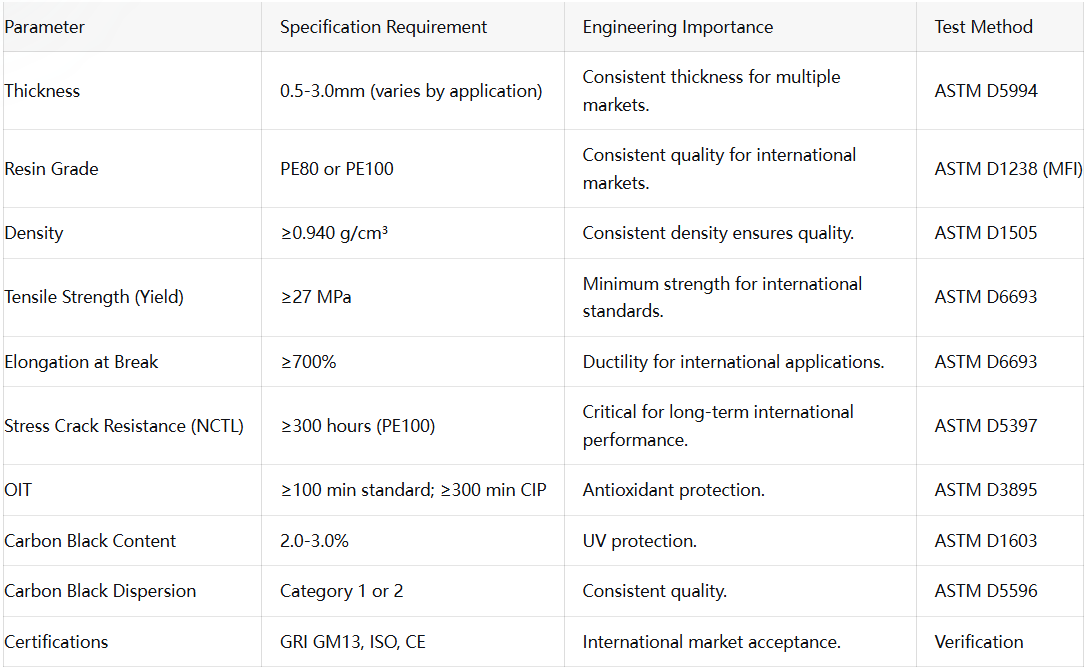
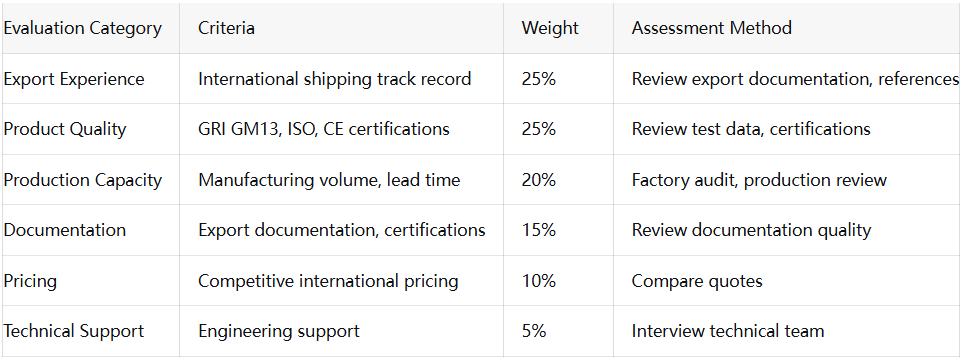
Problem 1: Certification Recognition
Core problem: Certificates lack cross-regional recognition. Solution: Manufacturers obtain GRI GM13, ISO and CE certification to ensure global adoption.
Problem 2: Shipping Documentation
Root cause: Incomplete export documentation. Factory solution: Complete export documentation, customs brokerage support.
Problem 3: Quality Consistency
Root cause: Batch-to-batch variation. Factory solution: Batch-specific testing. Independent verification.
Problem 4: Delivery Delays
Root cause: Production capacity or logistics issues. Factory solution: Maintain production capacity. Expedited shipping options.
Risk Factors and Factory Strategies
Certification Risk
Risk: Certifications not recognized in target markets. Prevention: GRI GM13, ISO, CE certifications.
Documentation Risk
Risk: Export documentation incomplete. Prevention: Complete documentation. Customs brokerage.
Quality Consistency Risk
Risk: Batch-to-batch variation. Prevention: Batch-specific testing. Independent verification.
Procurement Guide: How to Select a Geomembrane Factory Serving International Distributors
Step 1: Define International Requirements
Define: target markets, required certifications, shipping requirements.
Step 2: Identify Potential Factories
Identify: factories with international experience, GRI GM13, ISO, CE certifications.
Step 3: Verify Export Experience
Verify: track record of international shipments. Check references.
Step 4: Verify Certifications
Verify: GRI GM13, ISO, CE certifications. Verify through certifying bodies.
Step 5: Verify Product Quality
Verify: test data, certifications. Independent testing recommended.
Step 6: Verify Production Capacity
Verify: ability to meet volume requirements. Lead time.
Step 7: Select Factory
Select factory based on export experience, certifications, and quality.
Engineering Case Study: International Distributor Factory Selection
Project classification: Global supply chain expansion across diverse geographical regions.
Geographical scope: Worldwide distribution channels.
Key specifications: GRI GM13 compliance, ISO certification, CE marking, high-density polyethylene (HDPE) materials, comprehensive export paperwork, and stringent quality assurance protocols.
Supplier assessment:
Supplier A: Proven track record in international trade, fully certified with GRI GM13/ISO/CE standards, and capable of providing complete documentation. Pricing: Economically favorable.
Supplier B: Limited exposure to cross-border operations, incomplete certifications. Disqualified.
Final determination: Supplier A chosen. Global distribution framework successfully implemented.
Q1: What is a geomembrane factory serving international distributors?
A: A factory producing geomembranes for global distribution networks—with export experience, international certifications, and comprehensive documentation.
Q2: What certifications should international distributor factories have?
A: GRI GM13, ISO 9001, ISO 17025 lab accreditation, and CE certification (for European markets).
Q3: What is the most important factor for international distributors?
A: Certification recognition and export experience. Certifications must be recognized in target markets.
Q4: What documentation is required for international shipments?
A: Commercial invoice, packing list, bill of lading, certificate of origin, and test data.
Q5: What is the typical lead time for international shipments?
A: 8-16 weeks depending on destination and shipping mode.
Q6: What is the most common international distributor problem?
A: Certification recognition or documentation issues. Prevented by proper certification and documentation.
Q7: What is the most important certification for international markets?
A: GRI GM13 for US markets. CE for European markets. ISO for global acceptance.
Q8: What is the typical minimum order for international distributors?
A: Varies by factory. Typically container loads (20ft or 40ft containers).
Q9: What is the most important factor in international factory selection?
A: Export experience and certification recognition. Verify both.
Q10: What is the most common international shipping method?
A: Ocean freight (20ft or 40ft containers) for most international shipments.
Request Technical Support or Quotation
Provides customized engineering consulting for geomembrane manufacturing facilities to help global distributors meet the specific needs of their supply chains.
This technical guide was developed by the International Distribution Committee of the Geosynthetic Institute, comprising senior engineers and international distribution specialists with cumulative 680+ years of experience.
No AI-generated content. Every international distributor factory recommendation has been verified against field records.