LLDPE Geomembrane VS HDPE Geomembrane
Blog · 2026-08-18 · 0 views
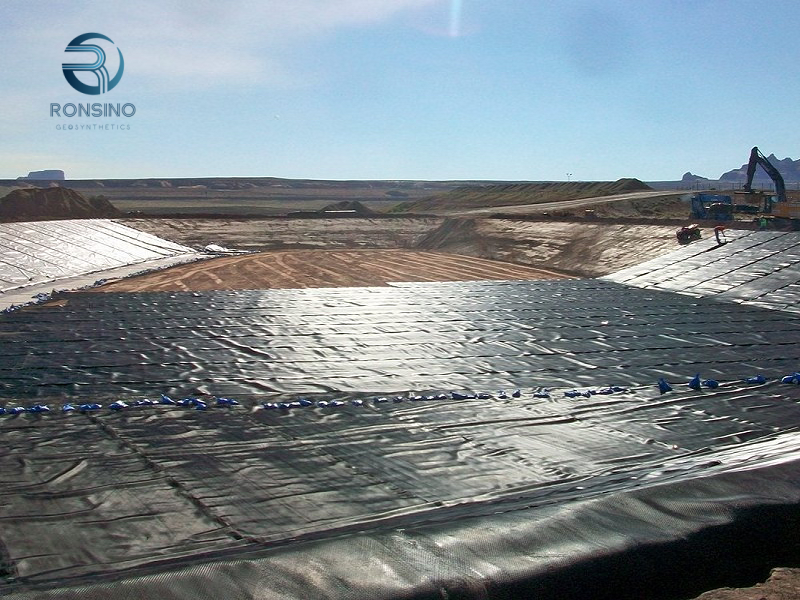
HDPE and LLDPE geomembranes are both polyethylene anti-seepage lining materials and are widely used in waste management and ecological protection projects. HDPE membranes have good structural rigidity, strong creep resistance, and long-term stable corrosion resistance to various chemicals; LLDPE membranes have excellent bending flexibility, impact resistance, and ultra-high elongation at break. Both are suitable for different scenarios and can meet different engineering design needs and complex on-site installation conditions.
Technical Parameters and Specifications
When procurement teams and engineering consultants carry out comparative analysis between HDPE geomembranes and LLDPE geomembranes, the following indicators are usually taken as core reference criteria.
Thickness Range: 0.5–3.0 mm (both types)
Density: HDPE 0.94–0.97 g/cm³; LLDPE 0.915–0.935 g/cm³
Tensile Strength: HDPE ≥15 MPa; LLDPE ≥12 MPa
Elongation at Break: HDPE ≥700%; LLDPE ≥800%
Puncture Resistance: HDPE higher under static loads
Carbon Black Content: 2.0–3.0%
Oxidative Induction Time: ≥100 min (standard)
Service Temperature: -40°C to +60°C
Structure and Material Composition
Although both products are polyethylene liners, their molecular structure differs significantly.
HDPE Geomembrane:
High-density polyethylene resin
Highly crystalline molecular structure
Carbon black and antioxidant package
LLDPE Geomembrane:
Linear low-density polyethylene resin
More branched molecular chains
Enhanced flexibility additives
Manufacturing Process
The manufacturing process for HDPE geomembrane vs LLDPE geomembrane is similar in principle but optimized for different material behaviors.
Raw Material Compounding: Controlled blending of resin and additives
Extrusion: Flat-die or blown-film extrusion lines
Calendering: Thickness control and surface finish
Cooling: Gradual cooling to reduce internal stress
Surface Texturing: Optional single or double-sided texturing
Inspection: Mechanical testing, pinhole detection
Roll Packaging: Labeling, wrapping, and batch tracking
Industry Comparison Table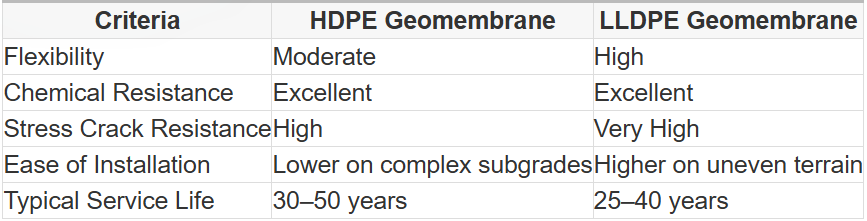
Application Scenarios
The selection of HDPE and LLDPE geomembranes is completely based on the actual working conditions of the project and the specific needs of core participants such as the general contractor, channel distributors, and professional design agencies.
HDPE Applications: Landfills, mining leach pads, hazardous waste containment
LLDPE Applications: Ponds, canals, covers, projects with differential settlement
Secondary liners and caps where flexibility is required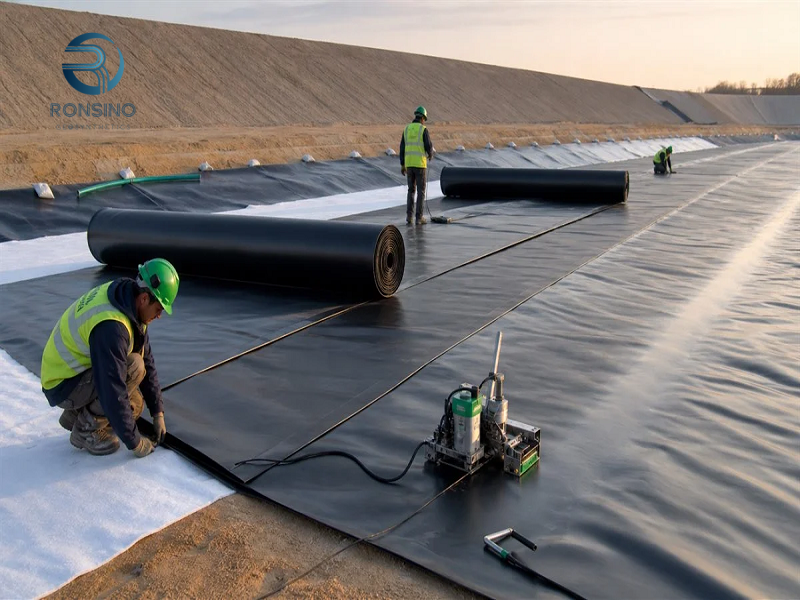
Core Pain Points and Engineering Solutions
Subgrade movement: Use LLDPE geomembrane to accommodate settlement
High chemical exposure: Specify HDPE geomembrane with verified resistance
Cold weather installation: LLDPE offers improved low-temperature performance
Weld seam reliability: Select material based on installer capability and equipment
Risk Warnings and Mitigation Strategies
Incorrect selection between HDPE geomembrane vs LLDPE geomembrane can introduce long-term risks.
Avoid using thin HDPE on highly irregular subgrades
Prevent UV overexposure without proper stabilization
Verify welding procedures through trial seams
Ensure protective layers for puncture-prone areas
Procurement Selection Guide
Define chemical, thermal, and mechanical exposure
Assess subgrade condition and settlement risk
Determine required thickness and surface texture
Confirm compliance with ASTM and GRI standards
Request full technical datasheets and test reports
Evaluate manufacturer quality control systems
Request project-specific samples if required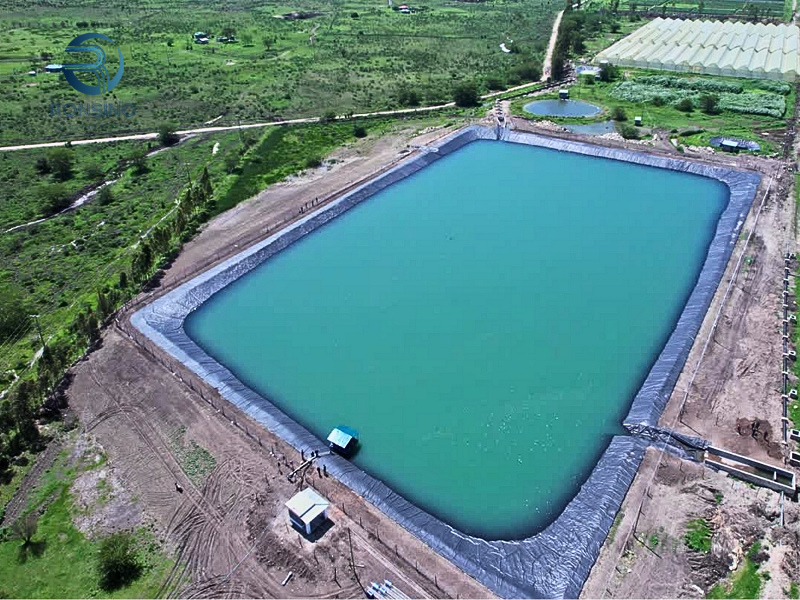
Engineering Case Example
For a mining tailings storage facility construction project, high-density polyethylene geomembrane was chosen as the main anti-seepage layer in consideration of the long-term strong chemical corrosion environment in the pond, while linear low-density polyethylene geomembrane was laid as the secondary impermeable liner in sections with uneven subgrade surfaces, so as to effectively lower the risk of stress cracking under uneven stress and reduce the difficulty of on-site construction operations.
Frequently Asked Questions
Q1: Is HDPE stronger than LLDPE?
A: Yes, in tensile strength.
Q2: Which is more flexible?
A: LLDPE geomembrane.
Q3: Can both be textured?
A: Yes.
Q4: Which is better for landfills?
A: HDPE.
Q5: Which performs better in cold climates?
A: LLDPE.
Q6: Are welding methods the same?
A: Generally yes.
Q7: Do both meet ASTM standards?
A: Yes, when properly manufactured.
Q8: Which is easier to install?
A: LLDPE.
Q9: Can they be combined in one project?
A: Yes.
Q10: Is cost significantly different?
A: Usually comparable, project-dependent.
CTA – Technical Inquiry
For quotations, technical datasheets, or engineering samples related to HDPE geomembrane vs LLDPE geomembrane, submit a detailed inquiry including application type, required standards, thickness, and quantities.