What Unique Benefits Does Geogrid Mesh Offer?
Blog · 2026-08-13 · 0 views
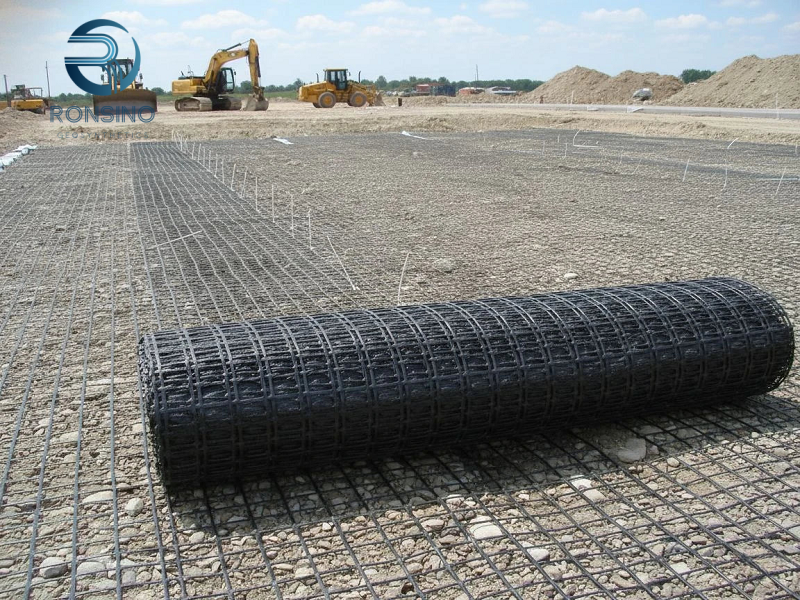
Geo Grid Mesh, as a geosynthetic material, has demonstrated revolutionary value in civil engineering and environmental projects. With its excellent tensile strength, long-lasting durability and environmentally friendly properties, it plays an integral role in soil reinforcement, infrastructure stabilization and the advancement of sustainable development. This case study deeply explores the significant advantages of Geo Grid Mesh through practical application cases, technical analysis and environmental benefit analysis.
1. What is Geo Grid Mesh?
Geo Grid Mesh is a high-performance geosynthetic material that improves soil strength and ground stability. Made from PP or HDPE, its grid structure interlocks with soil or gravel. Widely used in civil engineering, it enhances load distribution, reduces erosion, and reinforces embankments, roadbeds, and retaining walls. RONSINO Geo Grid Mesh offers high tensile strength, durability, and resistance to chemicals and UV, making it ideal for long-term reinforcement in harsh environments.
2. What Are Advantages of Geo Grid Mesh?
2.1 Geo Grid Mesh Enhanced Soil Stability and Load-bearing Capacity
The core function of Geo Grid Mesh is to strengthen weak soil and evenly distribute mechanical loads. By interlocking with soil particles, it effectively suppresses lateral displacement of soil and reduces uneven settlement. During the construction of a highway in Turkey, engineers used it to treat soft clay foundations: the grid dispersed the wheel load to a wider area, reducing vertical stress by 40%, eliminating the need to lay thick layers of aggregate, ultimately saving 30% of material costs and shortening the construction period by 20%.
The Guiyun Avenue bridge abutment project in Guizhou, China, uses geogrid mesh. Compared with traditional methods, the foundation bearing capacity is increased by 63.5% and the settlement is reduced by 45%. The project involves constructing high fill in rugged terrain using a multi-layer geogrid reinforcement system. The tensile strength of geogrids up to 80kN/m can effectively transmit vertical pressure laterally, thereby alleviating stress concentration and suppressing soil displacement. On-site on-board tests have verified that the damage resistance of geogrid-reinforced foundations is 1.6 times that of traditional foundations.
In the same vein, during the expansion initiative for Weijiu Road, steel-plastic composite geogrids were deployed to tackle the issue of uneven settlement occurring at the junction of newly constructed and existing roadbeds. The high-modulus steel wires integrated within the geogrid, which boast a tensile strength exceeding 100kN per meter, effectively restricted the lateral displacement of surrounding soil, leading to a 70% reduction in the occurrence of longitudinal pavement cracks and prolonging the functional service life of the road by 5 to 8 years. The interlocking interaction formed between the apertures of the geogrid and adjacent soil particles gave rise to a stable "composite structural layer", which boosted the overall load-bearing capacity of the subgrade by 40%.
2.2 Geo Grid Mesh Durability in Extreme Environments
Through minimizing soil displacement, Geo Grid Mesh significantly prolongs the infrastructure's service life. In a notable railway initiative within Australia, the geo grid wall mesh was implemented to inhibit the shifting of ballast material. Following installation, surveillance data revealed a 70% decrease in track irregularities, thereby enhancing operational safety and decreasing the need for frequent upkeep.
- UV Resistance: Withstands 20+ years of sunlight exposure.
- Chemical Resistance: Unaffected by oils, fuels, and pH variations.
Under the extreme temperature environment of Xinjiang (-30°C to +50°C), after three years of deployment, the reinforced earth barrier demonstrated excellent durability. Experiments by the Xinjiang Institute of Building Sciences have confirmed that the annual deformation rate of reinforced sand structures using anti-UV polymers is less than 0.5%, which is three times more durable than traditional concrete barriers. Because the polyethylene composite reinforced mesh contains stabilizers, its molecular structure is effectively resistant to ultraviolet aging. After being exposed to ultraviolet rays equivalent to 1,000 hours of continuous sunlight, it still maintains 90% of its original tensile strength.
Geogrid Mesh for Retaining Walls
2.3 Geo Grid Mesh Versatility in Composite Applications
The integration of geogrids with a variety of geosynthetics significantly increases their versatility. A river bank protection project in Guangxi uses a composite design of two-way geogrids and non-woven geotextiles, which increases the shear strength of the soil by 55% while maintaining drainage efficiency. Geotextiles effectively intercept more than 95% of sediment particles and prevent grid clogging; geogrids control lateral soil movement, reducing erosion by 80%, and remain stable even under heavy rainfall conditions.
The Shanghai demonstration project shows that the barrier formed by geogrids and geomembranes has a puncture resistance of 2.8 kN, three times that of an unreinforced system. It can effectively reduce pore water pressure by 60% through the drainage network, significantly improve slope stability, and can adapt to a variety of engineering needs.
- Geo Grid Mesh for Roadways and railways – Reinforces subgrade layers.
- Geo Grid Mesh for Embankments and retaining structures – Provides lateral support.
- Geo Grid Mesh for Landfill liner and drainage systems – Enhances filtration and stability.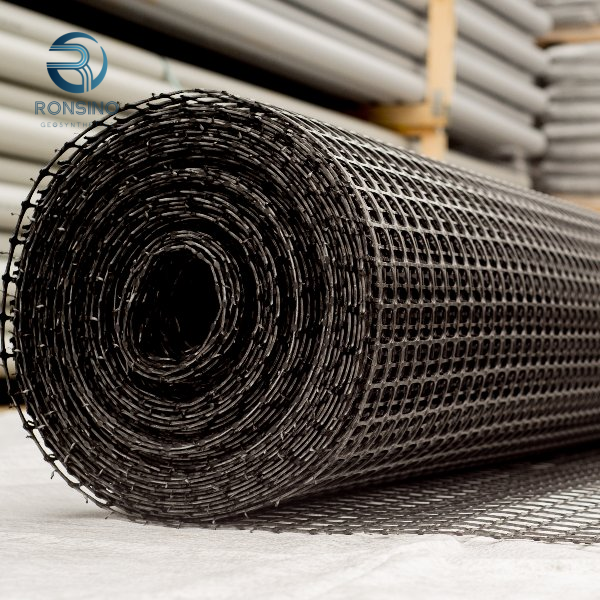
2.4 Geo Grid Mesh Environmental Sustainability
Geogrid innovation embodies the concept of sustainable development by reducing resource consumption and increasing recycling potential. The glass fiber variant based on inorganic silicon compounds is not only fully recyclable, but also emits 50% less CO2 during production than traditional steel bars. In the Beijing-Tianjin-Hebei transportation corridor infrastructure project, 200,000 square meters of recycled glass fiber geogrid materials were used, saving 1,200 tons of metal resources and reducing energy consumption by 1.8 million kilowatt hours.
In roadbed reinforcement, a highway project in Yunnan applied degradable polypropylene geogrid technology to form a solid vegetation layer through herb roots penetrating 10 mm pores. Two years later, the slope's vegetation coverage reached 90%, significantly better than the 30% of traditional concrete protected slopes. It effectively reduced surface runoff and soil displacement, and greatly improved the long-term ecological resilience of the terrain.
Geosynthetic grid mesh serves as a cornerstone material within contemporary civil engineering, delivering multifaceted benefits including ground reinforcement, economic viability, slope protection, and ecological harmony. Its remarkable capacity to bolster substandard earth materials and evenly disperse structural stresses renders it irreplaceable in large-scale developments. With ongoing advancements in building methodologies, this innovative material is poised to remain indispensable in constructing resilient and environmentally conscious infrastructural frameworks.
3. Why Choose Geo Grid Mesh Over Conventional Solutions?
In civil engineering and infrastructure, the choice of reinforcement materials is critical to structural integrity, project cost and environmental impact. Geogrids are innovative solutions that are quickly surpassing traditional reinforcement methods such as concrete barriers, metal reinforcements and composite layers. The main differences and advantages of these solutions will be compared and analyzed below.
3.1 Geo Grid Mesh vs Conventional Solutions Structural Efficiency
Traditional methods often rely on rigid materials such as concrete or steel to provide support, but they have limited ductility and are susceptible to cracking or collapse under dynamic loads. In contrast, geogrids form a composite system by strengthening the soil to evenly distribute the load. Its interlocking design significantly improves the adaptability of the foundation and reduces the risk of structural failure.
3.2 Geo Grid Mesh vs Conventional Solutions Installation Time and Cost
Traditional concrete barriers and extensive foundation systems demand significant manpower, advanced machinery, and extended curing periods. These methods not only prolong project timelines but also substantially escalate overall expenses. In contrast, Geo Grid Mesh offers a lightweight, easily transportable alternative that can be swiftly installed using minimal equipment. By eliminating the necessity for thick subbase layers or costly fill materials, it achieves cost reductions of 30–40% in road and embankment constructions.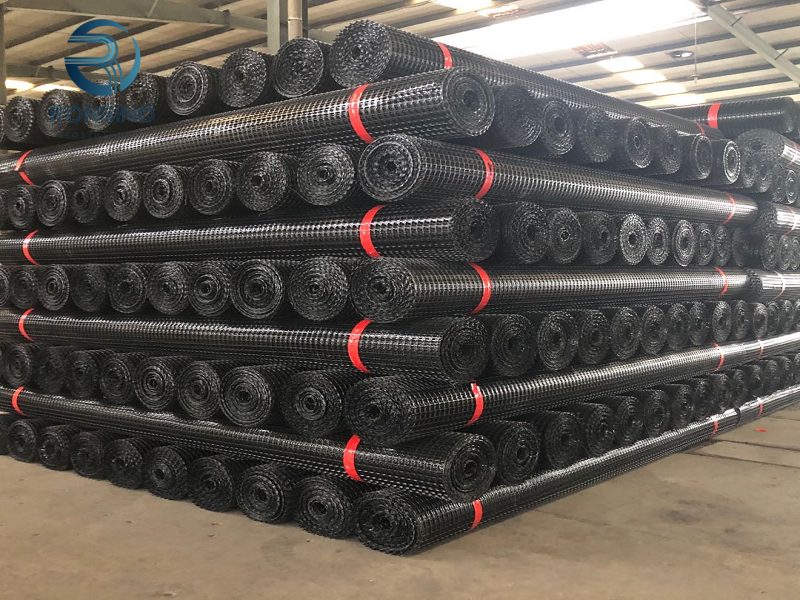
3.3 Geo Grid Mesh vs Conventional Solutions Environmental Impact
Conventional reinforcement materials like metals and concrete possess substantial carbon emissions attributed to their energy-intensive production methods. Moreover, extensive mining and manufacturing activities contribute significantly to environmental deterioration. Geo Grid Mesh promotes eco-friendly construction by minimizing raw material consumption, facilitating material recycling, and supporting vegetative growth on inclines. Biodegradable and recyclable variants further mitigate enduring ecological consequences.
3.4 Geo Grid Mesh vs Conventional Solutions Performance in Harsh Conditions
Reinforcing steel is susceptible to degradation in acidic or saline settings, whereas concrete may suffer from damage due to repeated freezing and thawing processes or exposure to harmful substances. RONSINO Geo Grid Mesh, constructed from polypropylene or high-density polyethylene enhanced with ultraviolet resistance, demonstrates exceptional durability against chemical elements, thermal variations, and prolonged environmental exposure. It maintains more than ninety percent of its tensile strength following extensive contact with severe weather conditions, thereby extending its operational lifespan while reducing the frequency of upkeep.
3.5 Geo Grid Mesh vs Conventional Solutions Design Flexibility
Conventional construction projects often demand bespoke formwork, extensive groundwork, and rigid structural designs. In contrast, Geo Grid Mesh provides architects and builders unparalleled design flexibility. This material can be stacked, contoured, or combined with geosynthetic fabrics to address unique site conditions—ranging from unstable ground surfaces, precipitous embankments, to constrained working areas. Its prefabricated nature supports incremental development and seamless incorporation with pre-existing civil engineering works.
Conclusion: Compared with traditional reinforcement methods, Geo Grid Mesh has become an excellent choice to meet the needs of modern infrastructure due to its high efficiency, flexibility and environmental protection advantages. By optimizing materials, shortening construction time and improving durability, RONSINO Geo Grid Mesh innovatively solves contemporary engineering challenges and provides better solutions for soil stabilization and structural reinforcement.
4. Summary
Geogrid mesh provides mechanical reinforcement and ecological conservation, making it vital in modern civil engineering. It stabilizes soil, withstands environmental stresses, and supports eco-friendly development across projects from transit systems to land restoration. As infrastructure demands grow, geogrid innovations will advance resource-efficient, durable, and sustainable engineering solutions.
As a leading geogrid mesh manufacturer, RONSINO Geosynthetics has more years of industry experience and focuses on the research and development, production, marketing and service of advanced geotechnical solutions. The company is world-renowned for its excellent quality and professional team. It holds ISO9001, ISO14001 and ISO45001 international certifications, and has passed strict tests such as Soncap, SAAO, BV, SGS and Intertek. Products are widely used in aquaculture, erosion prevention, drainage, mining and other fields. RONSINO is committed to providing cost-effective and innovative geogrid and synthetic material solutions, becoming your reliable partner with excellent quality and perfect after-sales service, and working together to create a prosperous future.