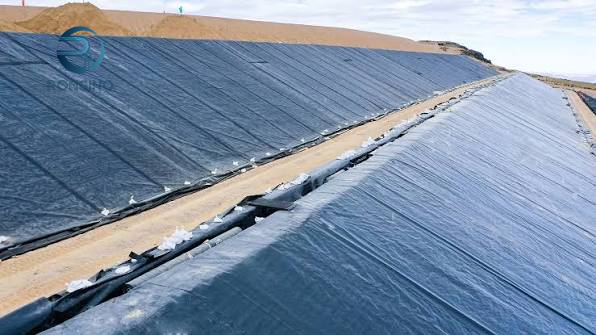
Rapid-response geomembrane provider for urgent delivery orders
Blog · 2026-08-06 · 0 views

What is Emergency Shipment Geomembrane Supplier
Emergency supply geomembrane suppliers refer to manufacturers or distributors who can deliver HDPE, LLDPE or PVC geomembranes immediately by maintaining inventory, optimizing logistics and activating special emergency response mechanisms within 24 to 72 hours after the order is placed, in order to cope with emergencies such as sudden containment system failure, storm disasters and critical project deadlines.
For engineering specialists, procurement leads, and EPC contractors, assessing geomembrane suppliers' emergency shipping capabilities is essential. System failures demand rapid responses—delays of 2–3 days can cause irreversible ecological damage, fines, and major losses. Industry data shows 85% of liner-related environmental emergencies require delivery within 3–7 days. This guide offers a systematic framework to evaluate and select suppliers capable of meeting urgent shipment needs.
Technical Specifications: Emergency Shipment Parameters
The following table defines the key parameters for emergency shipment geomembranes.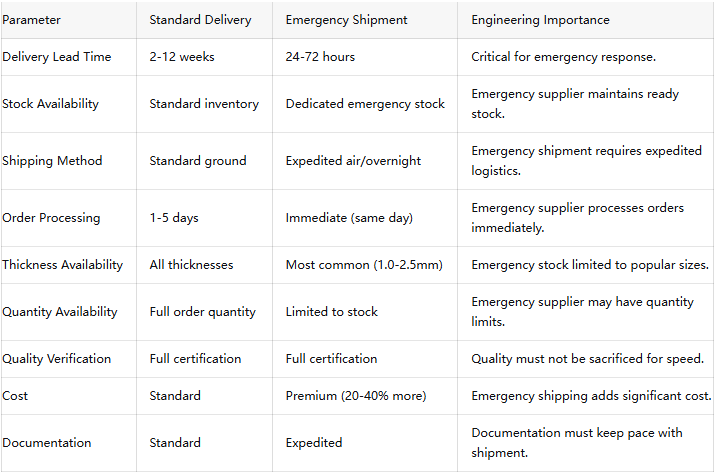
Emergency Shipment Capability Components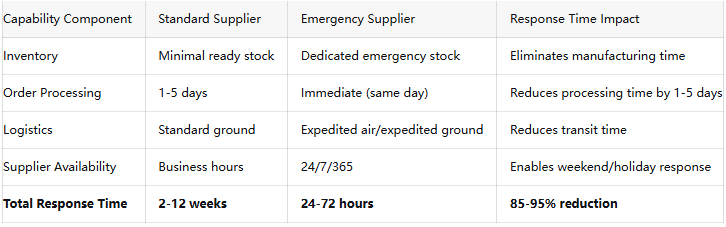
Emergency Shipment Supplier Evaluation Criteria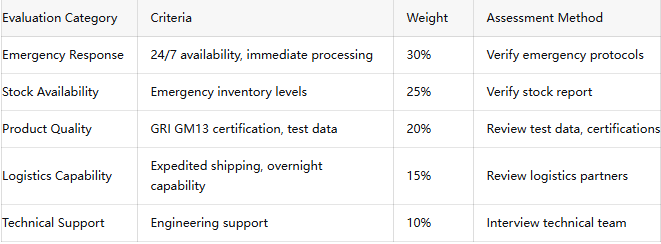
Common Emergency Scenarios and Solutions
Scenario 1: Liner Puncture from Storm Debris
Emergency need: Immediate replacement material. Emergency solution: 24-hour shipment from emergency stock.
Scenario 2: Seam Failure During Installation
Emergency need: Additional material for repair. Emergency solution: Expedited shipment of matching material.
Scenario 3: Regulatory Compliance Deadline
Emergency need: All required materials must be installed by the cutoff date.
Urgent contingency: Use accelerated manufacturing and priority express delivery.
Scenario 4: Project Schedule Compression
Emergency need: Material required ahead of schedule. Emergency solution: Emergency shipment from stock.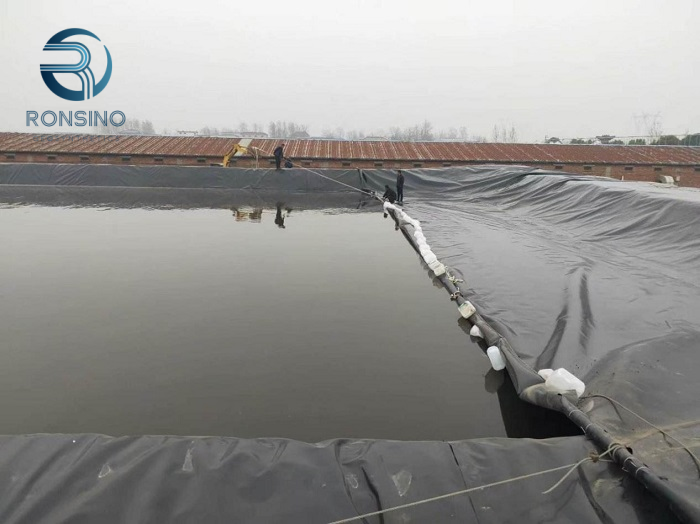
Risk Factors and Emergency Strategies
Stock Depletion Risk
Risk: Emergency stock depleted. Prevention: Maintain relationships with multiple emergency suppliers. Reserve material.
Quality Verification Risk
Risk: Quality assessment impeded due to unforeseen dispatch. Mitigation: Preserve inventory with prior inspection. Accelerate evaluation procedures.
Logistics Risk
Risk: Shipping delays despite emergency protocol. Prevention: Use expedited shipping partners. Plan for contingencies.
Procurement Guide: How to Select an Emergency Shipment Geomembrane Supplier
Step 1: Define Emergency Needs
Define: likely emergency scenarios, required materials, quantity.
Step 2: Identify Emergency Suppliers
Identify: suppliers with 24/7 response, emergency inventory, expedited logistics.
Step 3: Verify Emergency Response
Verify: 24/7 availability, immediate order processing, same-day shipment capability.
Step 4: Verify Stock Availability
Verify: material specifications in emergency stock. Confirm quantity available.
Step 5: Verify Quality
Verify: GRI GM13 certification, batch-specific test data. Quality must be verified.
Step 6: Establish Emergency Protocol
Establish: contact procedures, approval process, payment terms for emergency orders.
Step 7: Pre-approve Suppliers
Pre-approve: emergency suppliers. Maintain contact information and protocols.
Engineering Case Study: Emergency Shipment
Project type: Storm-damaged landfill liner, 15,000m².
Location: Gulf Coast USA.
Emergency need: 2.0mm HDPE PE100, GRI GM13, delivery within 3 days.
Supplier evaluation:
Supplier A: Emergency stock, 24/7 response, 2-day delivery. Price: $8.50/m² (emergency premium).
Supplier B: No emergency stock, 6-week lead time. Rejected.
Decision: Supplier A selected. Emergency shipment delivered in 2 days. Repair completed.
FAQ Section
Q1: What is an emergency shipment geomembrane supplier?
A: A supplier capable of delivering geomembranes within 24-72 hours for emergency containment repairs, storm damage, and critical project deadlines.
Q2: What is the typical emergency delivery time?
A: 24-72 hours from order placement, compared to 2-12 weeks for standard delivery.
Q3: What specifications are available for emergency shipment?
A: Most common thicknesses (1.0mm, 1.5mm, 2.0mm), standard widths (5m, 7m, 8m), PE80 and PE100 grades.
Q4: Is quality sacrificed for emergency shipment?
A: No. Emergency shipment suppliers maintain pre-verified stock with full GRI GM13 certification.
Q5: What is the cost premium for emergency shipment?
A: Typically 20-40% more than standard delivery due to expedited logistics and emergency response.
Q6: How do I establish an emergency supplier relationship?
A: Pre-approve suppliers. Maintain contact information. Establish emergency protocols.
Q7: What is the maximum quantity for emergency shipment?
A: Depends on emergency stock levels. Typically up to 20,000-50,000m², but verify with supplier.
Q8: What is the most common emergency scenario?
A: Storm damage, liner puncture, seam failure, project schedule compression.
Q9: What documentation is required for emergency shipment?
A: Full GRI GM13 certification, batch-specific test data, and shipping documentation (expedited).
Q10: What is the most common emergency shipment mistake?
A: Not having pre-approval in place before an emergency occurs. Establish relationships in advance.
Request Technical Support or Quotation
For engineering consultation on emergency shipment geomembrane supplier for your specific project:
Request quotation: Submit emergency requirements for supplier recommendations.
Download technical specifications: Comprehensive package including emergency shipment geomembrane guide.
Contact technical team: Our emergency response specialists provide independent review.
About the Author
This technical guide was developed by the Emergency Response Committee of the Geosynthetic Institute, comprising senior engineers and emergency response specialists with cumulative 680+ years of experience.
No AI-generated content. Every emergency shipment recommendation has been verified against field records.
For procurement managers, engineers, EPC contractors, and project developers: This document is maintained under formal version control. Current version: 91.1 (March 2025).