Synthetic Impermeable Barriers for Thailand’s Advanced Solid Waste Landfill Project
Blog · 2026-11-16 · 0 views
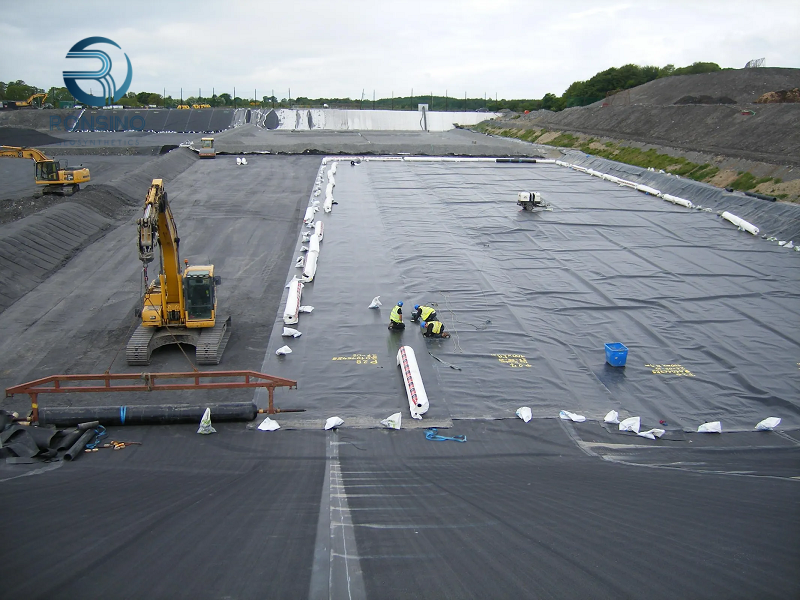
The Kingdom of Thailand produces substantial quantities of both domestic and commercial refuse. Contemporary waste disposal facilities are engineered to securely encapsulate refuse, thereby mitigating the risk of contaminant infiltration.
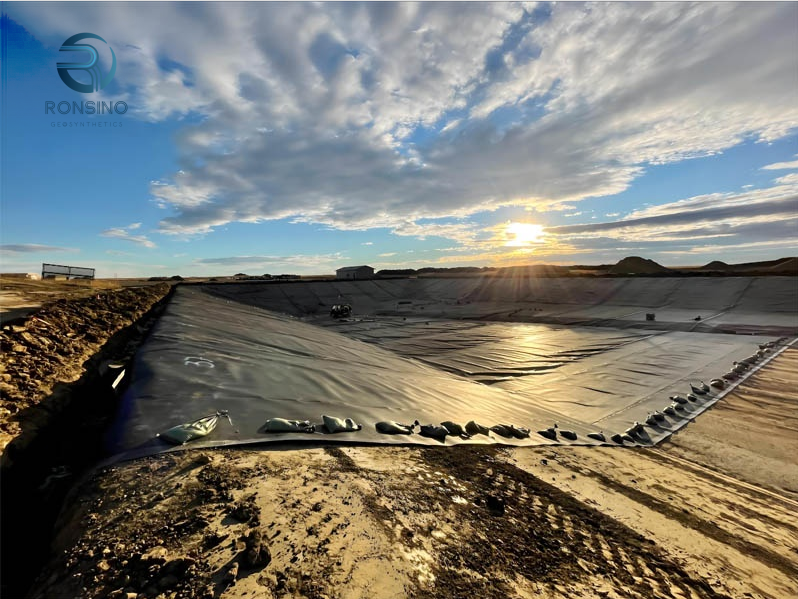
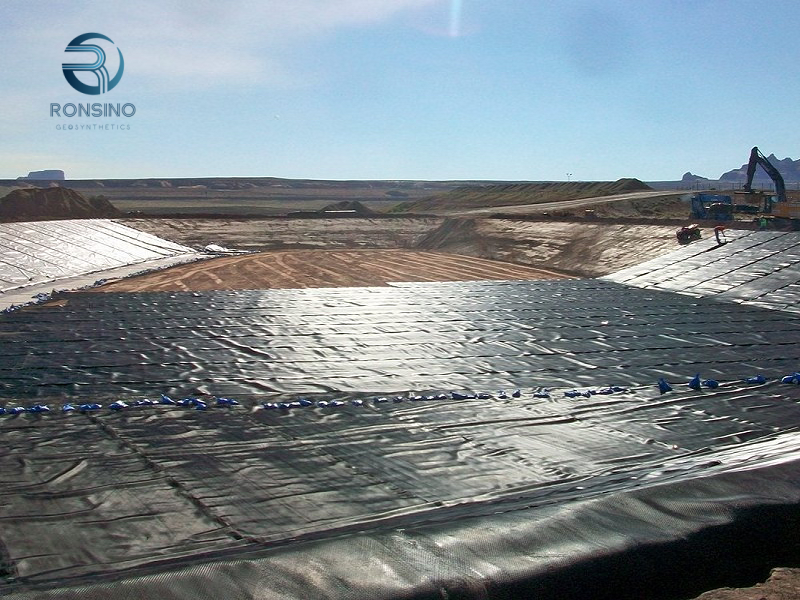
A robust barrier safeguards regional earth and subterranean water purity. Premium HDPE Geomembranes serve as the optimal solution for Thai waste management initiatives. Superior polyethylene materials provide exceptional, enduring protection against seepage.
Thailand has an equatorial climate, with abundant rainfall and hot temperatures. Landfills need to have excellent impermeability to cope with these environmental challenges. Toxic leachate is formed when rainwater seeps into layers of waste beneath the surface.
In the absence of adequate HDPE landfill barriers, toxic seepage may infiltrate aquatic systems. This contamination jeopardizes potable water sources, natural habitats, and human wellness. Our analysis incorporated technical specifications from producers and empirical findings from third-party laboratory evaluations.
We studied field performance at real Thai landfill sites.The review covered liner type, thickness, welding and subgrade design. Our goal is practical guidance for engineers and project owners.
1. What to Look For
HDPE landfill membranes, facing chemical, mechanical, and hydrostatic pressures, offer an optimal balance of strength, reliability, and cost for containment projects.
Numerous critical elements determine the proper functioning of the liner system. Chemical durability is paramount for ensuring the integrity of landfill containment. The liquid waste generated in landfills comprises corrosive acids, various salts, and complex organic substances.
High-density polyethylene (HDPE) anti-seepage membrane is resistant to strong corrosion and does not degrade in performance. It not only protects the structural integrity, but also protects the ecological environment, and has excellent puncture resistance.
Hazardous waste and construction debris can compromise the integrity of the liner system. Adequate base preparation minimizes potential hazards during construction. Adding a geotextile buffer layer can provide additional protection. Most early failures are caused by perforations rather than degradation caused by chemical reactions.
Thickness matches the project’s waste height and load.
1.0 mm suits small and low-load landfill cells.
1.5 mm works for many standard municipal landfill projects.
2.0 mm is preferred for deep and high-volume waste sites.
Thicker HDPE Landfill Liners provide strong safety for large landfills.
Weld quality determines the liner’s overall reliability. Landfills need thousands of meters of field seams. Each weld must reach at least 90 percent of parent strength.
Prior to commencing waste disposal operations, it is imperative to thoroughly examine every seam. Inadequate welding continues to be the predominant factor contributing to leachate seepage. Ultraviolet stability assumes critical importance throughout the open-air construction period.
The sun in Thailand is strong and high-performance materials are needed for the protective lining. High-quality high-density polyethylene (HDPE) contains special carbon black, which has strong UV resistance, prevents cracking and embrittlement, and extends life. Material selection should focus on long-term performance and cost-effectiveness, while maintaining durability and value.
HDPE landfill barrier systems cost US$6 to US$14 per square meter. While cheap solutions are economical, their durability often falls short; a high-quality barrier can ensure reliable containment for decades, and its long-term value far outweighs the cost savings of inferior materials and costly early repairs.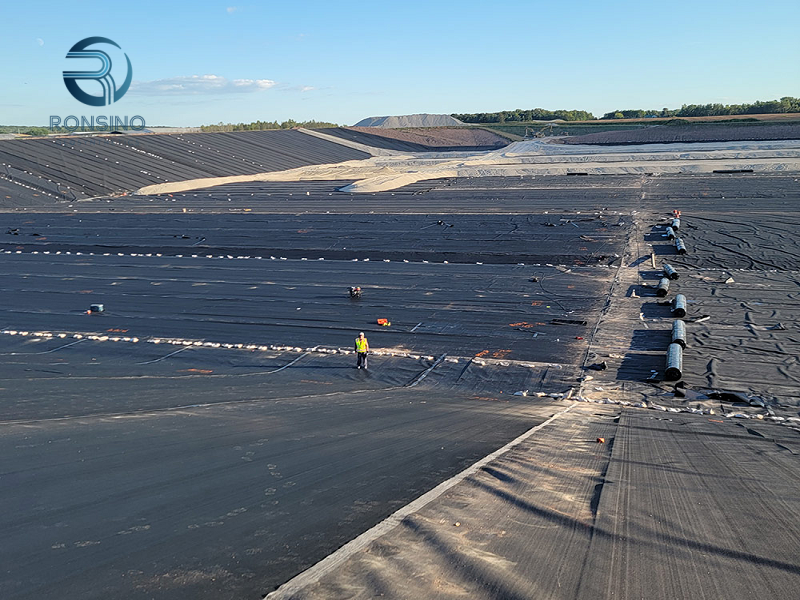
2. HDPE Landfill Liners Solutions for Thai Landfill Projects
2.1 Best Overall: RONSINO 1.5 mm Smooth HDPE Geomembrane
RONSINO Geosynthetics offers a 1.5mm thick smooth high-density polyethylene (HDPE) geomembrane designed specifically for use in municipal landfills and adheres to internationally recognized performance standards.
The structure supports various scales, using high-density polyethylene with carbon black. It achieves over 23 MPa tensile yield strength and exceeds 480 N puncture resistance.
This geomembrane liner system has excellent oxidation resistance under normal and high pressure and has been successfully used in waste treatment facilities in Thailand. It was confirmed on site that the welding process was intact under high temperature and rainfall conditions, and the weld strength reached more than 90% of the base metal.
RONSINO provides roll widths extending up to 8 meters, thereby reducing the number of seams required in the field. These expansive rolls facilitate a notable acceleration in the installation process of liners. However, a key consideration is the constrained availability of such rolls in local warehouse inventories.
However, fast regional delivery offsets this small gap.
Best for standard landfills wanting balanced performance and cost.
2.2 Best for Deep Landfill Cells: RONSINO Heavy-Duty HDPE Liner
Well-known China manufacturer RONSINO produces high-quality, heavy-duty HDPE geomembranes designed specifically for large, high-volume landfills. Manufactured using advanced flat-die extrusion technology, which ensures a high degree of uniformity and no weak links in the board, it has been verified by independent laboratories to have excellent puncture resistance and tensile strength, and can withstand sharp waste and concentrated loads. The material is structurally strong to withstand the most demanding landfill operations and is often used as the base layer in two-layer liner systems. Although its material cost is higher than thinner versions, it is particularly suitable for deep containment units and areas with a higher risk of leakage.
2.3 Best for Steep Slopes: Textured HDPE Geomembrane
Designed specifically for landfill slopes, the textured surface high-density polyethylene (HDPE) liner has an embossed topography that significantly enhances friction between the liner and the soil and overburden, effectively preventing displacement due to heavy loads. Laboratory tests show that its interface friction angle reaches 28-34 degrees, which greatly improves the stability of slope structures and reduces reliance on expensive mechanical anchors. Although the initial cost is 20-40% higher than smooth liners, it is cost-effective in steep slopes and high-load scenarios, and is especially suitable for complex terrain.
2.4 Best Composite Solution: HDPE Liner with Geotextile Cushion
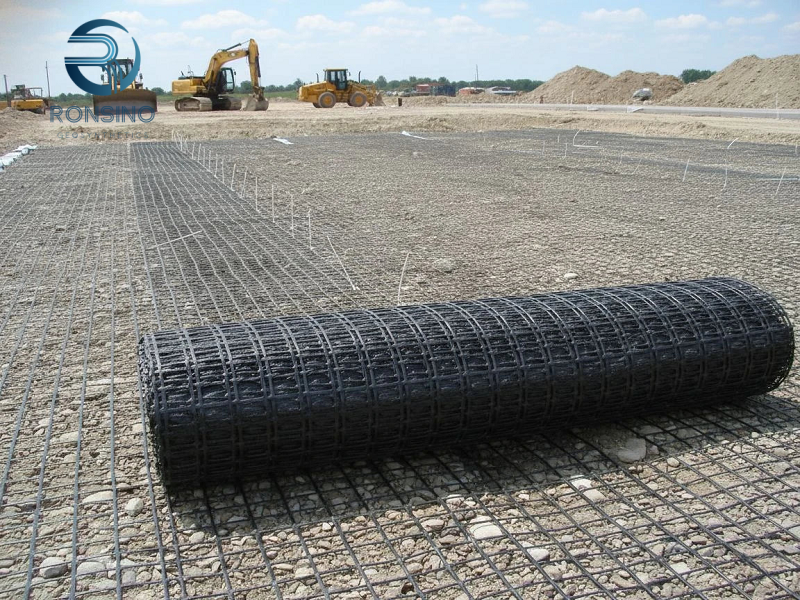
This composite structure combines a geotextile cushion with an HDPE membrane, which has the dual functions of containment (containment function/containment effect) and puncture resistance enhancement. Geotextiles can disperse concentrated stress from coarse-grained foundations and significantly improve the puncture strength of HDPE membranes. It can also increase interface friction, adapt to underground settlement, and simplify the installation process (although it slightly increases the welding complexity), and is especially suitable for rock formations or underground environments that require additional protection.
3. How to Choose HDPE Landfill Liners for Thailand
Selecting a landfill liner requires an evaluation of project-specific requirements, including waste characteristics, foundation conditions, environmental factors, and maintenance schedules.
2)Foundation Conditions: Rock foundation requires geotextile cushion; steep slopes should use textured liner.
3)Environmental factors: Open landfill requires UV-resistant materials; hot and humid climates require stronger resistance to moisture and heat and degradation capabilities.
4)Maintenance Plan: When maintenance is limited, thicker and more durable materials should be selected to avoid long-term financial risks.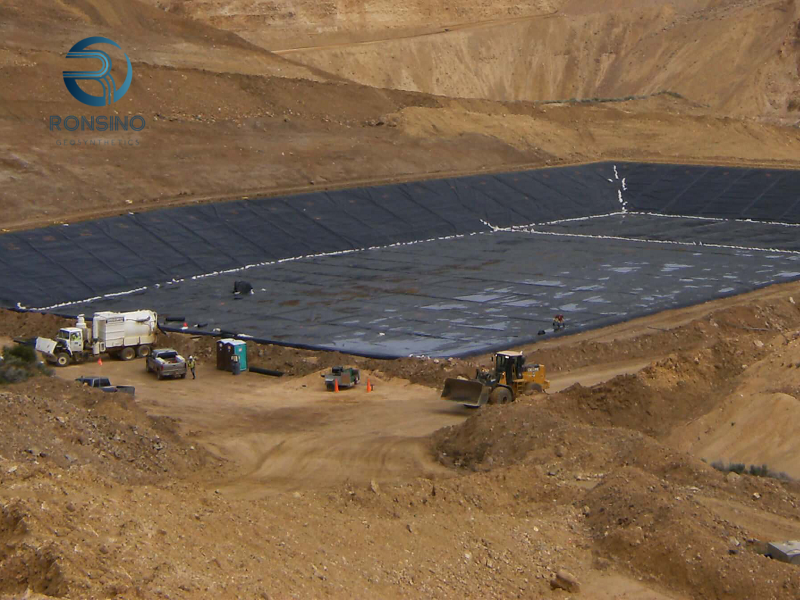
4. Field Installation Notes for Thai Landfill Projects
Thailand’s HDPE landfill anti-seepage layer construction experience shows that sharp objects must be thoroughly removed and a buffer layer must be laid before laying; welding must be monitored throughout the process, thermal parameters must be strictly controlled, and non-destructive testing must be passed; the anchoring system must be strong to prevent displacement; the system must have structural stability and accurately design drainage facilities to ensure long-term effective operation.
5. Conclusion
HDPE anti-seepage membrane is the key to safe landfill of solid waste. Its high-quality material has excellent mechanical properties, durability and ultra-long life. In projects, a 1.5 mm thick smooth HDPE anti-seepage membrane is usually used as the basic anti-seepage structure.
Steep terrain and deep waters require heavy-duty or textured materials with special properties. Pad selection is more than a simple matter of applying one standard. Compromising on liner quality will lead to potential leakage and environmental contamination.
The shortcomings of such problems always overshadow the immediate economic benefits. The right lining solution provides long-term value for the initial investment with its extended service life. Careful planning, proper thickness selection and precise welding are key to ensuring optimal performance and durability.
A robustly engineered landfill safeguards soil and water resources for extended periods. Prioritize premium-grade HDPE landfill liners to achieve enduring outcomes. Your landfill initiative will maintain secure functionality for numerous years.