Trustworthy Geomembrane Provider for Mining Engineering Initiatives
Blog · 2026-08-22 · 0 views
Technical Parameters and Specifications
When sourcing a reliable geomembrane supplier for mining projects, technical staff typically evaluate the following key technical indicators, commonly used in large-scale containment systems.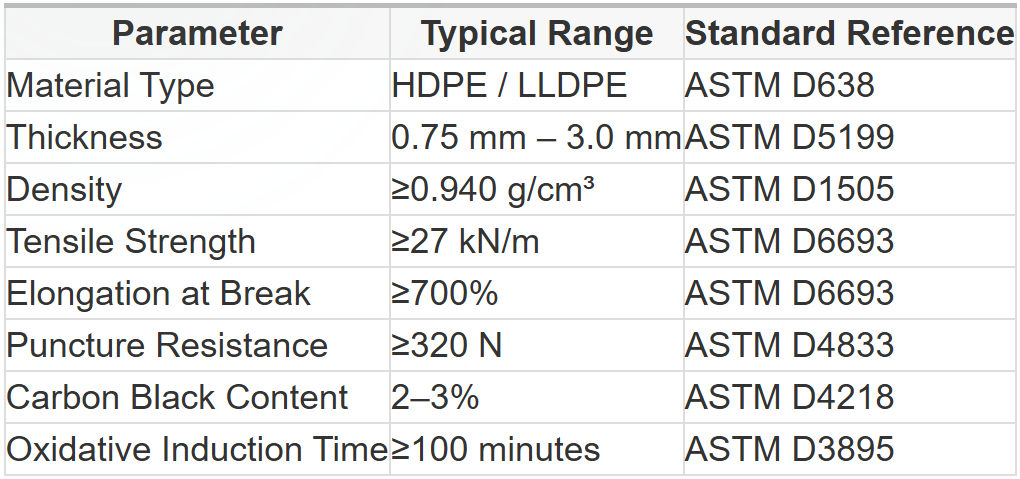
Mining projects usually specify thicker geomembranes (1.5 mm – 2.5 mm) to withstand heavy loads, chemical exposure, and long service life requirements.
Structure and Material Composition
Trusted geomembrane manufacturers that specialize in providing solutions for mining construction projects generally produce geomembrane products made of custom-developed high-performance polymer blends, which are tailor-made to adapt to the harsh and complex conditions present in mining sites.
High-Density Polyethylene Resin – Provides chemical resistance and structural strength.
Carbon Black Additives – Improve UV stability for outdoor mining environments.
Antioxidants – Extend service life and prevent thermal degradation.
Stabilizers – Enhance resistance to environmental stress cracking.
Optional Textured Surface – Improves friction performance on slopes.
Manufacturing Process
A reliable geomembrane supplier for mining project projects must maintain controlled production processes to guarantee consistent performance.
Raw Material Inspection
Polyethylene resin and additives are verified through laboratory testing before production.
Precision Mixing
Raw materials are blended using automated dosing systems to maintain formulation consistency.
Flat Die Extrusion
Extruders produce continuous geomembrane sheets under controlled temperature and pressure.
Calendering and Cooling
Sheets pass through precision rollers to achieve uniform thickness.
Surface Texturing (Optional)
Texturing rollers create friction surfaces for slope stability.
Quality Testing
Each roll undergoes thickness, tensile strength, and density verification.
Roll Packaging
Geomembranes are wound into export rolls typically ranging from 5–8 meters in width.
Industry Material Comparison
Application Scenarios in Mining Projects
Mining engineers frequently select a reliable geomembrane supplier for mining project containment systems used in the following scenarios:
Heap leach pads for gold and copper mining
Tailings storage facilities
Process water reservoirs
Evaporation ponds
Waste containment basins
Stormwater control ponds
These applications require materials capable of resisting acids, heavy metals, and mechanical stress from mining operations.
Core Procurement Challenges and Solutions
1. Material Failure Risk
Problem: Substandard liners may fail under chemical exposure.
Solution: Choose a reliable geomembrane supplier for mining project systems that meets ASTM and GRI-GM13 standards.
2. Inconsistent Thickness
Problem: Thickness variation reduces structural integrity.
Solution: Require third-party testing reports and roll inspection data.
3. Installation Compatibility
Problem: Poor weldability increases installation defects.
Solution: Ensure geomembranes are compatible with wedge welding equipment.
4. Long-Term Environmental Exposure
Problem: UV degradation reduces lifespan.
Solution: Select geomembranes with certified carbon black dispersion.
Risk Warnings and Prevention Measures
Improper installation can cause seam failure.
Unverified suppliers may provide recycled resin materials.
Incorrect thickness selection increases puncture risk.
Transport damage can compromise liner integrity.
Procurement teams should only partner with a reliable geomembrane supplier for mining project containment systems capable of providing traceable production records and test certificates.
Procurement Selection Guide
Define containment system design requirements.
Specify geomembrane thickness according to load conditions.
Verify supplier compliance with ASTM or GRI standards.
Request laboratory test reports for each production batch.
Evaluate supplier manufacturing capacity and export capability.
Review previous mining project references.
Confirm welding compatibility with installation contractors.
Engineering Case Example
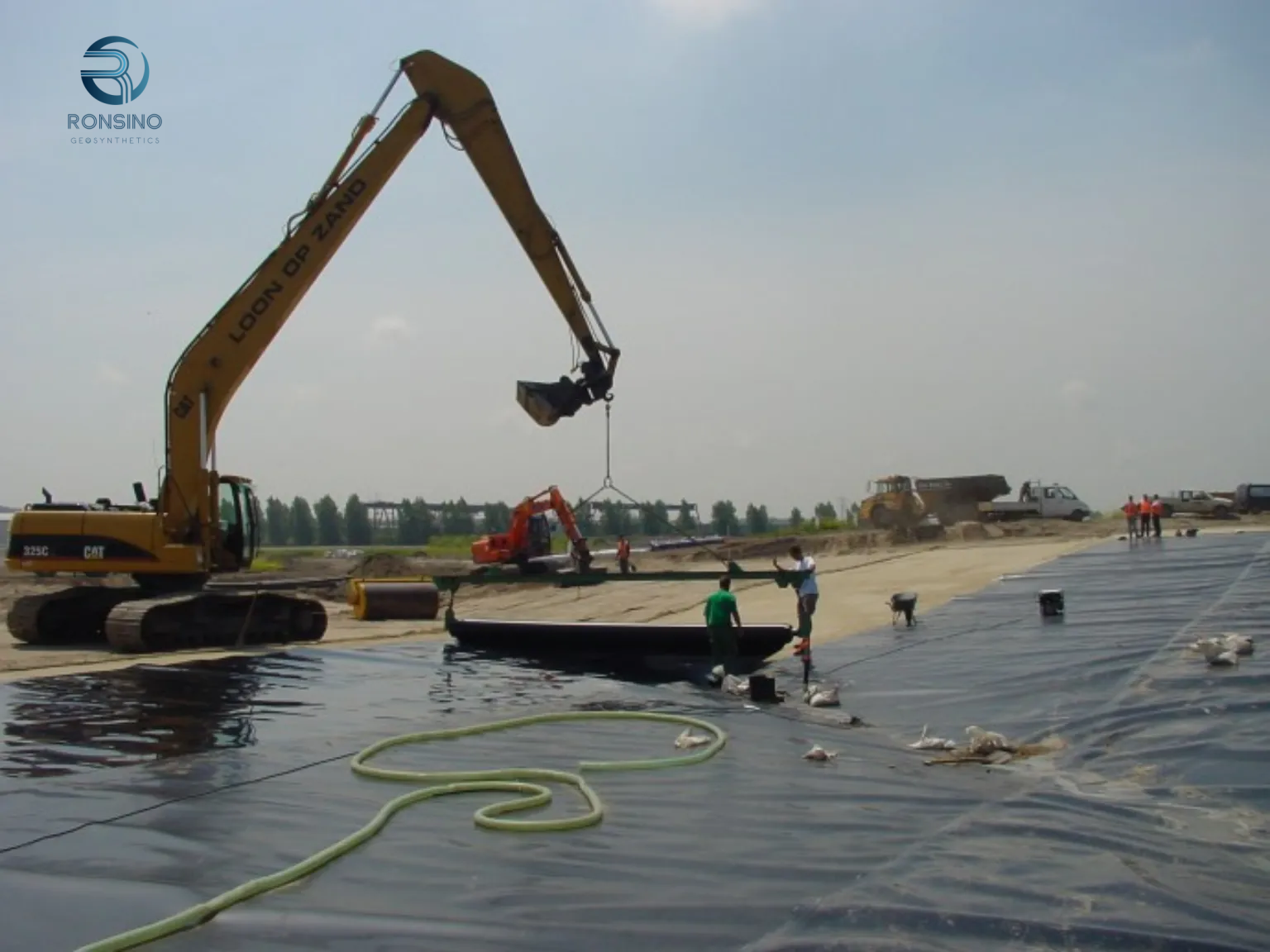
A copper mine project in South America needs to configure anti-seepage lining for a heap leach field of 180,000 square meters. Engineers selected a reliable supplier that could produce a 2.0 mm thick single-surface high-density polyethylene (HDPE) liner with a surface texture that ensured slope stability.
The installation included:
2.0 mm HDPE textured geomembrane
Roll width: 7 meters
Total material supplied: 210,000 m²
Installation method: thermal wedge welding
The system successfully met leak detection specifications and has been operating continuously for more than six years without a liner failure.
FAQ
1. What thickness is typically used in mining geomembranes?
Most mining projects use 1.5 mm to 2.5 mm HDPE geomembranes.
2. Why is HDPE preferred in mining applications?
HDPE provides superior chemical resistance and long-term durability.
3. What standards should geomembranes meet?
Common standards include ASTM specifications and GRI-GM13 guidelines.
4. What is the expected service life?
Properly installed geomembranes can last 20–50 years.
5. Can geomembranes resist mining chemicals?
Yes, HDPE geomembranes resist acids, salts, and heavy metals.
6. Are textured geomembranes necessary?
Textured surfaces improve friction and slope stability.
7. What roll width is commonly supplied?
Typically between 5 and 8 meters depending on production equipment.
8. How are seams joined?
Seams are welded using hot wedge or extrusion welding equipment.
9. How should geomembranes be stored?
They should be stored on flat surfaces away from sharp objects and sunlight.
10. What documents should suppliers provide?
Quality certificates, test reports, and production traceability records.
Request Technical Documents or Quotation
If you are looking for a reliable geomembrane supplier for mining infrastructure construction, prioritize obtaining full technical documentation before purchasing. Professional engineering teams typically require detailed product specifications, authoritative third-party test reports, and verifiable case references of similar mining projects to officially approve the use of relevant materials in mining containment and seepage prevention systems.
Professional suppliers can provide:
Engineering specification sheets
Sample geomembrane rolls
Third-party testing reports
Project reference documentation
Bulk pricing quotations