What's The Current Quotation of Non-Woven Geotextile Products?
Blog · 2026-09-02 · 0 views
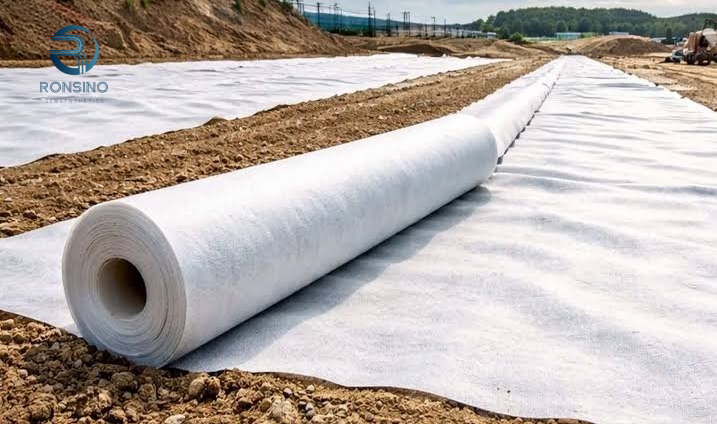
Geotextile materials have become essential components within contemporary civil engineering applications, delivering multifunctional approaches for ground reinforcement, slope protection, and fluid regulation. The worldwide expenditure on geotextile textiles is anticipated to reach $7.1 billion during 2024, with forecasts indicating a consistent 6.6% annual expansion rate that will culminate in a market valuation of $11.92 billion by the end of 2030. These advanced textile solutions are facilitating groundbreaking progress in both construction development and ecological preservation initiatives.
1. Understanding Non Woven Geotextile Price
Non-woven geotextiles, making up roughly 60 to 65 percent of the entire geotextile market share thanks to their outstanding filtration performance and efficient drainage properties, are offered to consumers spanning an extensive price range. For common standard-specification products, the global bulk trade prices calculated under FOB or EXW terms generally fall between 0.2 and 1.5 US dollars per square meter. Nevertheless, this reference price baseline will fluctuate remarkably depending on the specific technical parameters of the product and the scale of the purchase order.
Actual data from suppliers fully reflects this price range. Lightweight nonwovens (100–180 g/m2) used for weed protection or shallow drainage cost approximately $0.12 to $0.48 per square foot when purchased in bulk, while heavy-duty grades (400–450 g/m2) used for landfill bedding or mining area liners cost between $0.85 and $1.60 per square foot. B2B platform data shows that high-strength 500 g/m2 non-woven geotextiles can be priced as low as US$0.09 to US$0.16 per m2 in bulk orders, while more professional 300 g/m2 PET material geotextiles are quoted at US$0.20 to US$0.80 per m2.
In the consumer retail market, nonwoven fabric price gaps are notable. A 4×100-foot needle-punched roll, valued for high durability, absorption and tear resistance, retails for around $80, while an identical-sized spunbond roll for low-demand disposable use costs only $40. This gap highlights the importance of clarifying required performance grades and functional specifications before procurement.
2. Functions of Non Woven Geotextile
Nonwoven geotextiles serve several critical functions in construction and environmental projects:
2.1 Separation
Non-woven geotextiles act as a reliable barrier to prevent mixing of different soil layers, ensuring long-term structural stability. In road construction, they stop granular base material from sinking into soft subsoil, reducing deformation and extending pavement life.
2.2 Filtration
Geotextile fabric permits the passage of water while effectively preventing the loss of soil. This capability is essential in drainage systems, along riverbanks, and for coastal defense applications, where it is necessary to sustain water flow without allowing soil particles to be carried away.
2.3 Reinforcement
Nonwoven filter cloth can increase the tensile strength of weak soil layers and enhance the load-bearing performance of foundations. It is widely used in retaining wall backfilling, embankment paving, steep slope reinforcement and other projects. It can prevent soil displacement and reduce the risk of structural instability.
2.4 Drainage
Specific non-woven geotechnical drainage cloth can efficiently drain water and reduce accumulated hydrostatic pressure behind retaining walls and under building structures. It is suitable for scenarios such as high-standard sports field construction, landfill operations, and building foundation drainage systems.
2.5 Erosion Control
Permeable non-woven geotextiles form a reliable protective barrier that can effectively prevent wind and solidify soil. It is often combined with vegetation and embedded into lawn reinforcement mats to provide long-term stability to slopes and river banks.
2.6 Protection
Non-woven, needle-punched geotextiles function as a protective barrier to safeguard geomembranes—commonly employed in landfill and pond linings—against potential damage from pointed stones or other hazardous fragments.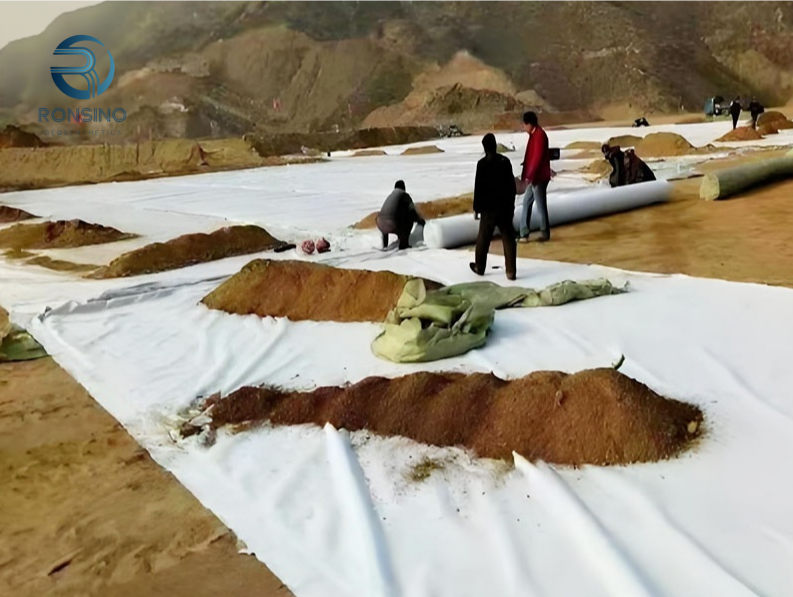
3. Key Factors Influencing Non Woven Geotextile
3.1 Material Type and Composition
3.1.1 Non-Woven Polypropylene (PP)
Cost: $0.15–$0.50/ft² ($1.50–$5.40/m²)
Specifications: 100–600 g/m² weight, 10–50 kN/m tensile strength, 0.1–0.5 mm AOS
Applications: Drainage, filtration, separation in roads and landscaping
Pros: Lightweight, cost-effective, UV-resistant, 20–50-year lifespan
Cons: Lower strength than woven, 20% less durable for heavy loads
Example: RONSINO’s 200 g/m² non-woven PP for a 1,000 ft² drain costs $150–$500
3.1.2 Woven Polypropylene (PP)
Cost: $0.30–$0.70/ft² ($3.20–$7.50/m²)
Specifications: 200–800 g/m² weight, 50–150 kN/m tensile strength, 0.2–0.6 mm AOS
Applications: Road stabilization, embankment reinforcement
Pros: High strength, low elongation (10–15%), 50-year lifespan
Cons: Less permeable, 10% higher installation cost
Example: Mirafi’s woven PP for a 5,000 ft² road costs $1,500–$3,500
3.1.3 Woven Polyester (PET)
Cost: $0.50–$2.00/ft² ($5.40–$21.60/m²)
Specifications: 300–1,000 g/m² weight, 80–200 kN/m tensile strength, 0.1–0.4 mm AOS
Applications: Retaining walls, steep slopes, landfills
Pros: Low creep (1–2%), high durability, 75–100-year lifespan
Cons: Higher cost, UV-sensitive without coating
Example: TenCate PET for a 2,000 ft² wall costs $1,000–$4,000
3.1.4 Natural Fibers (Jute/Coir)
Cost: $0.20–$0.80/ft² ($2.16–$8.64/m²)
Specifications: 300–700 g/m² weight, 10–30 kN/m tensile strength, biodegradable
Applications: Temporary erosion control, landscaping
Pros: Eco-friendly, 1–5-year lifespan, 15% lower carbon footprint
Cons: Short lifespan, limited strength
Example: RONSINO’s 500 g/m² jute for a 1,000 ft² slope costs $200–$800
3.1.5 Specialty Geotextiles (Geotubes/Composites)
Cost: $0.50–$5.00/ft² ($5.40–$54.00/m²)
Specifications: Custom weights, 100–200 kN/m tensile strength, tailored AOS
Applications: Coastal protection, dewatering, landfill liners
Pros: High performance, customizable, 50–75-year lifespan
Cons: Premium pricing, complex installation
Example: HUESKER geotube for a 500 ft² shoreline costs $250–$2,500
3.1.6 Material Cost Impact
Nonwoven polypropylene will account for 60% of geotextile demand in 2024 and is the most economical material for filtration and drainage; while woven polyester performs better under heavy-duty conditions. Polypropylene resin costs are expected to reach $1,200 per ton in the first quarter of 2025 (up 7%), accounting for 30-40% of total manufacturing costs.
3.2 Weight and Strength
3.2.1 Weight Range
Non-woven geotextiles price range from 100–1,000 g/m², with heavier fabrics costing 10–20% more. A 100 g/m² non-woven PP costs $0.15–$0.30/ft², while a 600 g/m² woven PET Geotextile Fabric Cost $1.00–$2.00/ft². Weight impacts application:
100–200 g/m²: Landscaping, light drainage ($0.15–$0.50/ft²)
200–400 g/m²: Roads, erosion control ($0.30–$1.00/ft²)
400–1,000 g/m²: Landfills, retaining walls ($1.00–$5.00/ft²)
3.2.2 Tensile Strength
High-strength (100–200 kN/m) woven polypropylene cloth ($0.70/square foot) has a high reinforcement cost (e.g., $3,500 for 5,000 square feet), while low-strength (10–50 kN/m) nonwoven fabric ($0.20/square foot) is low-cost ($1,500/square foot for the same area). The former is used for reinforcement, and the latter is suitable for filtration.
3.2.3 Performance Benefits
Denser materials (400+ g/m²) provide 30% enhanced durability against tears (1–2 kN, ASTM D6241) and endure for 50–100 years, whereas lighter alternatives (100 g/m²) typically last only 20–50 years. On a one-acre roadway, a 400 g/m² textile priced at $0.50/ft² ($21,780) cuts upkeep expenses by 25% across two decades.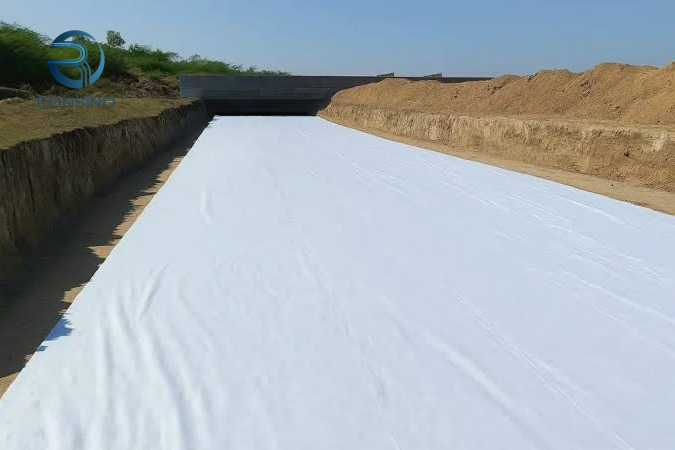
4. Special Non Woven Geotextile Price
Specialty geotextiles, such as those with specific properties such as UV resistance, chemical resistance, or electrical conductivity, may come in different price ranges.
The price of specialty geotextiles varies greatly based on the unique properties of the material and the intended application.
Please be advised that the cost spectrum for these non woven geo fabrics serves merely as a preliminary guide, with actual figures subject to variation influenced by fluctuating geotextile raw material costs, shifts in currency exchange rates, and additional determinants such as vendor selection, geographical location, and order volume. Furthermore, substantial procurement of geotextiles typically qualifies for preferential pricing arrangements. As an established geotextile manufacturer boasting over two decades of manufacturing expertise, we strongly recommend providing us with the specific technical specifications and performance parameters for your required needle punched geotextile, enabling us to furnish you with the most precise and current pricing details available.
5. Budgeting Tips for Non Woven Geotextile Projects
5.1 Match Fabric to Application
Must-Haves: Tensile strength (10–100 kN/m, $0.15–$1.00/ft²), permeability (50–300 l/m²/s), 20+ year lifespan.
Optional: Geotubes for coastal protection ($1.00–$5.00/ft²), PET for landfills ($0.50–$2.00/ft²).
Savings: Use non-woven PP ($0.15–$0.50/ft²) for drainage, reserving woven PET for reinforcement.
5.2 Leverage Bulk Discounts
Order 10,000+ ft² to save 20–30%. Contact RONSINO Geosynthetics for volume pricing on large projects.
5.3 Optimize Installation
Hire certified contractors for overlaps and anchoring ($0.30–$1.50/ft²) to reduce failures by 95%. Schedule in dry weather to save 10–15% on delays.
5.4 Invest in Longevity
Choose 200–400 g/m² fabrics ($0.30–$1.00/ft²) for 20–50 years, saving 40% on replacements compared to 100 g/m² over 10 years.
5.5 Use Protective Layers
Add aggregates ($0.50–$1.50/ft²) to prevent punctures, extending lifespan by 30%.
5.6 Plan for Maintenance
Budget $0.01–$0.05/ft² annually for inspections to avoid $1,000–$5,000 in repairs.
6. The Properties of the Geotextile Material itself Should be Considered
6.1 Material Attributes
The characteristics of geotextiles are closely related to their application performance. Key indicators include tensile strength, puncture resistance, elongation, water permeability and durability. Precisely matching these properties to project requirements ensures optimal functionality. Especially in nonwoven geotextiles, strength (especially in structural reinforcement scenarios) and puncture resistance are crucial to withstand mechanical stress and environmental factors, and it is necessary to ensure that they have sufficient strength during their service life.
6.2 Compatibility
It is imperative to evaluate the harmonious integration of double punched non woven geotextile with various construction materials. Specifically, assess its compatibility with surrounding soil, structural components of retaining walls, and associated drainage infrastructure. The objective is to prevent any adverse reactions between the geotextile and these materials that might compromise their integrity or diminish the overall efficacy of the system.
6.3 Environmental Conditions
The effectiveness of geotextiles is influenced by a range of environmental conditions, including temperature variations, prolonged ultraviolet radiation, and repeated freezing and thawing processes. A thorough assessment must be conducted to verify the capability of the most optimal non-woven geotextile material to endure the specific environmental challenges present at the project site.
6.4 Chemical Resistance
Geotextiles may occasionally encounter exposure to pollutants or chemical substances. Should this be a concern for your specific application, it is advisable to select a geotextile material that possesses an appropriate level of resistance to such chemical agents.
Summary
Nonwoven geotextile pricing ranges from $0.15 to $5 per square foot, depending on material composition (40-50%), quality and tensile properties (10-20%), application method (20-30%) and characteristics (5-15%). Polypropylene nonwoven fabric ($0.15-0.50/square foot) is suitable for drainage, while polyester woven fabric ($0.50-2.00/square foot) is better for reinforcement. Understanding cost factors such as polypropylene resin, UV stabilization, and installation labor can optimize project financial planning. RONSINO geotextiles have more than 20 years of industry experience and a 99% defect-free record, providing advanced and economical solutions.
Please contact The Best Project Material Co., Ltd. (RONSINO Geosynthetics) for woven or non woven geotextile samples and quotes at factory price to build a durable, eco-friendly driveway.
Selecting optimal non-woven geotextiles represents a critical decision that profoundly influences the ultimate success of your infrastructure endeavor. For those seeking dependable, superior-grade geotextiles, RONSINO Geosynthetics emerges as the ideal solution. RONSINO Geosynthetics provides an extensive array of products, including filament-based, polyester staple fiber, and polypropylene staple fiber geotextiles, alongside woven fabrics and diverse material classifications, all tailored to satisfy the unique specifications of your project. It is anticipated that this discourse will furnish pertinent guidance, enabling you to make more informed choices regarding the utilization and implementation of geotextiles.