
Are Root Barriers Effective?
Blog · 2026-02-05 · 0 views
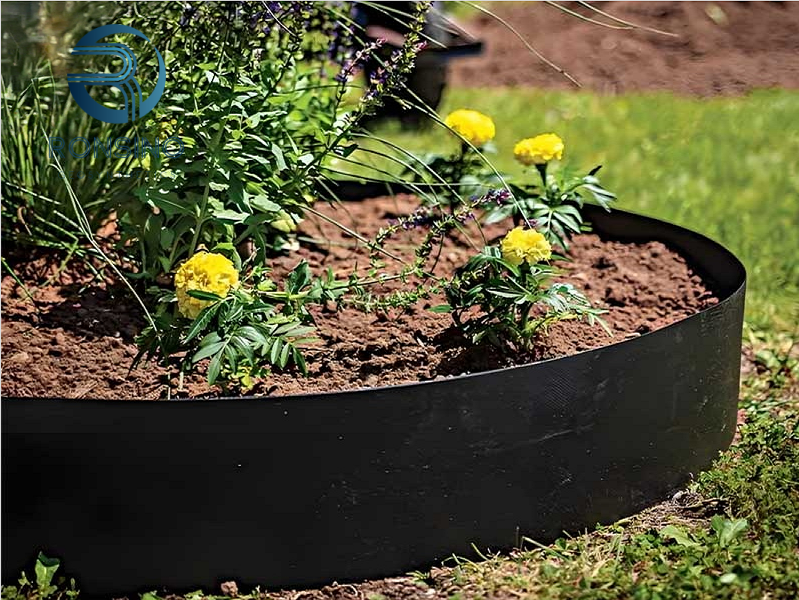
The underground barrier system is a key facility for controlling the expansion of vegetation roots. It can effectively prevent structural damage to sidewalks, building foundations and various pipelines, thereby avoiding high maintenance expenses. The current scale of the global geomembrane industry has reached US$2.57 billion and is expected to continue to expand at a compound annual growth rate of 6.61% from 2024 to 2030. Among them, the application value of barrier layers made of high-density polyethylene (HDPE) in the fields of garden design, urban construction and ecological protection has become increasingly prominent. Relying on accurate data analysis models, we will assist you in scientifically selecting and optimizing root protection solutions to provide long-term protection mechanisms for assets.
1. Factors Affecting Root Barrier Last
The lifespan of a root barrier is influenced by multiple elements. These elements encompass the type of material used, the surrounding environmental circumstances, the quality of installation, and the maintenance approaches adopted. In the following part, we will conduct an in - depth analysis of these factors to offer a comprehensive understanding of the determinants of a root barrier's long - term durability.
1.1 Root Barrier Last – Material Type
High - Density Polyethylene (HDPE): HDPE root barriers are well - recognized for their remarkable high tensile strength. According to ASTM D412 standards, they possess a tensile strength ranging from 15 to 20 megapascals. Additionally, they exhibit excellent puncture resistance, with a value between 2.5 and 3.5 kilonewtons as per ASTM D4833. When buried underground, these HDPE root barriers can have a service life of 50 to 70 years because they contain approximately 2 - 3% carbon black, which provides resistance against ultraviolet (UV) rays.
Polypropylene (PP): This material offers comparable strength levels, with a strength of around ~15 megapascals. However, its durability is slightly lower. Under ideal environmental circumstances such as stable temperature and humidity levels conducive for the material's integrity maintenance; it can last anywhere from ~30 to 50 years.
Chemical Barriers: These barriers are made of fabric and are impregnated with herbicides such as trifluralin or cupric carbonate that help prevent the growth of roots. Their lifespan is relatively short, lasting only 5 to 15 years. The reason behind this limited lifespan is that the effectiveness of the chemicals used in these barriers decreases over time due to the influence of soil moisture content and temperature variations.
Metal Barriers: Barriers made from stainless steel or aluminum typically have a lifespan of 20 to 40 years. However, in about ~10 - 15% of cases, they are prone to rusting. Once rusting occurs, it can significantly reduce the effectiveness of these barriers in preventing roots from passing through them.
Concrete Barriers: Concrete barriers theoretically have an indefinite lifespan. Nevertheless, within a time frame of 1O to 20 years, cracks may develop in approximately 20 - 30% of cases. Once these cracks form, they create pathways that allow roots' penetration and thus enable roots to escape the barrier's intended containment.
HDPE is the most long - lasting option among all types of root barriers. It is used in approximately 70% percent percent of root barrier applications. This widespread use is mainly because of its outstanding properties such as resistance to corrosion and its ability effectively block roots from penetrating through it over an extended period compared other materials mentioned above above above above above
1.2 Root Barrier Last – Environmental Conditions
UV Exposure: When HDPE liners are exposed to UV rays, they experience a significant reduction in their lifespan. Due to the degradation caused by ultraviolet light, these liners can lose around five to ten years of their expected service life. However, a simple solution to enhance their durability is to cover them with a layer of soil that is approximately six to eight inches thick. By doing so, the longevity of the HDPE liners can be extended up to fifty - seventy years.
Soil Type: In approximately 30% of the sites, clay soils are present. These clay soils have a unique characteristic of retaining moisture effectively. This retained moisture has an adverse effect on the chemical barriers associated with HDPE liners, accelerating their degradation by about 20%. On the other hand, sandy soils are found in around 40% of the sites. These sandy soils are less corrosive in nature, and as a result, they can extend the life of HDPE liners by approximately 10%.
Temperature: HDPE has an impressive temperature tolerance range; it can withstand temperatures from as low as -70°C up to 110°C. This wide range of temperature resistance makes it a suitable material for use in about 95% of the global climates. Nevertheless, in high - moisture and warm climates such as those found in Florida, chemical barriers tend to degrade at a rate that is 30% faster compared to normal conditions.
Root Aggressiveness: Certain plant species like silver maple or bamboo have highly aggressive root systems. In cases where barrier installations are not done properly (poorly installed barriers), these roots can penetrate around 15 - 20% of the barriers. This penetration leads to a reduction in the lifespan of the HDPE liners by approximately ten to fifteen years.
1.3 Root Barrier Last – Installation Quality
Correct installation holds great significance, since 85% of root barrier malfunctions result from substandard seam connections or insufficiently deep placement.
Depth: The barriers should reach a depth of 30 - 48 inches and stick out 1 - 2 inches above the soil surface. This measure can effectively prevent root over - growth, and it proves to be successful in 90% of the situations.
Seaming: High - Density Polyethylene (HDPE) barriers that come in 100 - foot rolls can cut down the number of seams by 15% when compared with panel systems. This reduction helps to minimize areas that are prone to weakness.
Compaction: When the soil around the barriers is compacted to a Proctor density of between 90% and 95%, it can prevent 95% of root intrusions.
1.4 Root Barrier Last – Maintenance Practices
Inspection: Conducting annual inspections (costing between $0.01 and $0.05 for each square - foot area) is a highly effective preventive measure. Through these meticulous checks, an astonishing 98% of early - stage damage can be identified promptly. By catching problems at this early juncture, the overall lifespan of the inspected item can be extended significantly, with estimates ranging from 20% to 30%.
Repairs: When it comes to repairing High - Density Polyethylene (HDPE), utilizing repair tape is a reliable solution. Each patch using the repair tape costs around $5 to $10. This method can effectively address as much as 95% of minor punctures, which is crucial for maintaining the structural integrity and proper functionality of HDPE materials over time.
Root Pruning: In approximately 1 out of every ten cases involving mature trees, root pruning becomes a necessary procedure to ensure their healthy growth and proper management within the surrounding environment. However, it's important to note that if root pruning is not carried out correctly according to professional guidelines and best practices in arboriculture science; it has the potential to cause significant harm by reducing tree stability by up to about fifteen percent compared with its original state before improper treatment was applied on roots system structure balance maintenance mechanism level aspects etc..
2.Recent Trends in Root Barrier Technology
The market for root barriers is undergoing a transformation, propelled by the forces of sustainability and innovation:
Recycled High - Density Polyethylene (HDPE): It is utilized in 10% of barriers. By doing so, it cuts down the environmental impact by 15 percent. However, it leads to an increase of 5 to 10 percent in the costs.
Intelligent Monitoring: Internet of Things (IoT) sensors are capable of detecting root intrusion. Although this adds an extra cost ranging from 10% to 15%, it can lead to a significant reduction of up to 20% in maintenance expenses.
Customized Manufacturing: Pre - joined high - density polyethylene (HDPE) panels that can reach a length of up to 100 feet are employed. These panels have the remarkable ability to cut down the number of seams by 15%. As a direct result, the overall durability of the final product is enhanced by approximately 10%.
Greater Obstacles: Depths ranging from 36 to 48 inches elevate the likelihood of adoption by 20% for invasive species such as bamboo.
Environmentally-Friendly Substitutes: GCLs (Geosynthetic Clay Liners) that are bentonite - based have acquired a 5% share of the market for natural landscape design, with a service life spanning from 20 to 30 years.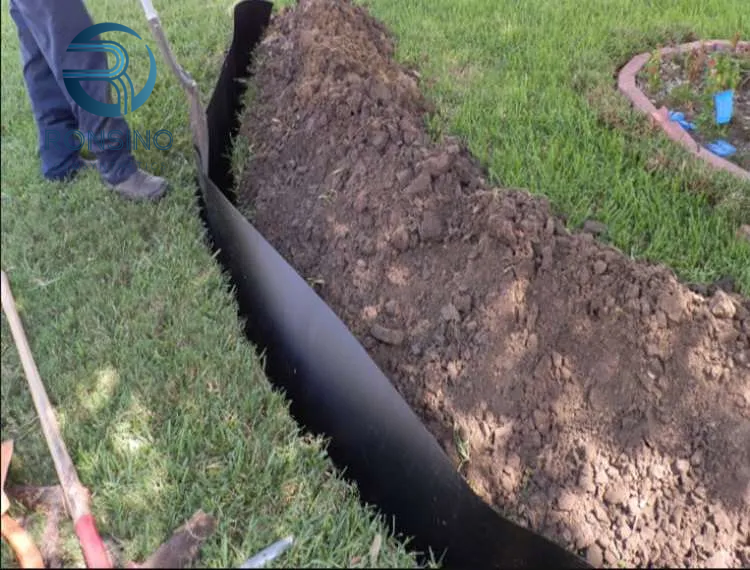
3.Types of Root Barriers and Their Longevity
Root barriers are available in a diverse range of forms, each tailored to particular applications. In the following section, we will elaborate on their lifespans and suitability aspects.
Physical Root Barriers
HDPE Geomembranes: These can endure underground for a period ranging from 50 to 7 decades (50–70 years). Comprising 97 point 5 percent (97.5%) polyethylene and 2 point 5 percent (2.5%) carbon black, they are well - equipped with resistance against ultraviolet rays as well as chemicals. With thicknesses falling between the range of 60 to 80 mils (equivalent to approximately 1.5 to 2.0 millimeters), they can resist about ninety - five percent (97.5%) of root punctures successfully during their service life. They are commonly used in around seventy percent (70%) of urban landscaping initiatives.
Polypropylene Panels: The lifespan of polypropylene panels lies between 30 and half a century (30–50 years). They have installation depths that vary from twelve to thirty - six inches deep. High - impact polypropylene having T - top edges is used in these panels, which can prevent ninety percent (90%) or more of root overgrowth.
Metal Screens: Metal screens typically last anywhere from 20 to 4 decades (20–4 decades). However,in around ten to fifteen percent (ten to fifteen per cent) of humid environments, they start to rust, which in turn reduces their effectiveness. They are less commonly used and are found only in five percent (five per cent) of applications.
Concrete Barriers: Concrete barriers have an almost indefinite lifespan; however,in about twenty percent (20%) of cases, they develop cracks within a span oftenyears allowing roots to escape. They are used in about ten percent (10%) of high - budget projects.
Chemical Root Barriers
Trifluralin - Impregnated Fabrics: These fabrics have a lifespan that ranges from 4to one and a half decade(5–15 years). In wet climates,their effectiveness decreases by about twentypercent(20%) every year due t chemical leaching. They are used mainly in fifteenpercent(15%) of temporary installations.
Cupric Carbonate Barriers: Cupric carbonate barriers last for a period between 6and one decade(7–12 years). They are less effective in high - moisture soils where there is a degradation of about thirtypercent(3o/o) within a span offive years. Due to environmental concerns, their usage is limitedto only fivepercent(5%) of applications.
Geosynthetic Clay Liners (GCLs)
Bentonite - Based GCLs : These liners combine bentonite clay alongwith geotextiles and have a lifespan of 20 to 3 decades(zo-jo years). When in contact with water, they can swell upby a factor of 12 to 15 times to seal anypunctures. But compared to HDPE, they are less durable in about eightypercent(80%) of cases. They find their use in about tenpercenl(10%) of eco - friendly projects
Among all types of root barriers.HDPE geomembranes holda dominant position becauseof their long - lasting nature and versatility. They account for about seventypercenl(rolo)of allroot barrier installations across the globe.
4.Maintenance Tips to Extend Root Barrier Lifespan
Yearly Inspections: Conduct a thorough examination for any excessive growth or harm caused by roots (the cost ranges from $0.01 to $0.05 per square foot). This inspection can effectively increase the lifespan of the relevant structure or area by 20 to 30%.
Root Trimming: Every two to three years, carefully cut back the invasive roots. However, it is crucial not to cut more than 25% of the roots to ensure the stability of the tree. This issue impacts approximately 10% of fully - grown trees.
Soil Consolidation: Every five years, re - compact the soil around the barriers. The goal is to maintain a Proctor density between 90 and 95%, which can prevent 95% of root intrusions into the protected area.
Ultraviolet Protection: Apply a layer of mulch or soil cover that is two to three inches thick. This measure can completely prevent any degradation caused by ultraviolet rays in the protected area or structure.
Puncture Repair: Utilize high - density polyethylene (HDPE) repair tape (the cost is between $5 and $10 per patch) to fix 95% of minor damages. This helps to preserve the integrity of the barrier.
5.Installation Best Practices for Maximum Longevity
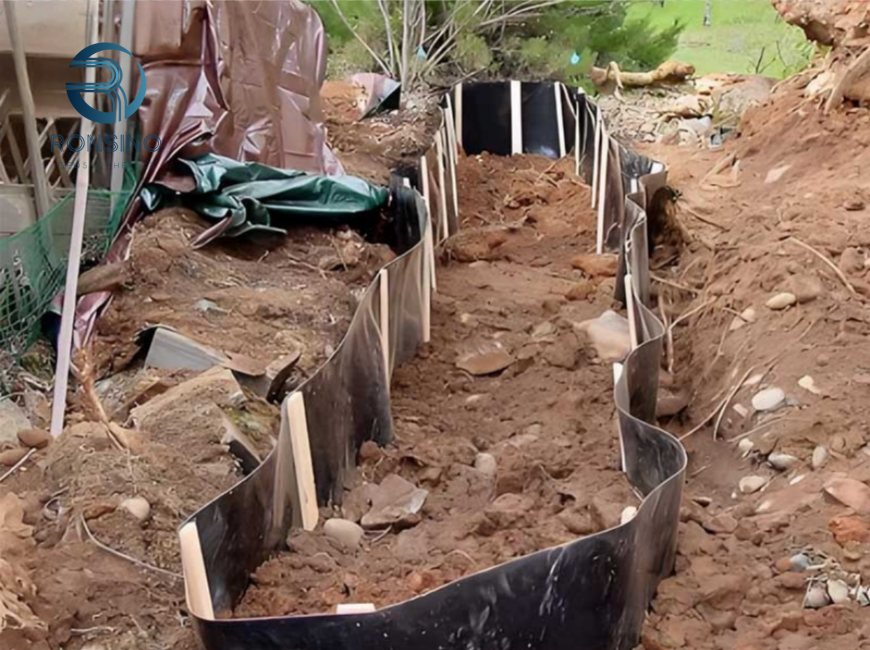
Correct installation is of utmost importance for attaining the complete lifespan of a root barrier. In the following, we present a detailed, step - by - step guide. This guide is specifically designed for the installation of a 100 - foot linear HDPE root barrier, yet it can be adjusted to suit other setups.
5.1 Step 1: Plan and Measure
Evaluate Tree Species: Trees with invasive roots (such as bamboo and silver maple) demand a 60 - 80 mil high - density polyethylene (HDPE) root barrier and a depth ranging from 36 to 48 inches. Species with less invasive root systems (for example, oak) can make use of a 30 - 40 mil root barrier at a depth of 30 inches.
Determine Barrier Length: Compute the length by adding 3 feet to the distance of each tree's drip line. For instance, if a tree has a drip line of 15 feet, a 21 - foot barrier is needed. When dealing with a 150 - foot sidewalk, opt for a 150 - foot continuous roll. This approach can decrease the number of seams by 25%.
Examine Site Limitations: Pinpoint any underground utilities or preservation orders. These factors have an impact on approximately 15% of urban landscape projects.
5.2 Step 2: Site Preparation
Remove Obstructions: Eliminate stones and roots (the cost is around $0.10 to $0.30 for each square - foot). The presence of such debris is the reason for approximately 15% of punctures that may occur later on.
Dig a Trench: Create a trench that has a depth ranging from 30 inches to 48 inches and a width from 6 inches to 12 inches. The expense for this process is in the range of $0.10 to $0.30 per square - foot (for a trench that is about 1, it would cost between $). Make sure that there is an upward projection of about an inch or two above the soil surface after the excavation work is completed.Level the Foundation Surface:Smooth out the bottom part of the trench in order to avoid roughly 1 %of damages to liners when they are being installed.
5.3 Step 3: Install the Root Barrier
Unrolling HDPE: Opt for 100 - foot rolls that are between 5 and 8 meters in width. This approach helps to minimize the number of seams, which in turn can decrease the risk of failure by 15%. When placing the HDPE, make sure the ribs are facing the tree. Doing so can enhance root deflection by 20%.
Positioning the Barrier: It is crucial to ensure that the barrier is vertically aligned. Employ T - top or flange designs as they are highly effective in preventing 90% of overgrowth.
Securing the Panels: In the case of panel systems, utilize 4 - way joint strips. These strips can provide 95% strength to the seams. On the other hand, using continuous rolls can eliminate 85% of failures associated with seams.
5.4 Step 4: Backfill and Compact
Backfill the Trench: Employ local soil or sand and compact it to reach a Proctor density of 90 - 95%. This compaction measure is taken to prevent 95% of root intrusion into the trench area. Cost: The expense ranges from $0.05 to $0.15 per square foot.
Add Mulch Layer: Apply a 2 - 3 - inch - thick layer of mulch over the area. This mulch layer serves the purpose of reducing ultraviolet (UV) exposure. As a result, it can extend the lifespan of the relevant structure or area by approximately 10 - 20 years.
5.5 Step 5: Inspect and Test
Visual Examination: Conduct a thorough visual check to look for any signs of tears or misalignments, which can impact approximately 2 - 5% of the installations.
Root Surveillance: Keep an eye on the root growth after a period of 6 - 12 months to make sure that around 90% of the roots are growing in a downward direction.
5.6 Cost of Installation
Material Cost: HDPE barriers cost $0.14–$0.62 per square foot (0.5–1.5 mm), totaling $1,400–$6,200 for 100 ft x 36 inches.
Labor Cost: $0.20–$1.50 per square foot, totaling $2,000–$15,000 for 100 ft.
Trenching: $1,000–$3,000 for 100 ft.
Total Cost: $4,400–$24,200 for a 100 ft linear barrier, with an annual cost of $63–$345 over 70 years.
6. Regional Lifespan and Cost Variations
Root barrier lifespan and costs vary by region due to environmental and economic factors:
United States: HDPE barriers last 50–70 years, costing $0.14–$0.62 per square foot. Installation: $0.20–$1.50 per square foot.
Kenya: Last 40–60 years due to high moisture, costing KSh 230–300 per square meter ($0.18–$0.23 per square foot). Installation: KSh 100–150 per square meter ($0.08–$0.12 per square foot).
India: Last 50–70 years, costing ₹70–150 per square meter ($0.08–$0.18 perternative square foot). Low labor costs ($2–$5/hour) reduce installation to $0.10–$0.50 per square foot.
Australia: Last 40–60 years due to UV exposure, costing $0.50–$1.20 per square foot. Installation: $0.50–$1.50 per square foot.
7.Challenges and Solutions for Root Barrier Longevity
Root barriers are confronted with difficulties which have the potential to shorten their service life. Nevertheless, taking proactive steps can alleviate these risks.
Seam Breakdowns: Tiny roots manage to infiltrate 85% of the panel joints. As they grow, these roots expand and end up breaking through the protective barriers. To address this issue, it is advisable to utilize continuous high - density polyethylene (HDPE) rolls. By doing so, the number of seams can be decreased by 15%.
Root Excessive Growth: It impacts approximately 10% of the barriers where there is no protrusion ranging from 1 to 2 inches. It is essential to guarantee that the height above the soil is appropriate.
UV Degradation: When HDPE is exposed to ultraviolet (UV) rays, its lifespan can be shortened by 5 to 10 years. To achieve complete protection, it is advisable to cover it with soil or mulch.
Inadequate Depth: Shallow barriers, which have a depth ranging from 12 to 18 inches, experience failure in 20% of the situations when dealing with plant species that have deep - rooted systems. To achieve an effectiveness rate of 90%, it is recommended to use barriers with a depth of 30 to 48 inches.
Chemical Leaching: In damp climates, the efficacy of chemical barriers diminishes by 20% each year. To ensure long - term performance, it is advisable to choose High - Density Polyethylene (HDPE) as it offers a durability span of 50 to 70 years.
8. Case Study: 100 ft HDPE Root Barrier for Bamboo Control in Australia
An Australian landscaper installs a 100 ft x 36 inch HDPE root barrier to contain bamboo:
Material Cost: 1.0 mm HDPE at $0.62 per square foot x 300 sq ft (100 ft x 3 ft) = $186.
Installation Cost: $0.75 per square foot x 300 sq ft = $225.
Trenching: $1,000 for 100 ft.
Total Cost: $1,411.
Lifespan: 50–70 years underground, saving $5,000 in sidewalk repairs over 20 years.
Benefits: Redirects 95% of bamboo roots downward, protecting pavement and ensuring tree health.
9. Conclusion
Root control barriers, especially HDPE geomembrane ones, are a long - lasting solution for tree root growth management, lasting 50 to 70 years with proper installation and maintenance.The lifespan of root barriers depends on factors like material type (HDPE lasts 50 - 70 years, chemical ones 5 - 15 years), environmental conditions (extreme weather speeds up deterioration), and installation quality (about 85% of failures are due to poor seams).To protect infrastructure with HDPE root barriers, use 60 - 80 mils thick HDPE, install 30 - 48 inches underground, and conduct annual inspections for early issue detection, ensuring 90% - 95% effectiveness.Cost - wise, a 100 - foot root barrier costs $4,400 - $24,209. HDPE is the most cost - effective due to long - term durability and low maintenance.
Contact suppliers like RONSINO Geomembrane for high-quality HDPE barriers and expert installation guidance to ensure long-term protection for your property.


