
Drainage Cell Block for Stadium Roof Project in Switzerland
CASE · 2025-09-28 · 0 views
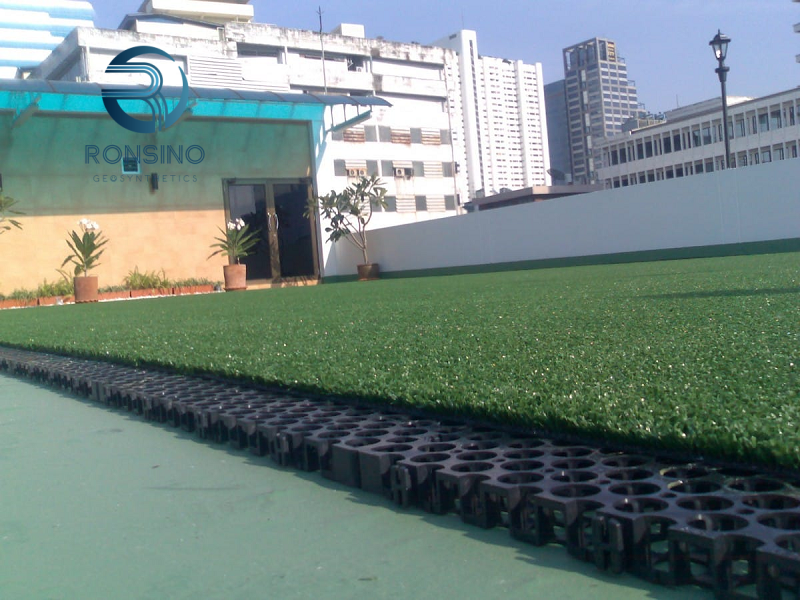
Drainage Cell Block are the widely used drainage system for indoor and outdoor construction projects.
1.Why Chose Drainage Cell Block Switzerland for Stadium Roof Project
A Swiss customer selected our drainage lattice blocks for their stadium roof, mainly for their excellent compressive strength and load-bearing capacity. After receiving the customer's specific demand for 30mm×500mm×500mm products, we quickly provided a technical solution containing detailed data and certification analysis, and efficiently sent samples for testing the next day.
The customer was deeply satisfied with the compression performance and overall quality of the sample, which greatly enhanced their confidence in us. Subsequently, we calculated the material consumption of nearly 8,000 square meters based on its architectural blueprint. After reaching a consensus on logistics, packaging and pricing, we signed a customized agreement and put into production immediately after confirmation of payment to ensure that the order is delivered on time.
This cooperation fully reflects customers' trust in our product quality, communication efficiency and operational capabilities. We stay true to our commitment and strive to exceed our customers' expectations to create a reliable, top-notch drainage system for their stadium roof.
2.What is Drainage Cell Block?
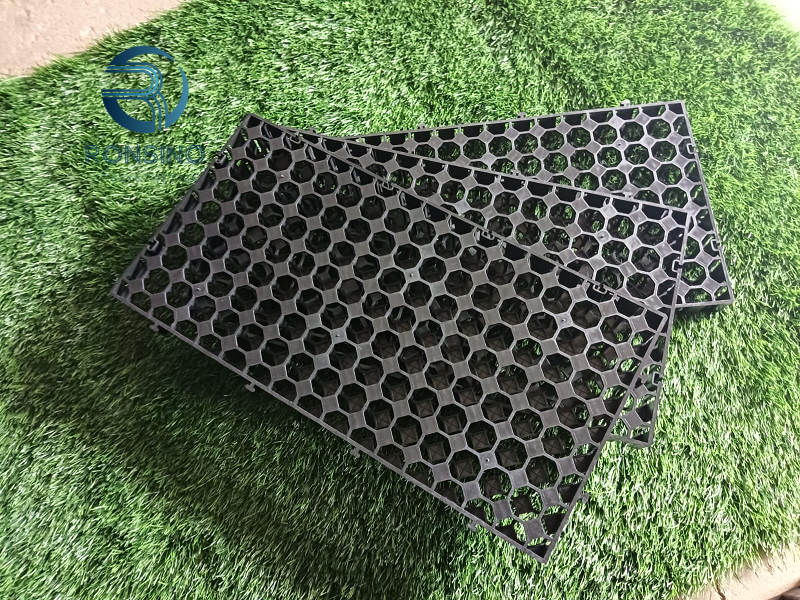
Drainage modules are made from high-density polyethylene (HDPE) or polypropylene (PP) resin through a heat-pressing process, precision molded into interlocking geometries and covered with non-woven geotextile to create a porous drainage network that stabilizes the foundation and controls moisture.
The system is widely used in green roofs, rainwater management, underground waterproofing, ecological filtration, underground pipes, surface waterways, sports lawns and other fields. When installed, the modules are fixed to the foundation, floor or roof, and can withstand the static load of the upper concrete and dynamic stresses such as mechanical operation and material handling.
Its advantages are: it replaces traditional cement and reduces material and labor costs; its open structure ensures smooth hydraulic flow and prevents clogging; it is detachable and recyclable with minimal post-maintenance, saving long-term expenses; it is compatible with a variety of landscape designs and is in harmony with the environment; it also reduces land degradation and promotes sustainable development.
Drainage modules have become the preferred solution for high-performance hydrological projects due to their sophisticated design, high strength and environmental friendliness.
3.Main advantages of Drainage Cell Panels
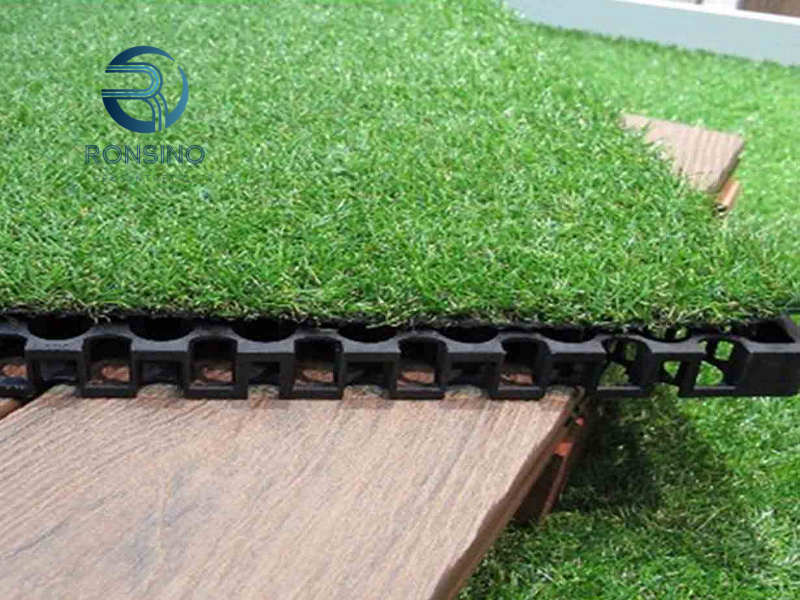
The drainage unit module provides a comprehensive solution for efficient water resources management, structural protection and construction performance improvement. Its versatility, high strength and easy installation make it an ideal choice for a variety of applications. Drainage unit modules offer several significant advantages, making them a highly regarded option in a variety of engineering applications.
3.1 Efficient Water Discharge
The integration of Drainage Cell Blocks ensures swift and proficient rainwater evacuation. This substantially diminishes or completely eradicates hydrostatic stress exerted upon the waterproof membrane. The dynamic water management mechanism inherent in drainage cells significantly enhances the efficacy of waterproofing performance.
3.2 Versatile Functionality of Drainage Cell Block
When combined with geotextile, Drainage Cell Block offer multiple functions such as drainage, waterproofing, ventilation, moisturizing, and partitioning. This versatility allows for comprehensive solutions in various construction scenarios.
3.3 Lightweight and High Strength of Drainage Cell Block
Drainage Cell Block are lightweight, making them easy to handle and transport. Despite their light weight, they possess high structural strength, ensuring durability and stability in demanding conditions.
3.4 Moisture Insulation and Heat Insulation
Drainage Cell Block's intricate design features numerous support points, establishing an air-filled void between the exterior cladding and the underlying substrate. This strategic configuration delivers effective moisture control, efficient water evacuation, and thermal regulation, thereby significantly improving the building's functional efficiency and durability.
3.5 Protection of Structural and Waterproof Layers
One of the primary advantages of Drainage Cell Block lies in their exceptional capacity to safeguard the foundational strata and the moisture barrier within a building endeavor. Through the mitigation of harm to these indispensable components, the durability and soundness of the structure and its corresponding waterproofing mechanism are upheld.
3.6 Effective Water Discharge
The architecture of the Drainage Cell Block incorporates both prominent and subtle anchoring points positioned along its periphery. These connecting elements are engineered to mesh seamlessly with adjacent units, establishing an uninterrupted gradient. This structural methodology ensures rapid and effective removal of surplus fluid, maintaining optimal performance even during substantial inflow scenarios.
3.7 Simple Construction and Transportation
Drainage Cell Block are designed for ease of use in construction projects. They are simple to install and transport, saving time and effort during the construction process.
Drainage cell stands as a prevalent geotechnical solution engineered specifically for effective water diversion purposes. Comprising lightweight, three-dimensional panels, these components are securely affixed to subterranean structures—such as basement exteriors or foundational elements—to facilitate optimal groundwater control. Each drainage cell is meticulously crafted with a smooth rear surface, establishing a durable, unobstructed void between the concrete slab and the surrounding earth. In contrast to the limited interstitial spaces provided by geocells, the generous cavity inherent to drainage cells ensures markedly superior hydraulic performance. The overlying soil exerts sufficient pressure to maintain the drainage unit’s fixed position.
4.Construction Steps of Drainage Cell Panels
The site needs to be cleared and leveled, and the slope of the outdoor garage and roof garden should be maintained at 2-5‰. Permeable pipes can be installed on roof greening, and the water flow from the drainage unit must be smoothly connected to the sewage or municipal pipe network.
The basement floor needs to be anti-seepage, and the elevation is higher than the basic structure. When laying the drainage unit, the circular boss should face downwards, and blind ditches should be set up around it to allow seepage water to flow through the gaps and merge into the blind ditch to the water collection well. The wall needs to be anti-seepage. It can be placed against the drainage unit outside the main wall, and a protective layer can be built on the outside. The seepage water will flow directly into the blind ditch and the water collection well.
When laying the drainage unit, ensure that there are no debris (cement, yellow sand, etc.) in the gap to keep drainage smooth. After laying, backfilling (on the ground and outdoor garages) or protecting the waterproof layer (basement and interior walls) should be carried out in time to prevent damage from strong winds or external forces. Use clay soil for backfill. If there is nutrient soil or light soil, there is no need for a yellow sand layer. When laying, support points or bottom overlaps can be reserved and covered with geotextile to ensure that no soil blocks the water conduction channel to maintain smooth drainage.
5.Case Study of Drainage Cell Block for Stadium Roof Project in Switzerland
Construction location – Switzerland
Products used – 30mmX500mmX500mm PP Drainage Cell Block
Construction area –8000 square meters
Application project – Roof drainage system of indoor stadium
6.About RONSINO
Since its establishment in 2007, RONSINO has been committed to providing one-stop geosynthetic materials products and solutions to global customers. RONSINO has supplied a variety of highly efficient and technologically advanced geomembranes, geotextiles, geocells, bentonite waterproof blankets (GCLs), drainage slabs and geogrids to more than 81 countries. RONSINO not only produces high-quality geosynthetic materials, but also provides professional design and installation services. At the same time, we support original equipment manufacturing (OEM), original design manufacturing (ODM), and customized development and processing services. If you have any questions or needs, please feel free to contact us.


