Filament Polyester Geotextile Solutions for Highway Construction in Australia
CASE · 2026-01-23 · 0 views
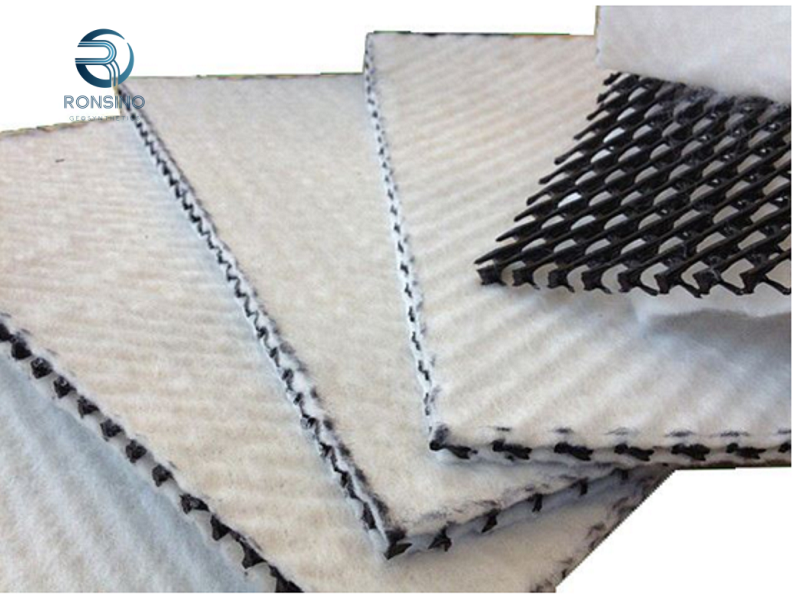
Filament soil - stabilizing fabric (continuous - filament geotextile), a permeable non - woven geotextile, is made by extruding and consolidating 100% pure polyester or polypropylene filaments, then needle - punched and thermal - bonded for a stable network with reliable dimensional stability.It has high tensile strength, significant elongation, perfect uniformity, damage resistance and excellent filtration.Made of high - quality raw materials and stabilizers via an optimized process, it has uniformly distributed three - dimensional physical properties. Ideal for separation and protection in geotechnical projects (e.g., road or foundation construction) to separate layers and protect underlying structures from stress - related damage.
Benefit
Polyester filament geotextiles are made through polyester filament molding and consolidation processes. The fibers have a three-dimensional structure. They are innovative building materials and are widely used in the fields of geotechnical and civil engineering. It has excellent mechanical strength, excellent drainage capacity, good elongation, excellent chemical properties, high resistance to biological erosion, strong acid and alkali resistance, and anti-aging properties. It has a wide range of pore sizes, tortuous pore distribution, good permeability and filtration performance, light texture, good continuity, convenient construction, high tensile strength and corrosion resistance.
Issue
Traffic determines the speed of a country’s logistics and transportation, which in turn determines a country’s economic development. In construction, highway subgrade is one of the important parts of road. As the key link of pavement engineering, it usually needs to bear loads of different weights and needs to have a certain load force. As an important part of the road, the subgrade is the foundation of the pavement structure and bears various loads from the road surface. The construction quality of the roadbed directly affects the quality of the road surface, affects the service life of the entire road surface, and further affects the safety of traffic and people. At the same time, extending the service life of roads is also a very important issue. A client from the Australia wanted to build a highway that goes from the countryside to the city. Therefore, in the process of road construction, there are high requirements for the tensile strength and bursting strength of the material such as geotextile, and considering the cost, the material also needs to be cost-effective.
Solution
1) Inspection and product recommendation. After confirming the construction environment with local engineers, RONSINO recommended 270gsm polyester filament geotextile to the customer.
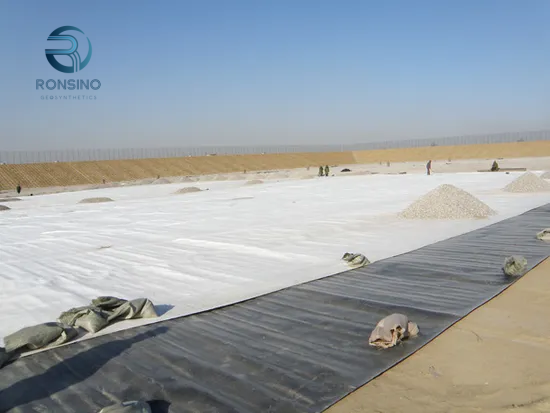
2) Laying method. Before laying expressway ground stabilization fabric, the smoothness of the working surface should be ensured. Generally pay attention to the following points.
The seam must intersect the slope line;
Where there is balance with the slope foot or where there may be stress, the distance between the horizontal joints must be greater than 1.5m;
On the slope, anchor one end of the geotextile, and then put the coil down on the slope to ensure that the geotextile is kept in a taut state;
All geotextiles must be held down with sandbags that will be used during layup and retained until the top layer of material is laid.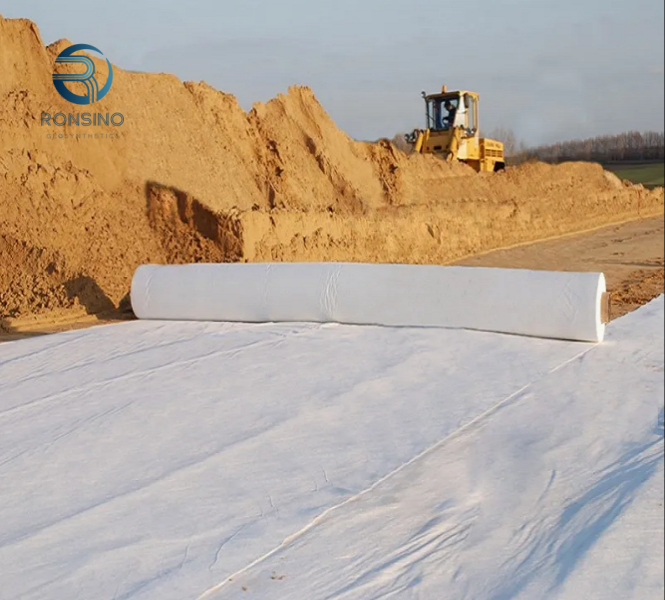
The method of ground stabilization fabric laying on the highway is as follows.
Use manual rolling; the ground stabilization fabric surface should be flat, and the deformation allowance should be properly reserved. The installation of filament geotextiles is usually done by overlapping, sewing and welding. The width of stitching and welding is generally more than 0.1m, and the width of lap joint is generally more than 0.2M. Geotextiles that may be exposed for a long time should be welded or sewn.
Sewing of geotextiles. All stitching needs to be done continuously (for example, point stitching is not allowed). Before overlapping, the geotextile must overlap more than 150mm. Small stitches should be at least 25mm from the selvage (exposed edge of the material); sewn geotextile seams include 1 row of chain stitches with a wired lock. The thread used for sewing should be a resin material with a small tension exceeding 60N, and have chemical resistance and light resistance equivalent to or exceeding that of geotextiles. Appropriate measures must be taken to prevent soil, particulate matter or foreign matter from entering the geotextile layer after installation.
During the construction, the longitudinal edges of the geotextile are naturally lapped. In the case that the hot-bonded connection cannot be performed in wet (rain and snow) weather, the geotextile should adopt another method—the stitching method, that is, use a special sewing machine for double stitching. The connections are sutured with chemical UV-resistant sutures. The small width is 10cm when sewed, and 20cm when the natural overlap.
For the stitching, the same quality suture as the geotextile should be used, and the suture should be made of a material with stronger resistance to chemical damage and ultraviolet light irradiation.
After the geotextile is laid, the geomembrane shall be laid after the approval of the on-site supervision engineer.
Case study of Filament Polyester Geotextile Solutions for Highway Construction in the Australia
Total Filament Polyester Geotextile Quantity- 80,000 square meters
Grams Weight–270gsm
Each Roll Size–5m*100m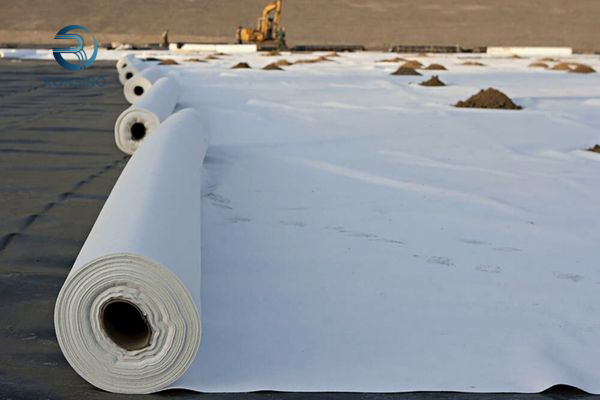
Summary
RONSINO filament polyester geotextile is the best choice for road construction, especially the good physical and chemical properties of causeway construction provide more guarantee for construction. Laying with 270gsm geotextile can achieve the best input-output ratio. The construction of highways is one of the most common uses of our polyester filament geotextiles. This cooperation with the local project in the Australia allows us to lay the ground With a deeper understanding of applications, our professional knowledge is constantly improving, and we look forward to cooperating with you all over the world!
About RONSINO
RONSINO manufactures and wholesales many types of effective and states of the art geotextile, geomembrane, and other geosynthetics to over 36 countries. RONSINO geosynthetic products are widely used across a variety of industries including waste containment, water containment, aquaculture, industrial project, energy project and mining projects, etc. RONSINO main customers are from Australia, France, Sweden, UK, Hungary, New Zealand, Poland, Mexico, Ecuador, Brazil, Pakistan, Bangladesh, Thailand, Vietnam, Malaysia, Indonesia, Singapore, Australia, Sri Lanka, India, UAE, Saudi Arabia, Qatar, Kenya, etc.
RONSINO is not only manufacturing best quality geosynthetic products but also providing professional design and installation service. OEM, ODM, custom development and fabrication are also available. If you have any questions or inquiries, please fill and submit the following form, we will reply as soon as possible.