HDPE Fish Farm Pond Liner Material for Shrimp Farming Project in Malawi
CASE · 2025-12-17 · 0 views
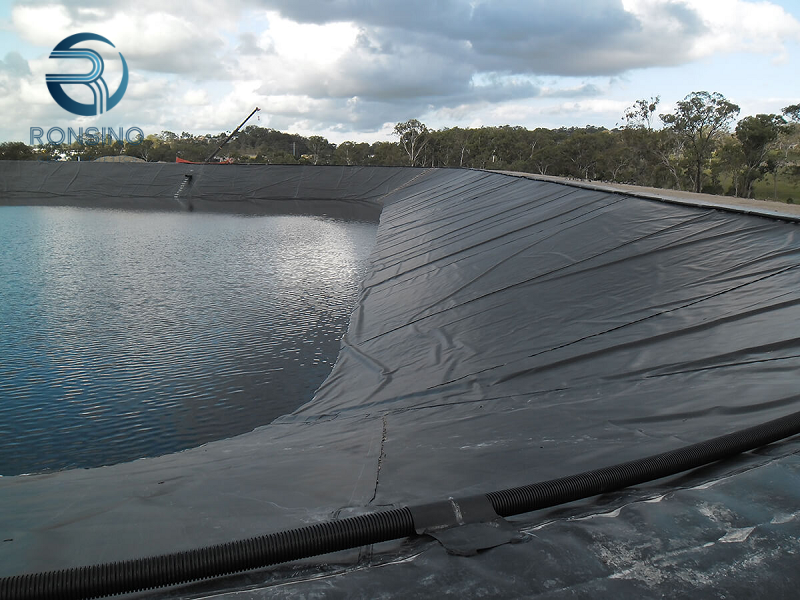
Crafted from premium high-density polyethylene (HDPE) resins, HDPE fish farm pond liners incorporate 2%–3% carbon black along with anti-oxidation, anti-aging and UV-stabilizing additives. The production process adopts top-tier automated manufacturing equipment paired with a three-layer compression molding technology to yield the finished products.Ideal for large-scale applications demanding resistance to ultraviolet radiation, ozone and chemical corrosion, as well as those requiring high-standard installation, this HDPE pond liner material stands out as a superior solution. As a cost-efficient choice for exposed lining projects, HDPE geomembrane pond liners are extensively utilized across a broad spectrum of fields, including aquaculture, solid waste containment, mining operations, water storage systems and biogas digester construction.
Here’s another plagiarism-reduced version with varied wording and a more streamlined structure, while keeping the core message intact:
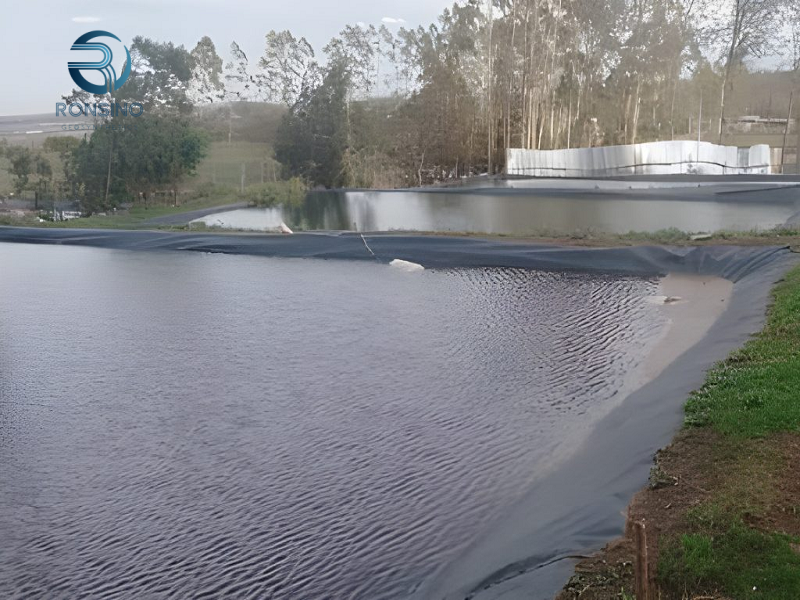
HDPE fish farm pond liners are pivotal to achieving full water retention, structural safeguarding, and ecological wellbeing in both shrimp and fish rearing ponds. Recognized as the top choice lining material for aquaculture pond projects, HDPE geomembrane liners act as the essential structural foundation of shrimp and fish farms, solidifying their standing as the premium pond lining solution.
The benefits of HDPE geomembrane liner for shrimp farming
This system delivers exceptional stability. Unlike direct pond excavation, the adoption of HDPE fish farm pond liners enhances the structural stability of pond slopes significantly. It effectively mitigates threats posed by natural elements including wind, rainfall, and wave action, preserving the designed stability of the aquaculture system and preventing the loss of farmed stock caused by environmental damage to the pond.
Furthermore, the deployment of HDPE geomembranes enables the construction of ponds with steeper slopes and greater depth, which indirectly boosts aquaculture yields. The robust stability of this liner system also cuts down on routine pond maintenance work and reduces earthwork-related costs substantially.
This solution also helps boost aquaculture yields. With geomembrane liners in place, the pond bottom remains free of weeds, sludge and other debris that would otherwise hinder harvesting efficiency. As a result, the fishing process becomes far more streamlined: harvesting time is cut down significantly, while the vitality and freshness of the harvested fish and shrimp are greatly improved.
This solution also minimizes disease-related risks. After laying HDPE fish farm pond liners, the survival and propagation conditions for harmful bacteria in the pond are significantly compromised, thereby fostering the healthy growth of fish and shrimp stocks.Thanks to the liner’s barrier effect that isolates direct contact between soil and pond water, soil-borne chemicals and pathogens are prevented from seeping into the aquaculture water body, which lowers the likelihood of disease outbreaks and transmission. In essence, the application of HDPE geomembranes cuts down on aquaculture medication costs, while also mitigating the risk of large-scale mortality among fish and shrimp caused by infectious diseases.
Pond Maintenance SimplificationThe installation of impermeable geomembrane liners simplifies pond cleaning procedures significantly. What’s more, it also facilitates the deployment of efficient drainage systems for water exchange and pond flushing inside the aquaculture area.
Faster Breeding CyclesThanks to the application of HDPE fish farm pond liners, both pond cleaning and harvesting work become much more convenient, cutting down considerable time and labor costs. This efficiency boost helps shorten the turnaround time of aquaculture operations, which indirectly increases overall yields. Additionally, the use of such liners expands the range of optional sites for setting up fish or shrimp farms.
Case Study
Destination – Malawi
Product – 0.5mm Geomembrane
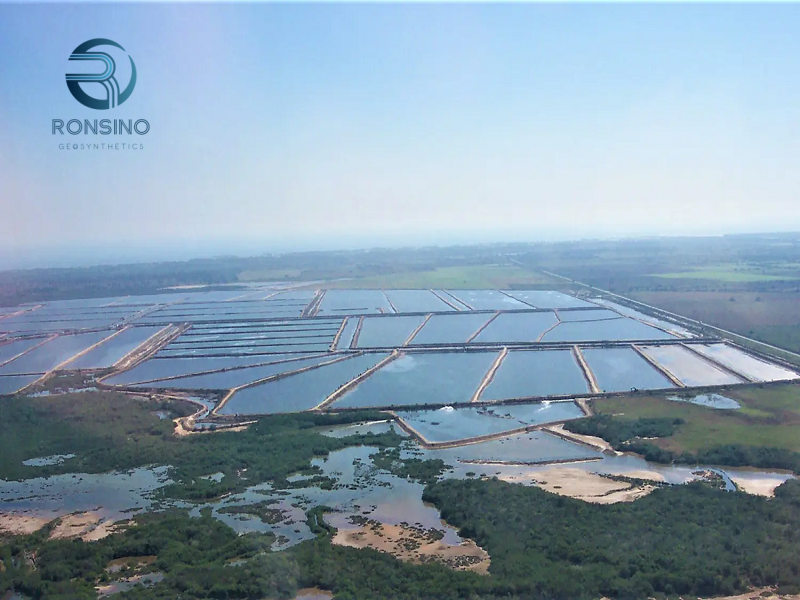
Usage – Shrimp farming
Issue
In Malawi, shrimp farming is predominantly practiced in coastal regions, where brackish or seawater is readily available to supply the ponds. The coastal land itself is mostly swampy or sandy, and may occasionally feature organic soil compositions. This type of terrain is unsuitable for crop cultivation or plantation farming, which also makes it relatively inexpensive to procure.Yet using such soils for pond construction poses several challenges: ponds built on pyrite-containing grounds (potentially acid sulfate or active acid sulfate soils) can develop low pH levels, which are detrimental to shrimp farming. Ponds established in sandy soils suffer from poor water retention capacity, while organic soils fail to support stable dike structures and require high oxygen levels to maintain viability. In addition, the low-lying topography of these coastal areas makes it difficult to drain and dry the ponds thoroughly after harvesting. Incomplete drying of pond beds will lead to gradual deterioration after several rounds of shrimp farming, which in turn causes stress to the shrimp and increases the likelihood of disease outbreaks.
Solution
A shrimp farming client based in Malawi was plagued by the aforementioned aquaculture challenges. Following in-depth consultations with our company, we recommended that the client adopt 0.5 mm or 0.75 mm HDPE fish farm pond liners for their ponds.This liner solution creates a reliable barrier that isolates pond water from the underlying soil, and it boasts excellent durability with high resistance to tearing and breakage. Beyond this core function, HDPE geomembrane liners can effectively prevent weeds, sludge and other obstructive contaminants from infiltrating the pond. They also help reduce the presence of harmful bacteria in the aquaculture environment, thereby cutting down on the need for antibiotic usage. In addition, the liners offer robust protection against slope erosion, while also simplifying routine pond maintenance and enabling the rapid removal of sediment and waste deposits.We provided the client with samples of both 0.5 mm and 0.75 mm HDPE pond liners for performance testing. After evaluating the test results, the client expressed high satisfaction with the product quality. Eventually, they placed an order for the 0.5 mm geomembrane to outfit their shrimp ponds. Our technical team further supported the client by offering professional advice and on-site guidance for the proper installation of the HDPE liners.
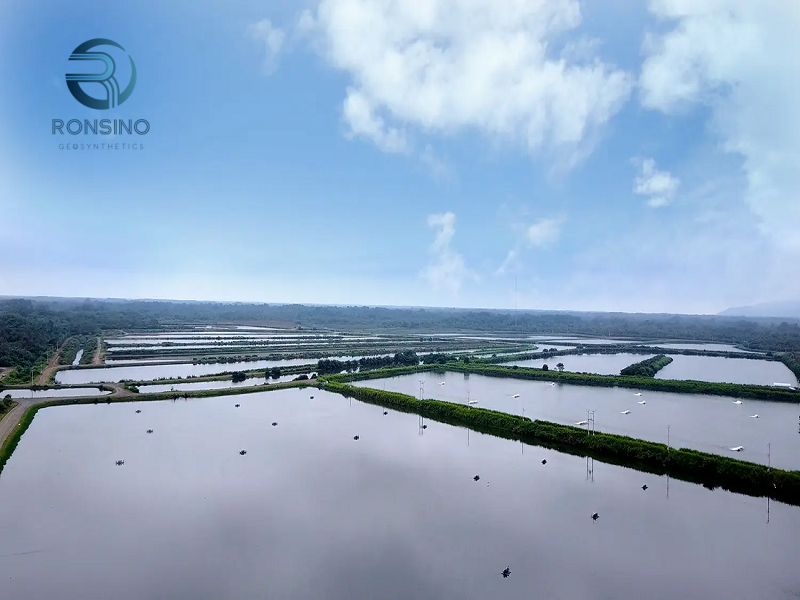
Specifications of HDPE Fish Farm Pond Liner Material for Shrimp Farming Project in Malawi
HDPE Geomembrane Liner thickness–0.5mm
Total Quantity–40,000 square meters
Each roll Size–7m*150m
Technological characteristics of geomembrane pond liner used in shrimp ponds
HDPE fish farm pond liners boast excellent flexibility, which allows them to meet the anti-seepage requirements of diverse projects. They also feature strong operability, straightforward construction procedures, and low mechanical equipment investment.
This liner solution offers the dual advantages of low costs and high economic returns. According to practical calculations, compared with conventional anti-seepage techniques such as reinforced concrete integral waterproofing and clay waterproofing, the adoption of this HDPE liner process can reduce project costs by approximately 30% to 50%.
In addition, the raw materials of HDPE fish farm pond liners are fully eco-friendly. Its anti-seepage mechanism relies on simple physical effects rather than chemical reactions, so it does not generate any harmful substances during application.
The product also has a high anti-seepage coefficient, and can effectively adapt to the uneven settlement of the base layer. When used in non-exposed (no direct sunlight) conditions, it enjoys an extended service life, ranging from 30 to 50 years.
Furthermore, the construction process of HDPE pond liners is efficient, enabling rapid progress on project sites.
About RONSINO
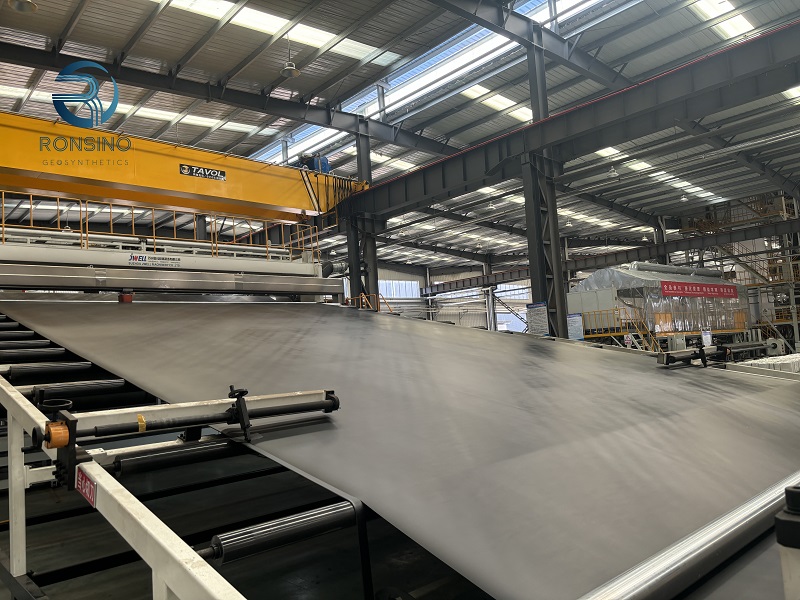
Founded in 2007, RONSINO has been dedicated to providing a full range of geosynthetics products and tailored solutions to clients across the globe. Over the years, the company has supplied a diverse array of high-performance, cutting-edge geosynthetic materials—including geomembranes, geotextiles, geocells, geosynthetic clay liners (GCLs), drainage boards and geogrids—to customers in more than 81 countries.Its core client base spans a wide spectrum of regions, covering nations such as Australia, France, Sweden, the UK, Mexico, Malawi, Brazil, Pakistan, Bangladesh, Thailand, Vietnam, Malaysia, Indonesia, Singapore, the Philippines, Sri Lanka, India, the UAE, Saudi Arabia, Qatar, Kenya, Ghana, Ethiopia, Somalia, Nigeria, South Africa and Eswatini, as well as the Hong Kong region of China.
RONSINO is not only manufacturing best quality geosynthetic products but also providing professional design and installation service. OEM, ODM, custom development and fabrication are also available. If you have any questions or inquiries, please fill and submit the following form, we will reply as soon as possible.