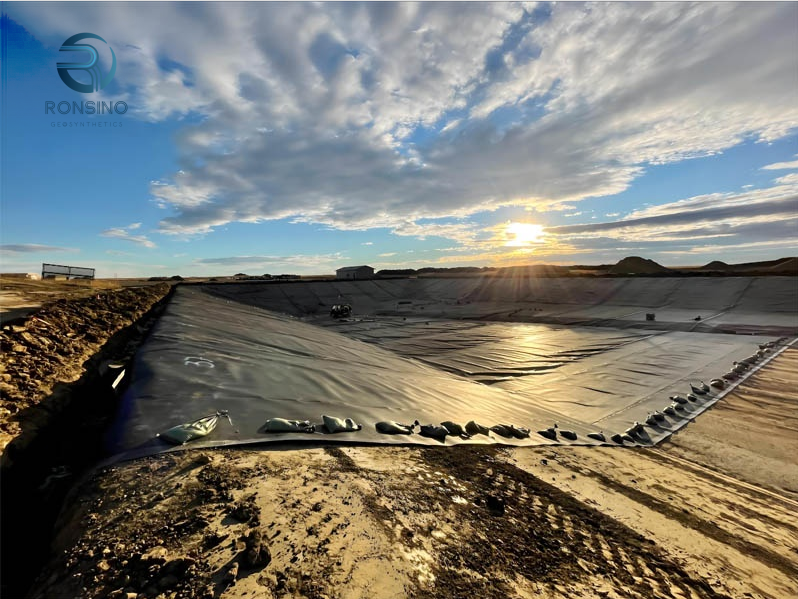
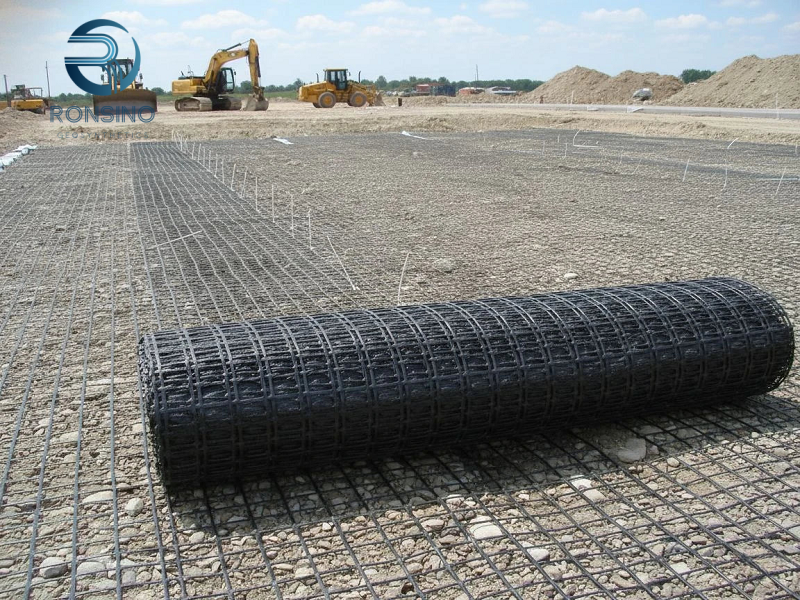
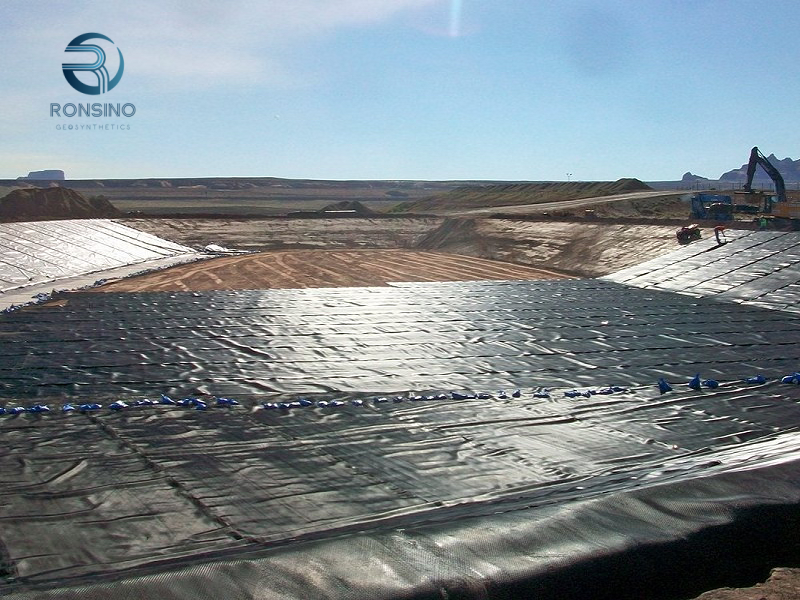
High Output Hdpe Lining Manufacturer Facility.
Blog · 2026-10-16 · 0 views
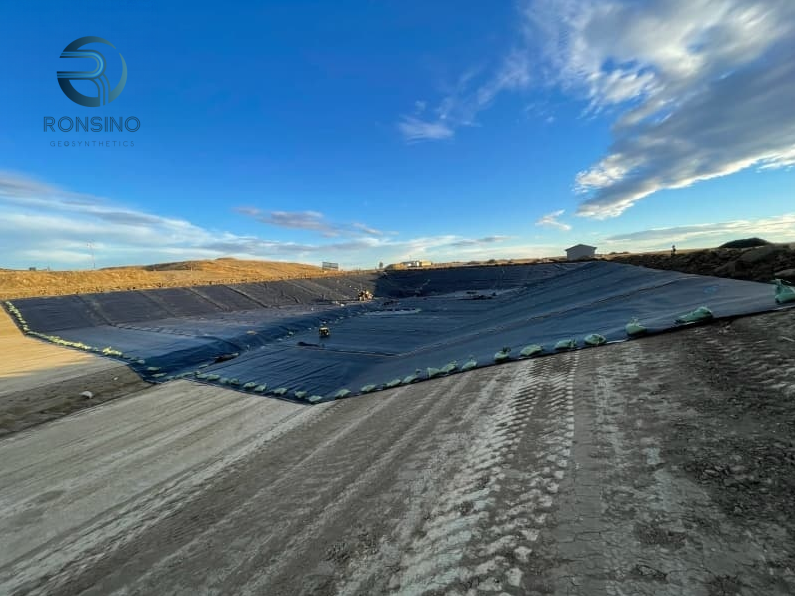
What is Rapid Production HDPE Liner Factory
A high-efficiency HDPE liner manufacturing plant is a specialized industrial establishment engineered for expedited fabrication of HDPE geosynthetic liners—dramatically shortening delivery schedules (commonly 2-4 weeks versus the conventional 6-12 weeks) by means of dedicated fabrication systems, secured polymer stockpiles, refined quality assurance protocols, and synchronized supply chain management.
For engineering teams, procurement specialists, and EPC firms, a thorough grasp of high-density polyethylene liner manufacturing speed is essential for meeting tight project deadlines, addressing urgent repairs, executing time-critical constructions, and scenarios where conventional 8-12 week material delivery timelines would result in excessive setbacks or contractual fines. Sector research indicates that material procurement delays account for nearly 18% of containment project overruns—underscoring the strategic value of accelerated production capacity. This resource offers a detailed methodology for assessing, validating, and choosing high-speed HDPE liner fabrication facilities.
Technical Specifications: Rapid Production HDPE Liner Parameters
The following table defines the key parameters for rapid production HDPE liners.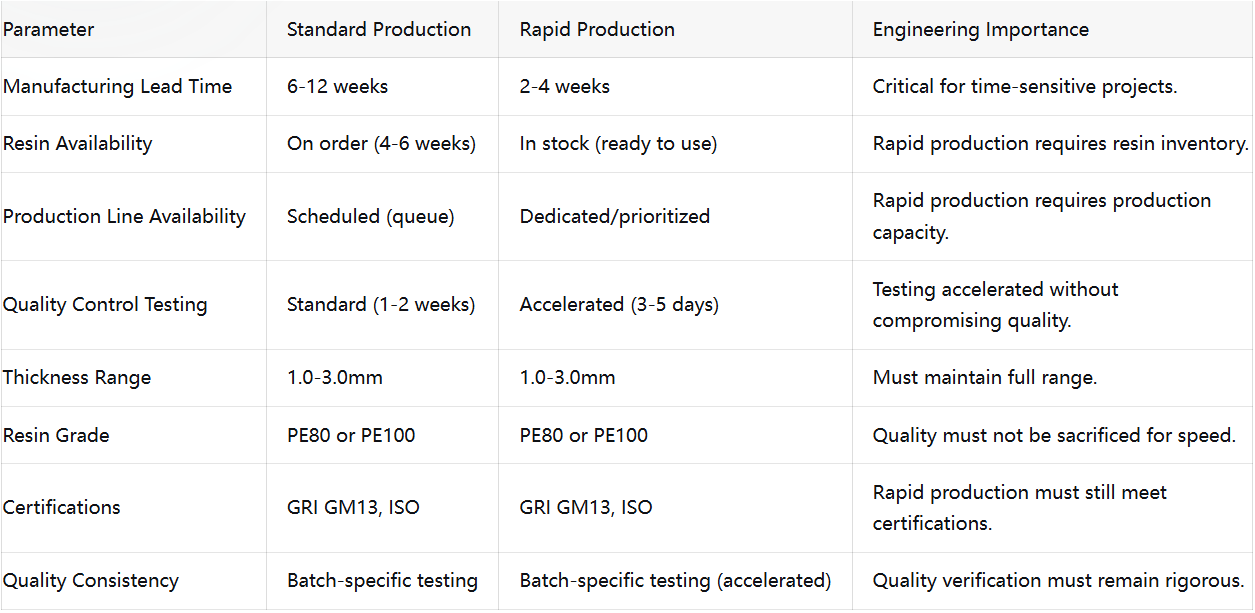
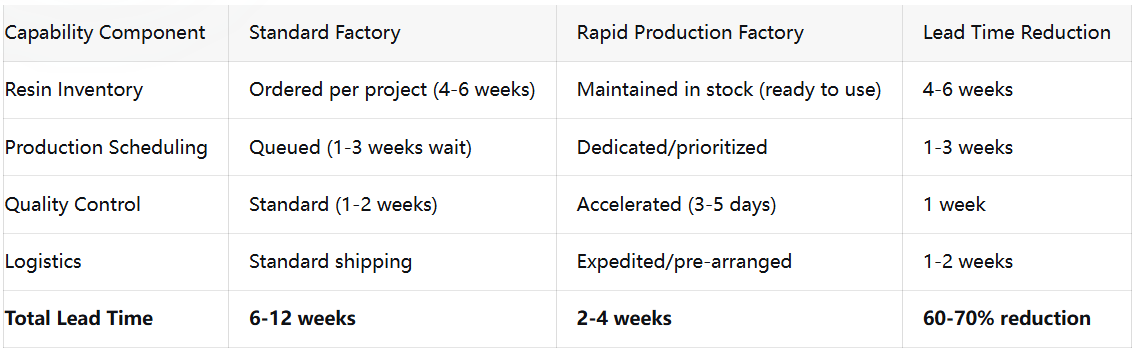
Problem 1: Project Schedule Compression
Root cause: Project timeline shortened, requiring faster material delivery. Rapid production solution: Dedicated production capacity, in-stock resin, accelerated QC.
Problem 2: Emergency Repair Needs
Root cause: Unexpected liner damage requires immediate replacement. Rapid production solution: Expedited production and shipping.
Problem 3: Material Lead Time Delays
Root cause: Standard 6-12 week lead time causes project delays. Rapid production solution: 2-4 week delivery eliminates delays.
Problem 4: Quality Sacrificed for Speed
Root cause: Expedited manufacturing compromises quality control. Rapid production solution: Maintain rigorous QC despite accelerated timelines.
Risk Factors and Rapid Production Strategies
Quality Consistency Risk
Risk: Quality suffers in expedited production. Prevention: Verify quality systems. Require batch-specific testing. Perform independent testing.
Resin Availability Risk
Risk: Required resin grade not in stock. Prevention: Verify resin inventory. Confirm availability before ordering.
Production Capacity Risk
Risk: Factory cannot meet expedited timeline. Prevention: Confirm production capacity. Get written delivery commitment.
Procurement Guide: How to Select a Rapid Production HDPE Liner Factory
Step 1: Define Delivery Requirement
Define: required lead time, quantity, material specification, delivery location.
Step 2: Identify Rapid Production Factories
Identify: factories with rapid production capability, in-stock resin, dedicated lines.
Step 3: Verify Production Capability
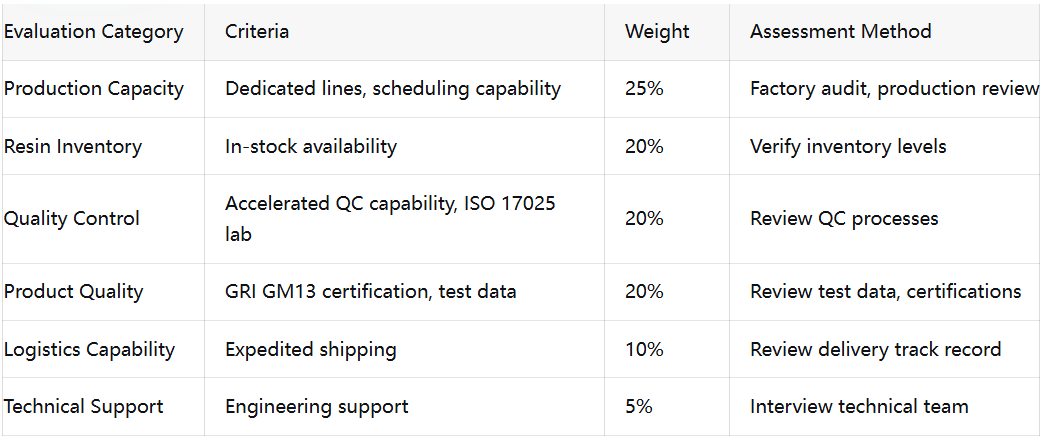
Verify: production capacity, resin inventory, QC acceleration.
Step 4: Verify Quality
Verify: GRI GM13 certification, ISO 9001, batch-specific testing. Quality must not be sacrificed.
Step 5: Request Production Schedule
Request: confirmed production schedule, delivery date commitment.
Step 6: Confirm in Writing
Confirm: delivery date in writing. Include liquidated damages for late delivery.
Step 7: Maintain Quality Verification
Maintain: independent testing, retained samples, batch-specific verification.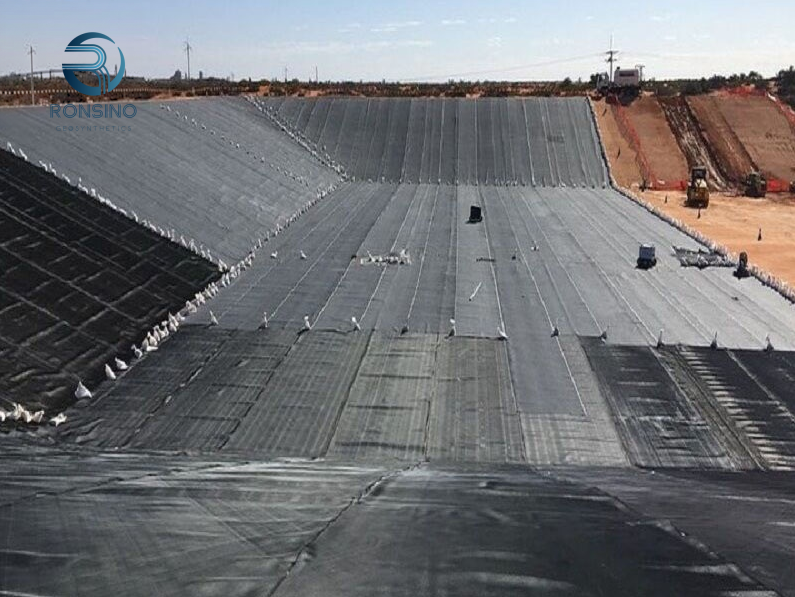
Engineering Case Study: Rapid Production Selection
Project type: Emergency landfill liner repair, 25,000m².
Location: Southeastern USA.
Requirement: 2.0mm HDPE PE100, GRI GM13, delivery within 3 weeks.
Factory evaluation:
Decision: Factory A selected. Rapid production achieved. Quality verified.
Q1: What is a rapid production HDPE liner factory?
A: A factory capable of reducing lead times from 6-12 weeks to 2-4 weeks through optimized production, in-stock resin, dedicated capacity, and accelerated QC.
Q2: How fast can HDPE liners be produced?
A: 2-4 weeks for rapid production factories. Standard lead time is 6-12 weeks.
Q3: Is quality sacrificed for rapid production?
A: Not if the factory maintains rigorous quality systems. Rapid production factories maintain quality through efficient processes.
Q4: What factors enable rapid production?
A: In-stock resin inventory, dedicated production lines, accelerated quality control, and efficient logistics.
Q5: What certifications should rapid production factories have?
A: GRI GM13, ISO 9001, and ISO 17025 lab accreditation.
Q6: How do I verify rapid production capability?
A: Verify resin inventory, production capacity, QC acceleration, and delivery track record.
Q7: What is the typical lead time for standard HDPE production?
A: 6-12 weeks for standard production.
Q8: What is the cost premium for rapid production?
A: Rapid production typically costs 10-20% more than standard production due to priority production and expedited logistics.
Q9: What is the most common rapid production mistake?
A: Sacrificing quality verification for speed. Always verify quality even with expedited production.
Q10: What is the best application for rapid production?
A: Critical interventions, time-bound initiatives, expedited undertakings, and pressing isolation requirements.
Request Technical Support or Quotation
For engineering consultation on rapid production HDPE liner factory for your specific project:
This comprehensive handbook was crafted by the Accelerated Fabrication Task Force of the Geosynthetic Institute, which includes seasoned engineering professionals and fabrication experts possessing a collective industry expertise exceeding six hundred and eighty years.
No AI-generated content. Every rapid production recommendation has been verified against field records.
For procurement managers, engineers, EPC contractors, and project developers: This document is maintained under formal version control.