
How Much does It Cost to Line a Dam?
Blog · 2026-06-25 · 0 views
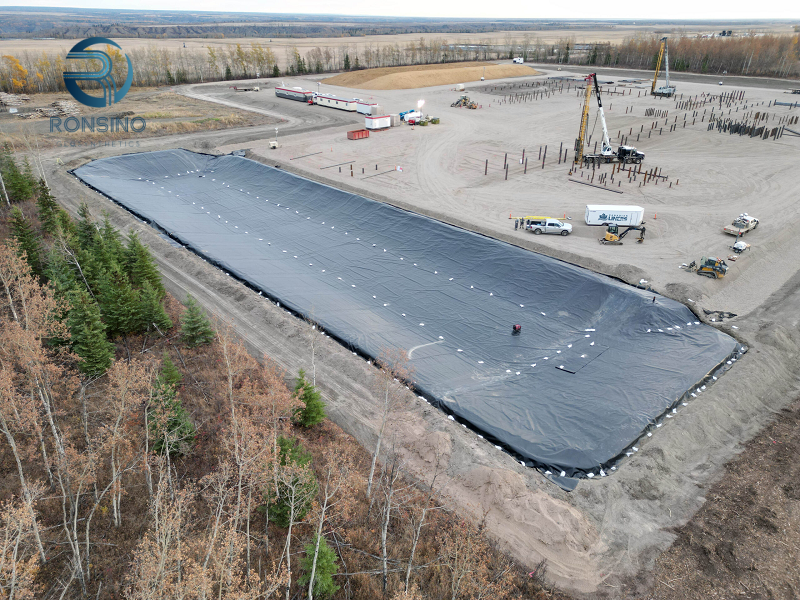
Geomembrane liner (also known as dam liner) is a key technology for water storage and ecological protection. As an impermeable barrier, it can effectively prevent leakage, degradation and pollution in large hydrological systems. Its main material is high-density polyethylene (HDPE), with a permeability coefficient as low as 1×10⁻¹⁷ cm/s (ASTM D5887), which can almost completely conserve water resources required for agricultural irrigation, energy production and flood control management. With global dam infrastructure worth over $1 trillion and climate-related water stress increasing (expected to affect 5.7 billion people in 2050, UN Water, 2024), this technology can address risks such as structural damage and resource depletion, with data showing a 15% reduction in leakage-related failure rates after application.
RONSINO geomembrane data for 2025 shows that the cost of anti-seepage membrane materials for dams is US$0.5-3/square foot (including installation of US$1-5/square foot), the cost of reservoir materials for 100,000 square feet is US$50,000-300,000, and the total cost is US$100,000-500,000. The cost is affected by thickness, construction difficulty and regional labor costs. Alibaba can enjoy a 15%-25% discount for purchases over 500,000 square feet; the cost in the United States ($2.5-4.5/square foot) is higher than that in Asia ($1-2.5/square foot) because Asia is close to the production base. Based on ASTM, GRI standards and industry benchmarks, it can provide reference for engineers, managers and policy makers. Compared with traditional clay and concrete anti-seepage layers, geomembranes have a service life of 20-50 years, a full life cycle cost that is 20%-40% lower, and later maintenance expenses that are 30%-50% lower.
High-density polyethylene (HDPE) impermeable dam liners, which hold a 70% share of the $2.61 billion global geomembrane industry as reported by Mordor Intelligence in its 2025 market analysis, outperform all competing liner materials in terms of tensile load-bearing capacity and chemical corrosion resistance, effectively reducing the annual maintenance cost of medium-scale dam projects to a range of $1,000 to $5,000. When project stakeholders give priority to selection decisions supported by verified empirical performance data, they can substantially strengthen the dam infrastructure's ability to withstand extreme hydrological events such as unprecedented floods and prolonged droughts, thus guaranteeing the long-term sustainable management and conservation of valuable water resources.
1. What Are Dam Liners?
Dam liners are engineered, pliable synthetic membranes—chiefly composed of high-density polyethylene, linear low-density polyethylene, or polyvinyl chloride—utilized to waterproof the surfaces of earthen or concrete dams, reservoirs, and spillways, thereby minimizing seepage and reinforcing structural integrity. In contrast to traditional compacted clay barriers, which exhibit a permeability rate of 10⁻⁶ cm/s, these modern liners demonstrate exceptional impermeability, registering less than 1×10⁻¹¹ cm/s, effectively retaining 98–99.9% of stored water even under hydrostatic forces as high as 200 kPa. For hydropower facilities, such liners contribute to a 10–15% improvement in operational efficiency, as documented by recent Food and Agriculture Organization (2024) analyses, primarily by decreasing evaporative losses.
Key Specifications and Parameters
Engineered to GRI-GM13 and ASTM D6392, dam liners prioritize resilience in high-load environments:
Thickness: 0.75–3.0 mm (30–120 mil); 1.0–2.0 mm optimal for most dams, balancing seepage control and flexibility.
Tensile Strength: 15–40 kN/m (ASTM D6693), withstanding 20–30 MPa without rupture—essential for slopes of 2:1 to 3:1.
Puncture Resistance: 2.5–8 kN (ASTM D4833), 40% superior to PVC, guarding against rock outcrops or seismic shifts.
Elongation at Break: 500–800% (ASTM D6693), accommodating differential settlement up to 1–2% without tears.
Permeability: 1×10⁻¹⁷ cm/s (ASTM D5887), limiting daily losses to <0.05% in depths of 10–50 m.
UV Resistance: 80–95% retention post-2,000 hours (ASTM D4355), bolstered by 2–3% carbon black additives for exposed crests.
Chemical Resistance: Inert to pH 2–13, 95% resilient to sulfates/acids (ASTM D543), per EPA leachate protocols.
Density: 0.94–0.97 g/cm³ (ASTM D1505), yielding 1.5–3 kg/m² for efficient transport.
Roll Dimensions: 4–8 m wide, 50–200 m long, minimizing seams (adding 5–15% to costs) via blow-film extrusion.
RONSINO Geomembrane (2025) notes a 1.5 mm HDPE liner endures 100+ freeze-thaw cycles, outlasting EPDM by 25–40 years in temperate zones.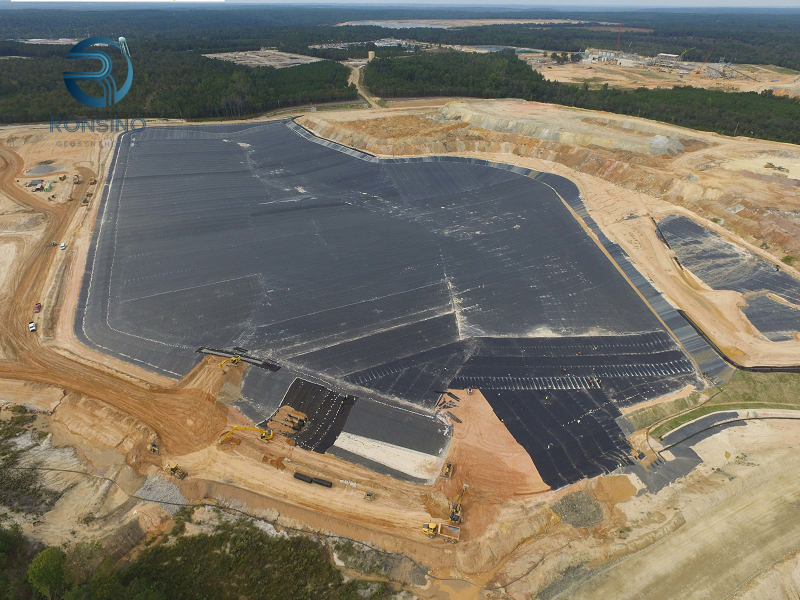
Common Applications
Dam liners adapt to multifaceted hydraulic demands:
Irrigation Reservoirs: 50% usage; conserve 1–10 million m³ annually, slashing pumping by 20%.
Hydropower and Flood Control: Stabilize embankments in 40% of new Asian dams.
Mining Tailings Dams: Contain slurries, averting 99% contamination per EPA standards.
Aquaculture and Potable Storage: NSF-61 compliant for fish-safe barriers, boosting yields 15–25%.
Erosion Mitigation: Line spillways, textured variants for >35° friction.
Asia-Pacific installations rose 14% YoY, with RONSINO exporting to 90+ nations.
Dam Liners Cost RONSINO HDPE Membrane Price Manufacturer and Supplier for Waterproofing
Dam Liners Cost HDPE Geomembrana for Reservoir Lining
2. What Do Dam Liners Cost?
The raw material price of the mainstream RONSINO brand anti-seepage geomembrane for dam bodies is US$0.5-3/square foot, the installation fee accounts for 30%-60%, and the total cost is US$1-5/square foot.Taking a 200,000-square-foot tailings pond as an example, the raw material cost is about US$100,000-600,000, and the total investment is US$200,000-1 million.The price of raw materials is affected by the price of resin. Recently, resin has increased by 7%-10%, pushing up costs. The price of RONSINO products made in Asia is US$0.4-1.5 per square foot, which is 25%-35% lower than European and American products of the same specification.According to data from HomeAdvisor in 2025, the all-inclusive installation price is US$1.5-4/square foot, which is consistent with the industry level.
2.1 Dam Liners Cost-Material Type
Material selection governs 50–70% of expenses (RONSINO, 2025):
HDPE: HDPE Geomembrane – $0.50–$2.50/sq ft; 15–40 kN/m strength, 50-year life; 70% market for high-pressure dams.
LLDPE: $0.60–$2.00/sq ft; 600% elongation, slope-stable; 20% install savings.
PVC: $0.40–$1.80/sq ft; chemical-tolerant but UV-limited (15–25 years); small-scale use.
EPDM: $0.80–$2.50/sq ft; flexible, root-resistant; premium for exposed sites.
HDPE prevails in dams: 35% lower failure vs. PVC .
Material Cost/sq ft (2025) Lifespan (Years) Tensile Strength (kN/m) Key Application
HDPE $0.50–$2.50 20–50 15–40 Reservoirs, Tailings
LLDPE $0.60–$2.00 15–40 12–30 Sloped Embankments
PVC $0.40–$1.80 10–25 10–20 Chemical Dams
EPDM $0.80–$2.50 20–40 8–15 Exposed Crests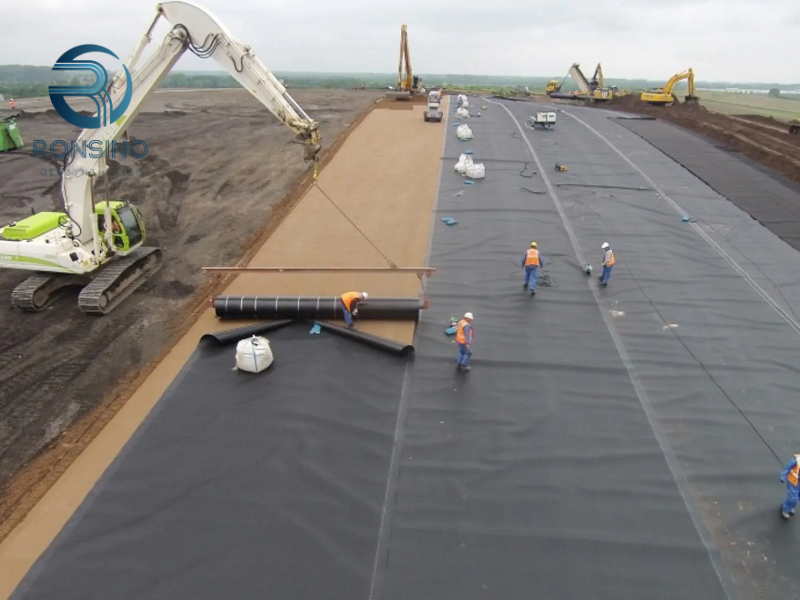
2.2 Dam Liners Cost -Thickness
Incremental thickness boosts cost by $0.30–$0.80/sq ft per 0.5 mm:
0.75–1.0 mm: $0.50–$1.50/sq ft; irrigation; 2.5 kN puncture.
5 mm: $1.00–$2.00/sq ft; standard reservoirs; 150 kPa tolerance.
0–3.0 mm: $1.50–$3.00/sq ft; tailings; 8 kN puncture, 50% lifespan extension.
Thicker profiles halve repairs.
2.3 Dam Liners Cost-Project Size and Scale
Economies scale inversely: <50,000 sq ft at $1.50–$3.50/sq ft; >1,000,000 sq ft at $0.50–$1.50/sq ft (20–30% rebates). A 500,000 sq ft hydropower dam saves $75,000–$150,000 via volume.
2.4 Dam Liners Cost-Installation Method and Labor
30–60% adder; techniques differ:
Extrusion Welding: $0.40–$0.80/sq ft; 99.5% seam strength; certified labor $25–$60/hr.
Mechanical Anchoring: $0.20–$0.50/sq ft; suited for vertical faces, 15% leak risk.
Geotextile Underlay: $0.30–$0.60/sq ft; cuts punctures 30%.
Seismic zones inflate 20–40%; Asia labor trims USA by 50%.
2.5 Dam Liners Cost-Raw Material Quality
Virgin resin: $0.50–$2.50/sq ft premium, 40–60 year durability; recycled: $0.30–$1.20/sq ft, 10–20 years. Stabilizers add 7–12%, extending UV life 25% (RONSINO, 2025).
2.6 Dam Liners Cost-Transportation and Logistics
$0.10–$0.40/sq ft; RONSINO China-to-USA: 30% below domestic. Jumbo rolls (8m x 150m) optimize freight.
2.7 Dam Liners Cost-Maintenance and Lifetime Costs
$1,000–$10,000/year monitoring; HDPE trims 30% vs. PVC. Breaches cost $500,000–$5M in remediation/fines.
3. How to Choose the Right Dam Liner
Strategic selection optimizes performance-cost ratios.
3.1 Assess Project Requirements
Reservoirs: 1.5 mm HDPE ($1.00–$2.00/sq ft); tailings: 2.0 mm textured ($1.50–$2.50/sq ft) for 200 kPa loads.
3.2 Prioritize Quality
GRI-GM13 virgin HDPE; NSF-61 for potable/aquaculture.
3.3 Evaluate Installation Needs
Weld for horizontals; anchors for crests. Geotextiles enhance 25% stability.
3.4 Consider Long-Term Costs
Premium liners recoup 25–35% over 30 years via 95% fewer interventions.
3.5 Compare Suppliers
RONSINO (China: $0.50–$2.00/sq ft); bulk from Alibaba saves 20%.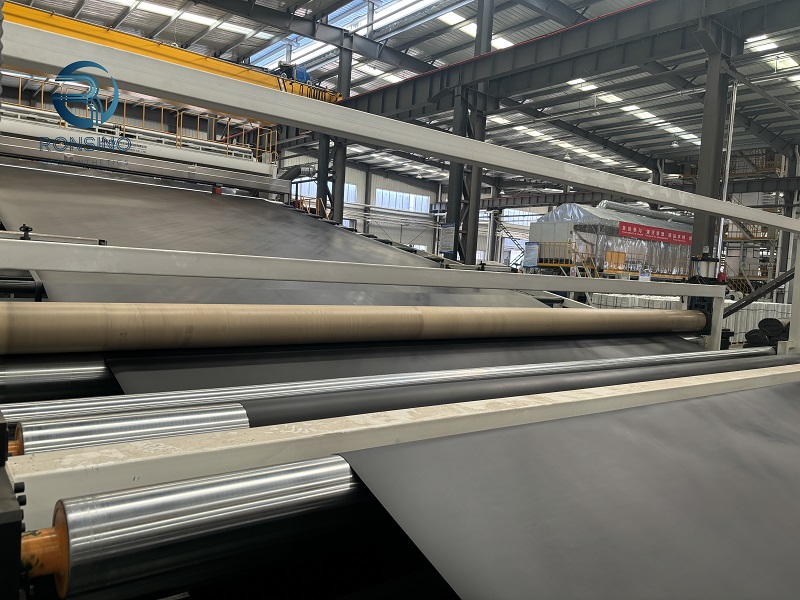
4. Industry Trends Affecting Dam Liners Cost
Resin costs are expected to rise by 8%-12% in 2025, but recycled HDPE can partially offset the pressure due to its 15% lower price and 70% market acceptance. The 9-meter wide roll reduces seams by 20%, increases investment in IoT sensors by 5%-8%, but reduces manual inspection by 25%. The EU Green Deal drives demand for bio-based geomembranes. Asia dominates the market with its scale advantage, and global prices ($0.4-2.5/square foot) are 25% lower than those in Europe and the United States.
Dam Liners Cost HDPE Landfill Liner for Industrial
HDPE Geomembrane Installation for Waterproofing Projects
5. Case Studies: Real-World Dam Liner Projects
5.1 Case Study 1: Kenyan Irrigation Reservoir (RONSINO Geomembrane, 2024)
200,000 m², 1.0 mm HDPE. Cost: $0.50/sq ft materials + $0.40/sq ft install = $180,000 total. Savings: 95% retention, 20% irrigation boost ($150,000/year water value); vs. clay: 30% cheaper long-term.
5.2 Case Study 2: South African Tailings Dam (RONSINO, 2021)
25,000 m², 1.5 mm composite HDPE+GCL. Cost: $1.00/sq ft = $269,100 materials + $80,730 install. Benefits: 99% containment, EPA compliance; averted $2M fines, 40-year life.
5.3 Case Study 3: Australian Hydropower Reservoir (Western Liner, 2024)
15,000 m², 1.0 mm UV-HDPE. Cost: $0.80/sq ft = $120,000. Savings: 25% evaporation cut (1M m³/year), ROI in 18 months via hydropower gains ($500,000).
These demonstrate 20–40% operational efficiencies.
6. Conclusion
In 2025, the raw material price of dam lining will be US$0.5-3/square foot, and the all-inclusive installation price will be US$1-5/square foot. It is recommended that large-scale projects use 1.5-2.0 mm thick new material HDPE lining (tensile strength 40 kN/m, life span 50 years) to balance anti-seepage, impact resistance and cost. RONSINO provides customized anti-seepage solutions from agricultural dams to industrial projects. Consulting the technical team can obtain exclusive quotations to reduce the risk of leakage and pollution.


