How Much Does it Cost to Line a Pond With Bentonite?
Blog · 2026-05-08 · 0 views
Bentonite clay liners, an organic, eco-friendly alternative to synthetic geomembranes, leverage sodium bentonite's osmotic properties to create impermeable barriers for water containment. Sourced from volcanic deposits, they prevent seepage while supporting ecological balance. Ideal for aquaculture, agriculture, and ornamental habitats, these liners offer self-healing capabilities and minimal environmental impact, making them ideal for sustainable projects.
The global bentonite industry is expected to grow from US$7.21 billion in 2025 to US$9.45 billion in 2032, with a compound annual growth rate of 4.0%, mainly driven by water resource protection, agriculture and ecological restoration applications. Among them, geosynthetic clay liners (GCLs) containing bentonite are expected to increase from US$461 million in 2025 to US$604 million in 2031, with a compound annual growth rate of 4.7%. In terms of price, the raw material cost of bentonite geomembrane is 0.5 to 3 US dollars per square foot, and the installation cost can reach 1 to 6.5 US dollars per square foot depending on the soil, technology and project scale. Based on industry standards and expert perspectives, this guide provides pond owners, construction and technical professionals with precise financial planning tools. Shandong Geosino New Materials Co., Ltd. (RONSINO Geosynthetics) provides high-performance, cost-effective bentonite products to help improve project investment returns.
1. What Are Bentonite Clay Pond Liner?
Bentonite waterproof blanket is an engineering waterproof material with sodium bentonite as the main component. It can expand to fifteen times its original volume when exposed to water, forming a gel-like barrier with low permeability (≤1×10⁻⁹ m/s). Unlike traditional synthetic materials, bentonite, as a "self-healing" active system, needs to be pressurized by covering soil or geotextile to enhance sealing. The material originates from mineral deposits in Wyoming, Texas and India in the United States. It has environmentally friendly properties such as non-toxic and recyclable, and complies with technical standards such as ASTM D5887 (expansion index >24 mL/2g) and ASTM D6496 (peel strength).
Key Properties and Specifications
Bentonite liners excel due to their engineered properties, tailored for diverse environmental conditions:
Swelling Capacity: Sodium montmorillonite exhibits a volumetric expansion of 12 to 15 times upon hydration, resulting in a mass density ranging from 850 to 1,200 kilograms per cubic meter, which facilitates the formation of an impermeable barrier capable of autonomously repairing minor breaches or accommodating structural movements.
Permeability and Durability: Hydraulic conductivity <10⁻¹¹ cm/s; service life of 20–50 years in submerged applications, with resistance to freeze-thaw cycles (up to 100 cycles without degradation) and chemical exposure (pH 4–10).
Thickness and Coverage: For particulate compositions, the functional stratum depth following hydration measures between 0.1 and 0.5 inches; geosynthetic clay liner alternatives exhibit initial dry thicknesses of 5–10 millimeters, which swell to 8–15 millimeters upon activation. Rolled material spans widths of 1–6 meters; application densities range from 1–6 pounds per square foot (4.9–29.3 kilograms per square meter), contingent upon substrate characteristics.
Environmental Compatibility: 100% biodegradable components; zero VOC emissions; supports aquatic life with neutral pH (7–9) and no leaching of heavy metals.
These attributes render bentonite liners a superior solution for locations exhibiting fluctuating groundwater levels or seismic disturbances, wherein adaptability surpasses the limitations of inflexible artificial materials.
Types of Bentonite Clay Pond Liner
Selecting the right type hinges on pond size, soil profile, and budget. Common variants include:
Granular Bentonite: Compact granules or fragments measuring 3–10 millimeters in diameter are suitable for extensive utilization; perfect for do-it-yourself modifications. Expansion capacity: 120–150 mL per 2 grams; expense: $0.04–$0.12 per pound. Optimal for expansive, manually dug aquatic basins exceeding one acre, where blending with local earth (30% bentonite to 70% soil proportion) fortifies impermeability.
Powdered Bentonite: Fine powder (<200 mesh) for precise sprinkling; higher dust potential but faster hydration. Bulk density: 800–900 kg/m³; application rate: 2–4 lbs/sq ft for silty soils. Suited for small ornamental ponds, with costs at $0.05–$0.15 per lb.
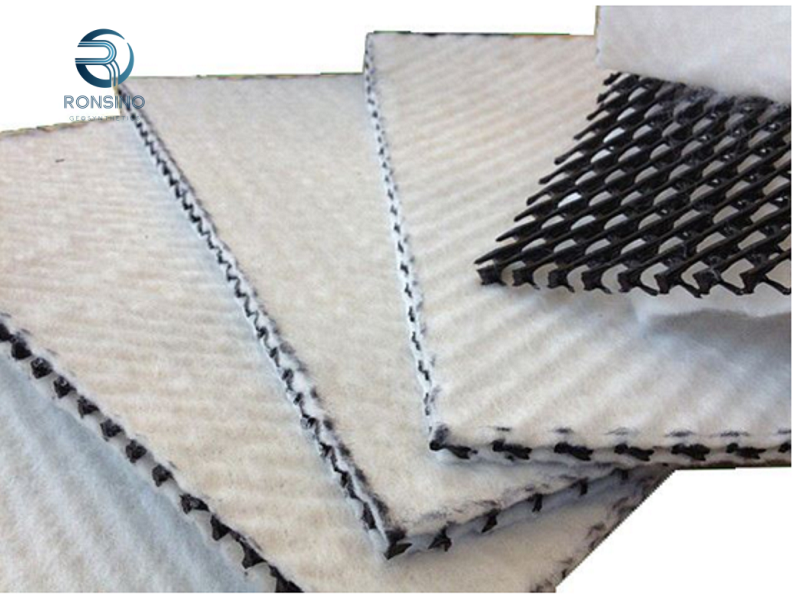
Bentonite Blankets or Mats: Pre-formed sheets (e.g., 4–6 ft wide rolls) with bentonite sandwiched between geotextiles; needle-punched for integrity. Peel strength: >360 N; thickness: 4–6 mm. Premium for sloped or irregular sites, priced at $1.00–$2.50 per sq ft.
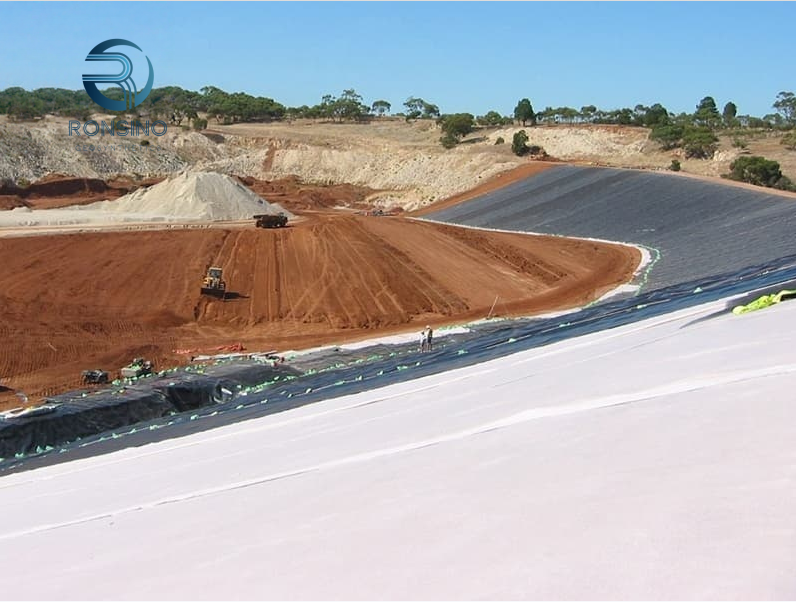
Geosynthetic Clay Liners (GCLs):This product is made of reinforced composite material with a core of bentonite sandwiched between geotextile and mesh cloth, with a water permeability of no more than 5 × 10⁻¹⁰m/sec. Each roll is 30 to 50 meters long and has a tensile strength of 5 to 10 kN/m. Designed for high-load scenarios, such as tailings pond liners, they sell for $1.50 to $5.00 per square foot.
RONSINO Geosynthetics offers all types, certified to ISO 9001 and ASTM standards, ensuring consistent performance.
Applications and Benefits
Bentonite liners shine in water-retention scenarios, with proven efficacy in global projects:
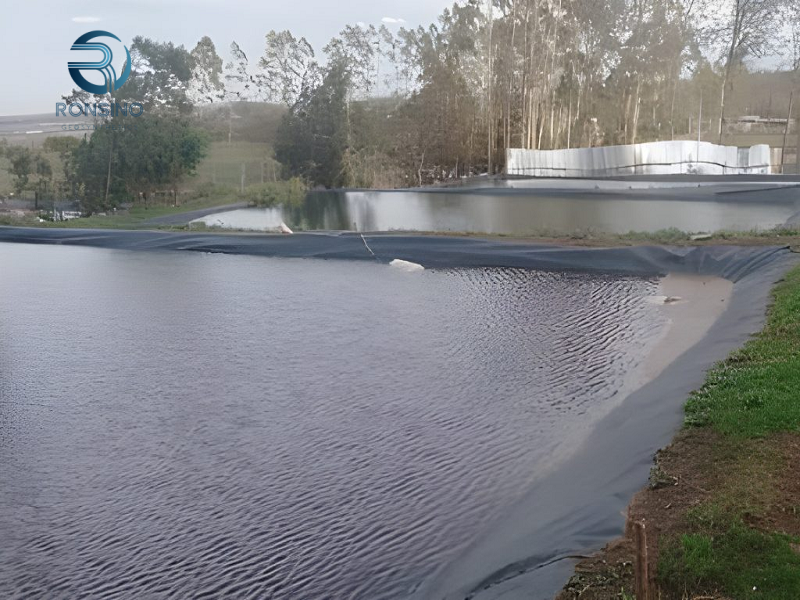
Aquaculture and Fish Ponds: Seals koi or tilapia habitats without synthetic residues; reduces evaporation by 90–95%.
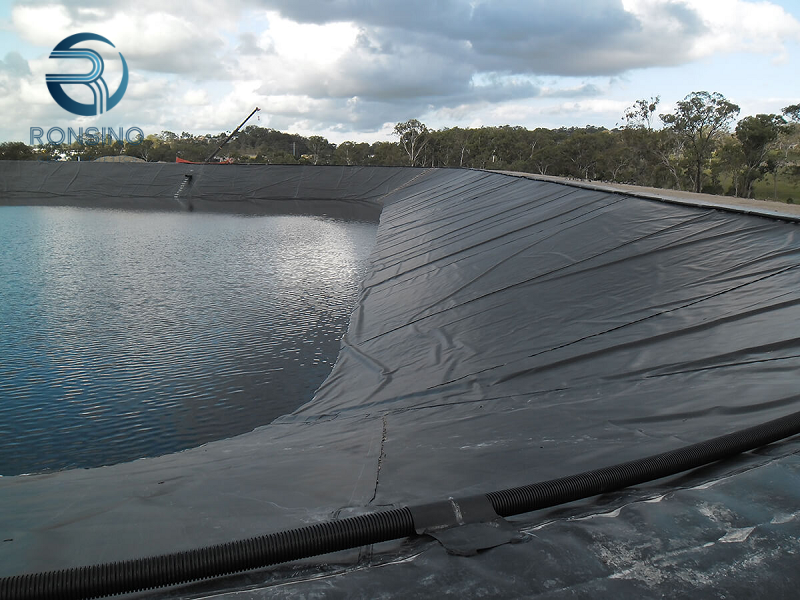
Irrigation and Reservoirs: Effectively reduces water leakage in farming environments; a demonstration project in Wyoming documented an 85% reduction in water consumption compared to untreated reservoirs.
Stormwater and Wastewater: Compliant with EPA guidelines for detention basins; self-healing mitigates root penetration.
Recreational and Wildlife Ponds: Enhances biodiversity; 20–30% lower maintenance than EPDM liners.
Benefits include eco-friendliness (biodegradable vs. plastic waste from synthetics), cost savings (up to 40% less aggregate needed), and longevity (self-repairs minor damages, extending life by 15–25 years).
Bentonite Clay Pond Liner for Water Retention
RONSINO Bentonite Clay Pond Liner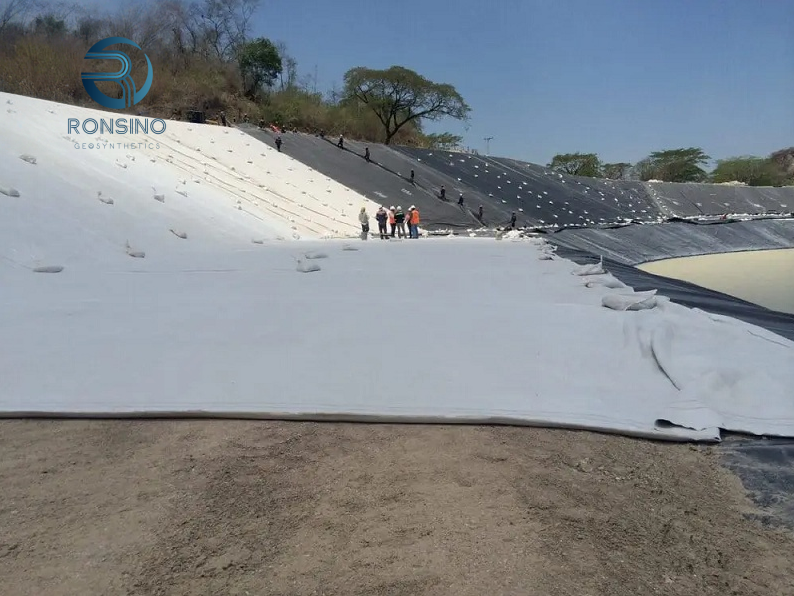
2. How Much Does a Bentonite Clay Pond Liner Cost?
The initial cost of sodium bentonite geomembrane fluctuates greatly. The raw material price is about $0.45-$2.75/square foot. After professional installation (0.25 acres of water body), the total cost reaches $2,200-$11,200. If it is expanded to a 1-acre project, the total investment is $19,800-$118,920 (materials account for 35-55%). The above is based on 2025 industry benchmarks and does not include permit fees ($180–$950), but covers key variables such as soil permeability and installation techniques. The following will analyze the main influencing factors and quantitative indicators to assist in accurate estimation.
2.1 Bentonite Clay Pond Liner Cost – Material Type
Material form dictates 25–45% of expenses, as processing levels affect pricing and handling.
Granular Sodium Bentonite: Dominant for cost-sensitive projects (70% market share); particle size 3–10 mm, moisture content <12%. Cost: $0.04–$0.12 per lb ($80–$240 per ton), translating to $0.04–$0.72 per sq ft at 1–6 lbs/sq ft rates. Advantage: Easy spreading; example: Lonestar Minerals’ premium grade at $420 for 3,000 lbs retail, ideal for 5,000 sq ft ponds ($200–$1,080 materials).
Powdered Bentonite: For fine-tuned applications; swell rate 140 mL/2g. Pricing: $0.05–$0.15 per lb ($100–$300/ton), or $0.05–$0.90/sq ft. Suited for retrofits; a 10,000 sq ft irrigation pond requires 20–40 tons ($2,000–$12,000).
Bentonite Mats/Blankets: Geotextile-encased for uniformity; mass per unit area 3.5–5 kg/m². Cost: $1.00–$2.50/sq ft, premium for erosion-prone sites. RONSINO’s mats offer 20% higher shear strength (8 kN/m) for $1.20–$2.20/sq ft.
Geosynthetic Clay Liners (GCLs): Advanced composites; overlap strength >90%. At $1.50–$5.00/sq ft, they command 15% market premium but reduce installation time by 30%, netting savings on labor-intensive jobs.
Comparative: Granular saves 50–70% vs. GCLs but demands precise soil mixing; for clay-rich bases, granular yields 25% lower total ownership costs over 20 years.
2.2 Bentonite Clay Pond Liner Cost – Application Rate and Thickness
The application quantity, expressed in pounds per square foot, varies according to soil composition and aquatic basin depth, accounting for 30 to 50 percent of the total material expenditure.
Low Rate (1–2 lbs/sq ft): For clay-based substrates (hydraulic conductivity <10⁻⁶ cm/s); nominal depth 0.25–0.51 centimeters following expansion. Expense: $0.43–$2.58 per square meter; ideal for secure, minimal-permeability locations such as ornamental aquatic features.
Medium Rate (3 lbs/sq ft): Silty soils; 0.2–0.3 inches. $0.12–$0.36/sq ft; balances efficacy and economy for 1/2-acre recreational uses.
High Rate (4–6 lbs/sq ft): Sandy/gravelly (permeability >10⁻⁴ cm/s); 0.3–0.5 inches. $0.20–$0.72/sq ft; essential for high-seepage zones, as in arid irrigation projects.
Soil analysis ($10-20 for a home kit, $400 for a professional assessment) can optimize application rates and reduce overuse by 20-30%. Taking a 20,000-square-foot pond as an example, upgrading from the smallest solution to the largest solution increases the cost by US$1,600-10,800, but can improve the silt containment effect by 40%.
2.3 Bentonite Clay Pond Liner Cost – Project Size and Scale
Scale leverages bulk discounts (10–30% for >10 tons), lowering per-unit costs for expansive designs.
Small Ponds (<1/4 Acre, 5,000 sq ft): $2.50–$6.00/sq ft total due to fixed mobilization ($500–$1,500). Example: Ornamental koi pond at $1,250–$3,000.
Medium Ponds (1/4–1 Acre, 10,000–43,560 sq ft): $1.50–$4.00/sq ft; economies reduce material to $0.30–$1.50/sq ft. A 1/4-acre aquaculture setup: $2,500–$12,000 installed.
Large Reservoirs (>1 Acre): $1.00–$3.00/sq ft; bulk granular at $0.03–$0.10/lb shaves 20%. Texas 5-acre farm pond: $50,000–$150,000, with 15% savings via phased installation.
Depth factor: Ponds >10 ft deep add 10–15% for reinforced GCLs to counter hydrostatic pressure.
2.4 Bentonite Clay Pond Liner Cost – Installation Method and Labor
The installation process constitutes a significant portion, accounting for 25 to 40 percent of the overall total, while the techniques employed exhibit diverse levels of intricacy and require varying types of machinery and tools.
Sprinkle/Mix Method (DIY-Friendly): Sodium bentonite is mixed 10–15 cm below the soil and compacted to 90–95% of Platts maximum dry density. Labor costs: $10–$20/hour in Asia, $30–$50/hour in North America, total expenditure per acre $8,712–$21,780. The process is: 1) Level the topsoil; 2) Spread bentonite clay (1–6 pounds/square foot) as needed; 3) Inject 1–2 inches of water weekly to promote expansion; 4) Test permeability to ensure compliance.
Blanket Placement: Unroll mats over prepared base, overlap 12–18 inches, anchor with soil cover (6–12 inches). $0.50–$1.50/sq ft labor; faster (1–2 days/acre) but requires cranes for large rolls ($500–$2,000 rental).
Professional vs. DIY: Pros add 20–30% ($1,000–$5,000 flat for small sites) but ensure 15% fewer failures; DIY suits <1/4 acre, saving $500–$2,000 but risking 10–20% rework.
Site prep (excavation/grading): $0.10–$0.30/sq ft; add geotextile underlay ($0.20–$0.50/sq ft) for sandy bases.
2.5 Bentonite Clay Pond Liner Cost – Soil Conditions and Site Preparation
Substrate profoundly impacts dosage and prep, with permeable soils inflating needs by 200–300%.
Clayey/Impermeable Soils: Minimal rate (1 lb/sq ft); prep $0.10–$0.20/sq ft; total adder: negligible.
Silty/Moderately Permeable: 3 lbs/sq ft; add lime amendment ($0.05–$0.15/sq ft) for stability; 20–40% cost uplift.
Sandy/Highly Permeable: 5–6 lbs/sq ft; core trenches or drainage diversion ($500–$2,000); up to 50% premium, but GCLs mitigate by 25%.
Regional variances: Arid climates (e.g., Southwest US) add 10% for hydration controls; sloped sites (>5%) require terracing ($1,000–$5,000/acre).
2.6 Bentonite Clay Pond Liner Cost – Transportation, Logistics, and Quality
Logistics: 5–15% of budget; remote delivery $0.10–$0.30/sq ft for 50-lb bags or bulk trucks (20–40 tons/load).
Quality tiers: Premium sodium (95% montmorillonite) at +10–20% ($0.10–$0.20/lb extra) vs. calcium bentonite (lower swell, $0.02–$0.08/lb); virgin vs. processed adds 5–10% for purity.
2.7 Bentonite Clay Pond Liner Cost – Maintenance and Lifetime Expenses
Low upkeep: Annual inspection and repaving costs $0.05 to $0.20 per square foot, with synthetics costing $0.50 more. The service life is 20 to 50 years; self-healing incisions can repair 20% to 30% of damage, and the cost of a single repair is between $500 and $2,000. According to a USDA study on pond sealing, its life cycle return on investment can reach 150% to 200% within 25 years.
Cost Component Small Pond (5,000 sq ft) Medium Pond (20,000 sq ft) Large Pond (43,560 sq ft)
Materials $250–$3,600 $1,000–$14,400 $2,178–$31,363
Installation $1,000–$2,500 $4,000–$10,000 $8,712–$21,780
Total $1,250–$6,100 $5,000–$24,400 $10,890–$53,143
3. How to Choose the Right Bentonite Clay Pond Liner
Navigating options requires aligning specs with site demands for optimal value.
3.1 Bentonite Clay Pond Liner – Assess Project Requirements
Match to load/soil: Light recreational (granular, 1–2 lbs/sq ft, $0.50–$1.50/sq ft); heavy aquaculture (GCLs, 4–6 lbs/sq ft, $2.00–$4.00/sq ft). Factor depth (add 10% for >8 ft) and traffic (reinforced for livestock).
3.2 Bentonite Clay Pond Liner – Prioritize Quality and Certifications
Opt for ASTM D5084-compliant products with >95% sodium content; RONSINO’s lines feature verified swell indices, reducing failure risk by 25%.
3.3 Bentonite Clay Pond Liner – Evaluate Installation Needs
DIY for small scales (tools: tiller $200/day); pros for >1/2 acre to achieve 95% compaction, saving 15–20% long-term.
3.4 Bentonite Clay Pond Liner – Consider Long-Term Costs and Sustainability
Enhanced coating applications contribute to a 20% extension of service life, while environmentally friendly formulations reduce carbon emissions by 30% compared to traditional PVC materials. Leverage AASHTO-developed analytical tools to evaluate potential return on investment projections.
3.5 Bentonite Clay Pond Liner – Compare Suppliers
Evaluate RONSINO's performance against global standards; request samples for pore size/expansion testing. Bulk purchasing can save 15% to 25% of costs.
Bentonite Clay Pond Liner Leak Prevention Clay for Pond Lining
Geo Clay Liner for Landfill Pond
4. Industry Trends Affecting Bentonite Clay Pond Liner Costs
2025 trends signal moderate inflation (3–5%) offset by innovations. The Prices are expected to rise by 3-5% in 2025, and technological progress will offset this impact. The GCL industry has an annual growth rate of 7.1%, and the market value will reach US$791.7 million in 2035. There is strong demand for bentonite-biopolymer composite systems, which are 10% more expensive but have 20% higher UV resistance. The aquaculture industry (a market of US$320 billion) has increased by 15% due to the implementation of sustainable initiatives, and the application of recycled geotextiles has reduced costs by 5-10%. Asian supply chain optimization curbs price increases. The IoT monitoring system adds $0.05-0.1 per square foot to the cost, but can achieve long-term benefits by reducing maintenance expenses by 20%. Swelling-based products are more popular in the regulated market, with demand increasing by 10% due to their environmental protection properties. However, the initial investment of GCL is still 20-30% higher than that of geomembrane.
5. Conclusion
Bentonite geomembrane liners are a cost-effective, high-performance solution with material costs ranging from $0.50 to $3 per square foot, with total project costs ranging from $10,890 to $53,143 for a one-acre project, depending on soil conditions, construction techniques and project size. Its inherent self-healing ability, environmentally friendly properties and service life of 20 to 50 years enable it to bring a superior return on investment compared to synthetic materials in ecological projects. Strict quality control and meticulous on-site assessment ensure complete impermeability and significantly reduce environmental impact.