
Impermeable Membrane for Shrimp farming Project in Norway
CASE · 2025-09-09 · 0 views
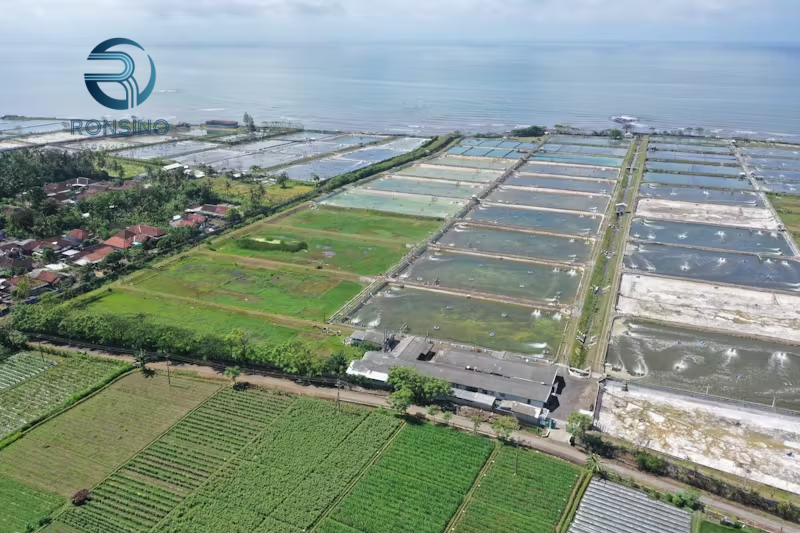
Impermeable Membrane, a commonly used anti-seepage barrier, is made of high-quality polyethylene resin and contains 2%-3% carbon black and special antioxidants, anti-aging agents and UV stabilizers. Using advanced automation equipment and precision three-layer co-extrusion technology, the material performs exceptionally well in harsh environments. Due to its excellent resistance to UV, ozone degradation and chemical corrosion, HDPE geomembrane has become the first choice for large-scale, long-term, durable and reliable projects. As an economical exposed liner system, it is widely used in aquaculture, waste management, mining, water storage and biogas digester projects.
Impermeable Membrane is the key to ensuring water storage and maintaining pond integrity and hygiene in aquaculture systems (especially shrimp and fish farming). Among various lining materials, HDPE membrane has become the most reliable choice for such projects due to its excellent long-term durability, chemical resistance and underwater performance, forming the core foundation of breeding facilities.
1.Technological characteristics of geomembrane pond liner used in shrimp ponds
1.This technology has significant cost advantages and excellent economic returns. Practical data shows that compared with conventional technologies such as traditional reinforced concrete self-waterproofing and clay waterproofing, the use of this solution can reduce project costs by 30% to 50%, and there is huge room for improvement in economic benefits.
2.The Impermeable Membrane anti-seepage system uses fully environmentally friendly materials. Its anti-seepage principle is based on a purely physical mechanism and does not produce any harmful chemicals throughout the process to ensure ecological safety.
3.Impermeable Membrane has excellent flexibility and can flexibly adapt to the differentiated anti-seepage needs of various projects. The construction is highly operable and the process is simple. At the same time, it greatly reduces equipment investment requirements and significantly improves construction convenience.
4.The material has excellent anti-seepage properties and can effectively resist the adverse effects caused by uneven settlement of the foundation. In an environment without direct UV rays, the service life can stably reach 30 to 50 years, and the durability is outstanding.
5.This technology has a short construction period and high efficiency. It can quickly advance the project progress and significantly shorten the construction period.
2.The benefits of geomembrane pond liner for shrimp farming
2.1The Impermeable Membrane system is stable.
The use of HDPE geomembrane liners enhances the structural integrity of pond slopes compared to traditional excavation methods. This method effectively resists the negative effects of environmental factors such as wind, rain, waves, etc., thus protecting aquatic habitats and preventing damage to farmed species. The inherent stability of HDPE geotextile ensures its continued performance throughout the life of the pond, reducing crop losses due to ecological disturbance. The material's flexibility supports steeper slopes and greater depths, maximizing culture capacity without increasing surface area. Enhanced structural stability not only reduces long-term maintenance requirements, but also significantly reduces earthwork costs.
2.2Increase production.
Geomembrane pond linings prevent unwanted vegetation and sediment buildup, enhancing harvesting efficiency. This streamlines extraction, reduces fishing time, and improves the health and freshness of harvested fish and shrimp.
2.3Disease hazards.
Applying geomembrane lining to aquaculture ponds can reduce environmental variability and promote the growth of aquatic organisms. The membrane effectively reduces the seepage of soil pollutants and pathogens by blocking direct contact between soil and water, thereby reducing the risk of disease transmission. Therefore, the use of high-density polyethylene geomembrane technology can reduce pharmaceutical expenditures in aquaculture and reduce significant losses caused by large-scale disease outbreaks.
2.4Pond cleaning.
After the geomembrane pond liner is installed, the cleaning of the pond will be easier. And it’s easier to install a clean drainage system inside the pond.
2.5Improve the breeding cycle.
The utilization of HDPE geomembrane impermeable barriers facilitates enhanced pond cleaning and fish harvesting, leading to significant reductions in both time and expenditure. This efficiency accelerates aquaculture development while simultaneously boosting yield through optimized resource management. Moreover, the material's properties expand the range of viable site selections for fish farm operations.
3.Case Study
Destination – Norway
Product – 0.75mm Geomembrane
Usage – Shrimp farming
4.Issue
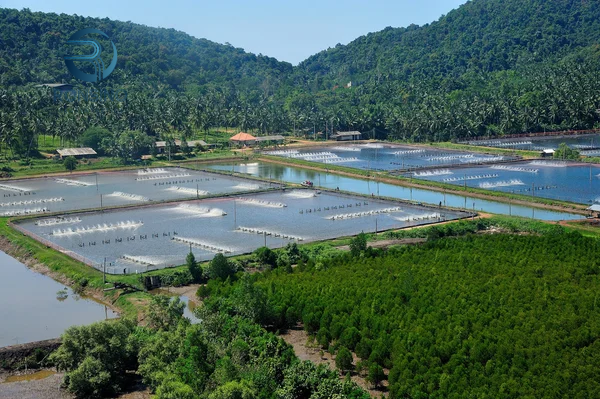
In Norway, shrimp farming is mainly done in coastal areas using brackish water or saltwater ponds. These areas mostly have marshy or sandy substrates, with occasional soils rich in organic matter. Due to its low cost, this type of land is not suitable for traditional agriculture, but it has economic value. There are challenges in using this land to build breeding ponds: pyrite-containing substrates can create an acidic environment that harms shrimp growth; sandy substrates have poor water retention; organic soils can weaken dam structures and increase oxygenation requirements; and topographic depressions also make drainage and post-harvest drainage difficult.
5.Solution
We recommend 0.5 or 0.75 mm HDPE geomembrane for Norwegian shrimp farming customers who are facing challenges. The membrane effectively isolates pool water and soil, is durable and resistant to damage, blocks impurities, reduces the use of microorganisms and antibiotics, protects the pool bank from erosion, and simplifies maintenance. The customer was very satisfied after field testing.
6.Specification of Impermeable Membrane for Shrimp farming Project in Norway
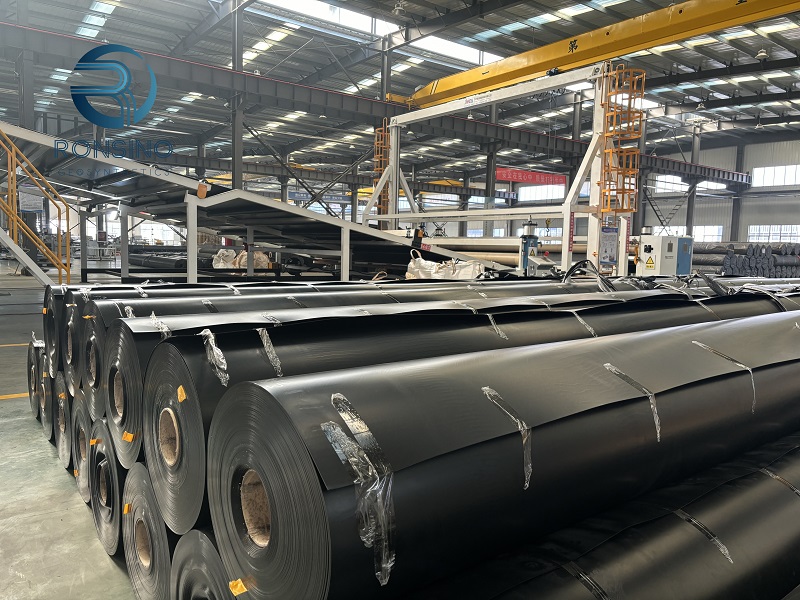
HDPE Geomembrane Liner thickness–0.75mm
Total Quantity –105840 square meters
Each roll Size – 7m*280m
7.Installation method of geomembrane Impermeable Membrane
7.1Base surface treatment
1) Flatness: the deviation does not exceed 5 cm per square meter, ensuring that the foundation surface is flat and straight;
2) Compaction degree: it needs to reach more than 90%, and the anti-seepage membrane can be laid after the rolling is completed;
3) Vertical and transverse slope: The vertical and transverse slope must be greater than 2% to ensure drainage effect;
4) Basic surface cleaning: There must be no sharp objects within a vertical depth of 2.5 cm to prevent puncture of the protective layer.
7.2Laying and cutting of HDPE geomembrane pond liner
1) Before construction, survey and planning are required, materials should be accurately matched and paved efficiently to ensure orderly preparation.
2) Strictly control the number of welds and scientifically cut them to reduce waste and ensure welding quality.
3) Follow the laying direction from low to high, leaving 1.5% slack to adapt to deformation to ensure long-term stability.
4) Longitudinal joints are arranged in a staggered manner, with a horizontal stagger of ≥1 meter to avoid penetrating weak zones.
5) The longitudinal joints should be at least 1.5 meters away from the foot of the slope and the bend, and a flat area should be selected to reduce stress concentration.
6) Follow the "slope first, then base" sequence to ensure tight connection and avoid joint defects.
7) The membrane material laid on the side slope should be parallel to the slope, with precise positioning to reduce wrinkles and ensure smoothness. 8) It is strictly prohibited to step on or drag tools after laying to protect the integrity of the film layer and eliminate the risk of damage.
8.Summary
High-density polyethylene geomembrane lining systems are exclusively fabricated from virgin raw materials, ensuring unparalleled quality and extended operational longevity. The geomembrane impermeable barriers manufactured by RONSINO demonstrate superior impermeability characteristics, exceptional resistance to chemical degradation, outstanding durability against environmental stress-induced cracking, robust puncture-proof capabilities, remarkable UV stability, consistent low-temperature flexibility without embrittlement, and outstanding cost-efficiency ratios.
HDPE geomembrane farm liner is widely used in canals, aquaculture, irrigation ponds and repair liners. Other liner applications include landfills, wastewater treatment lagoons, oil and gas exploration, power plants, etc.
9.About RONSINO
As a leading manufacturer and supplier in the geosynthetics industry, RONSINO is committed to developing, producing and installing advanced geotextile solutions. We provide geotextiles and geomembranes, which are widely used in civil engineering, mining, environmental protection, aquaculture and other fields. The company continues to improve its technology, manufacturing and project delivery capabilities, and its products are known for their excellent quality, performance, durability and high cost performance. Through innovative technology and professional services, we provide customized solutions to meet customer needs and look forward to working with you.
Our main innovative, high quality products include geotextiles, geomembranes, geogrids, geocells, geosynthetic clay Liner, and drainage boards, etc al. RONSINO customers are from more than 100 countries.
RONSINO offers both high quality geosynthetic products but also professional design and installation service. OEM, ODM, custom development and fabrication are also available. If you have any questions or inquiries,we will reply as soon as possible.


