
Is PE Eco-Friendly?
Blog · 2026-06-11 · 0 views
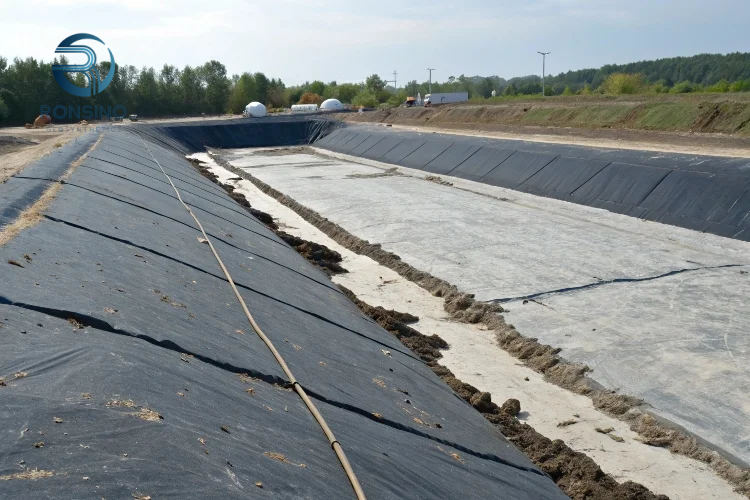
Polyethylene geomembrane boasts an extremely broad range of application scenarios. As infrastructure construction progresses in a steady and in-depth manner and the public’s awareness of ecological protection continues to rise, various geosynthetic materials are being applied on a larger scale across key industries including water conservancy development, transportation network construction, ecological governance, and civil engineering. As a core product in the geosynthetic material category, geomembranes demonstrate non-substitutable functional value in multiple aspects such as anti-seepage performance improvement, chemical corrosion resistance, and interlayer isolation for engineering structures. Notably, the polyethylene geomembranes developed and produced by RONSINO, relying on their outstanding overall performance, strong adaptability to complex construction and application environments, and full compliance with green and low-carbon production and use standards, have now become the preferred impermeable material solution for a large number of engineering projects of different types and scales.
This article will conduct an in-depth discussion on "Why choose polyethylene geomembrane" and provide a comprehensive decision-making reference for project managers, designers and procurement professionals by introducing its basic definition, classification system, performance advantages, applicable scenarios and selection suggestions.
1. What Is a PE Geomembrane?
PE geomembrane is a geosynthetic material made primarily from polyethylene (PE), produced via extrusion calendering or blown film processes. It offers excellent flexibility, impermeability, and chemical resistance. Common PE materials include:
HDPE (High-Density Polyethylene)
LDPE (Low-Density Polyethylene)
LLDPE (Linear Low-Density Polyethylene)
Among geomembrane products in the current market, high-density polyethylene (HDPE) geomembrane accounts for the highest proportion of applications. It has excellent density, excellent load-bearing capacity, strong tensile and tear resistance, and good stability against a variety of corrosive chemical media.PE geomembranes are divided into many categories to adapt to different scenarios and performance requirements. Commonly used geomembranes are single-sided smooth, double-sided smooth, and rough surface geomembranes. The specific specifications are determined by the product thickness and the actual needs of the target application field.
Geomembrane 0.75mm Pond Liner for Fish Farm
Flexible Polypropylene Pe Geomembrane
![]()
2. Material Advantages of PE Geomembrane
Polyethylene geomembrane is widely used because of its leading technical performance. It is resistant to a variety of chemical corrosion, has excellent puncture and tear resistance, is highly flexible and can adapt to terrain deformations, is resistant to ultraviolet rays, extreme temperatures, and has a long service life. These characteristics ensure that it has stable anti-seepage and reliable structure under harsh working conditions. It is a practical and cost-effective choice for anti-seepage closure scenarios such as landfills, industrial and agricultural reservoirs, tailings ponds, and mining projects.
2.1 PE Geomembrane – Excellent Impermeability
Polyethylene (PE) geomembranes boast not just an exceptionally minimal permeability rate; they also proactively block the infiltration of moisture chemical substances以及gaseous elements.As such, their effectiveness in seepage prevention is vastly superior compared to conventional options such as clay liners or concrete barriers.For this reason engineers repeatedly opt for themas the top-tier selection when tackling high-stakes engineering projects.To illustrate, take scenarios like waste landfills mining tailings impoundmentsorwater storage reservoirs-these membrane liners work efficiently to shield underground water sources while keeping adjacent ecological surroundings free from harmful pollution.
2.2 PE Geomembrane – Outstanding Chemical Resistance
Thanks to their exceptional chemical stability, polyethylene geomembranes can successfully endure prolonged contact with acidic, alkaline, saline substances and the vast majority of organic solvents. As a result, this outstanding performance renders them a highly preferred option for serving as impermeable liners in severe, corrosive scenarios such as chemical waste storage ponds and sewage treatment plants. In addition, these impermeable liners possess remarkable long-term usability, which enables them to fend off performance deterioration and keep their structural soundness intact for quite a long time, even when placed under harsh operating conditions.
2.3 PE Geomembrane – High Tensile Strength and Elongation
With excellent tensile strength and an elongation at break of more than 700% - polyethylene geomembrane can not only adapt to foundation settlement and frost heave, but also cope with other complex geological activities. Therefore, they can effectively prevent cracking, thereby providing long-term stability and reliability for the entire project.
2.4 PE Geomembrane – Good Low-Temperature Flexibility
Unlike traditional materials such as polyvinyl chloride, polyethylene geomembranes can not only maintain excellent ductility in ultra-low temperature environments, but also exhibit stronger resistance to brittle cracking. This significant performance advantage makes it the material of choice for complex engineering projects in high altitude or cold areas, meeting the core requirements of the project for long-term material stability. Therefore, its excellent low-temperature impact toughness makes it a reliable solution preferred in such harsh engineering scenarios.
2.5 PE Geomembrane – UV and Aging Resistance
With the addition of UV stabilizers, polyethylene geomembranes are capable of long-term use in outdoor exposure environments without significant deterioration. High-density polyethylene geomembranes often contain additives such as carbon black, antioxidants, and UV absorbers to enhance their resistance to aging and extend their service life—even under constant sunlight exposure.
3. Construction Advantages of PE Geomembrane
3.1 Lightweight and Easy to Install
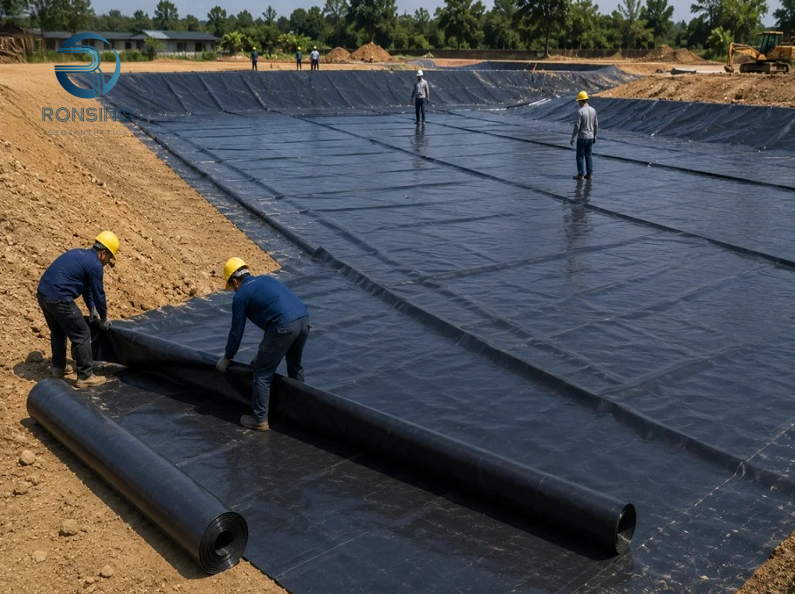
Due to the ultra-light weight of polyethylene geomembranes, they are very convenient to transfer and manipulate at construction sites. Accordingly, construction teams can lay them out quickly by adopting either mechanical installation approaches or manual paving techniques. This operational adaptability greatly cuts down the overall complexity of construction works, and as a result, brings about considerable reductions in both construction period investment and human resource expenditures.
3.2 Excellent Weldability
Polyethylene geomembranes adapt to various construction methods including hot melt joining and double-seam welding, whose specialized bonding creates joints with excellent mechanical strength and highly stable, durable sealing. This ensures full structural integrity of the anti-seepage layer, reliably guaranteeing the project's long-term operation and stable environmental protection performance throughout its service life.
3.3 Strong Adaptability
Thanks to excellent deformability, polyethylene geomembranes perfectly fit undulating, irregular site contours, readily adapt to slope gradients and uneven base layer deviations. This inherent feature makes them highly applicable to diverse construction scenarios, streamlines on-site laying workflows, and ensures tight, gap-free installation to meet the needs of nearly all engineering construction sites.
3.4 Short Construction Cycle
When contrasted against conventional concrete-based waterproof structures, PE geomembrane systems can be set up far more quickly—drastically cutting down overall project durations while simultaneously boosting the effectiveness of construction operations.
4. Wide Range of Applications
Thanks to their remarkable properties, PE geomembranes are used in a wide range of sectors:
4.1 Water Conservancy Projects
Reservoirs and canal seepage prevention
Artificial lakes and landscape water bodies
Dam reinforcement and lining
4.2 Environmental Protection Projects
Landfill liners and covers
Sewage treatment ponds
Hazardous waste containment
4.3 Agricultural Applications
Fish and shrimp farming ponds
Irrigation canal lining
Water storage ponds and biogas digesters
4.4 Municipal Engineering
Underground tunnel waterproofing
Subway waterproofing
Rooftop greening and waterproofing
4.5 Mining Industry
Tailing bottomliners
Heap leach pad liners
Mining wastewater treatment
As a key part of infrastructure construction, PE geomembrane plays a critical role in ensuring project safety and protecting the environment.
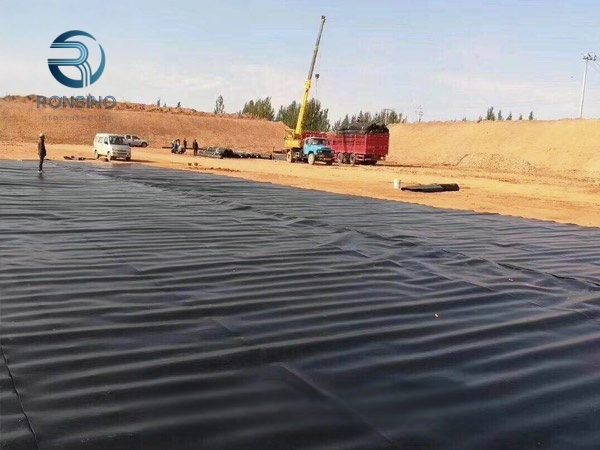
HDPE 60 Mils Geomembrane for Mining Pond
HDPE Plastic Sheets 1.5mm for Landfill
5. Economic Value of PE Geomembranes
While the initial cost of PE geomembrane may be higher than that of traditional materials like clay or concrete, it offers superior long-term economic benefits:
Lower construction costs: Faster installation and reduced labor and equipment expenses.
Minimal maintenance costs: Long-lasting durability and resistance to degradation reduce the need for repairs.
Reduced leakage losses: Effective impermeability prevents environmental contamination and resource waste.
6. Future Development Trends of PE Geomembranes
As environmental standards become stricter and engineering technologies evolve, PE geomembranes are developing in the following directions:
High-performance composite geomembranes: Combined with geotextiles for enhanced puncture resistance and strength.
Eco-friendly PE materials: Recyclable polyethylene to reduce environmental impact.
7. How to Choose the Right PE Geomembrane?
When selecting a PE geomembrane, consider the following:
Thickness options: Typically ranging from 0.2mm to 3.0mm, depending on project needs.
Material type: HDPE for durability, LLDPE for flexibility—each suited for different applications.
Quality standards: Ensure compliance with GB/T 17643-2011 or ASTM standards.
Manufacturer credentials: Choose experienced, certified manufacturers for guaranteed quality and service.
8. Why Choose Us?
RONSINO As a professional manufacturer of PE geomembranes, we adhere to the principle of “quality first, service foremost,” and are committed to delivering high-performance, eco-friendly, customizable geomembrane solutions.
Our core advantages include:
Advanced production lines: Automated multi-layer co-extrusion for precise control and stable quality.
Strict quality control: From raw materials to finished product inspections, we ensure consistent quality.
Large-scale supply capacity: We produce 3 to 4 full containers per day, ensuring stable delivery for bulk orders and export projects.
Technical support services: Professional engineers provide design consultation, on-site guidance, and after-sales support.
Nationwide fast logistics: Multiple warehouses for rapid shipping and on-time project delivery.
Whether you’re a government contractor or involved in municipal, environmental, agricultural, or transportation projects, choosing our PE geomembrane means choosing both quality and efficiency.
9. Conclusion: Choosing PE Geomembrane Is Choosing a Greener Future
Amid China’s ambitious pursuit of dual carbon targets and the growing emphasis on green construction practices, sustainable building materials are increasingly establishing themselves as the norm. PE geomembranes, distinguished by their superior characteristics, remarkable economic value, and minimal ecological footprint, have emerged as an indispensable element in contemporary engineering initiatives designed to ensure impermeability, provide long-term protection, and promote environmental sustainability.
Why choose RONSINO PE geomembrane? The answer is simple: it makes your project safer, your environment cleaner, and your future brighter.
If you have any questions about PE geomembranes or would like to request a sample, a quote, or technical consultation, feel free to contact us. We look forward to working with you to build a greener, more sustainable future!
This article will conduct an in-depth discussion on "Why choose polyethylene geomembrane" and provide a comprehensive decision-making reference for project managers, designers and procurement professionals by introducing its basic definition, classification system, performance advantages, applicable scenarios and selection suggestions.
1. What Is a PE Geomembrane?
PE geomembrane is a geosynthetic material made primarily from polyethylene (PE), produced via extrusion calendering or blown film processes. It offers excellent flexibility, impermeability, and chemical resistance. Common PE materials include:
HDPE (High-Density Polyethylene)
LDPE (Low-Density Polyethylene)
LLDPE (Linear Low-Density Polyethylene)
Among geomembrane products in the current market, high-density polyethylene (HDPE) geomembrane accounts for the highest proportion of applications. It has excellent density, excellent load-bearing capacity, strong tensile and tear resistance, and good stability against a variety of corrosive chemical media.PE geomembranes are divided into many categories to adapt to different scenarios and performance requirements. Commonly used geomembranes are single-sided smooth, double-sided smooth, and rough surface geomembranes. The specific specifications are determined by the product thickness and the actual needs of the target application field.
Geomembrane 0.75mm Pond Liner for Fish Farm
Flexible Polypropylene Pe Geomembrane
2. Material Advantages of PE Geomembrane
Polyethylene geomembrane is widely used because of its leading technical performance. It is resistant to a variety of chemical corrosion, has excellent puncture and tear resistance, is highly flexible and can adapt to terrain deformations, is resistant to ultraviolet rays, extreme temperatures, and has a long service life. These characteristics ensure that it has stable anti-seepage and reliable structure under harsh working conditions. It is a practical and cost-effective choice for anti-seepage closure scenarios such as landfills, industrial and agricultural reservoirs, tailings ponds, and mining projects.
2.1 PE Geomembrane – Excellent Impermeability
Polyethylene (PE) geomembranes boast not just an exceptionally minimal permeability rate; they also proactively block the infiltration of moisture chemical substances以及gaseous elements.As such, their effectiveness in seepage prevention is vastly superior compared to conventional options such as clay liners or concrete barriers.For this reason engineers repeatedly opt for themas the top-tier selection when tackling high-stakes engineering projects.To illustrate, take scenarios like waste landfills mining tailings impoundmentsorwater storage reservoirs-these membrane liners work efficiently to shield underground water sources while keeping adjacent ecological surroundings free from harmful pollution.
2.2 PE Geomembrane – Outstanding Chemical Resistance
Thanks to their exceptional chemical stability, polyethylene geomembranes can successfully endure prolonged contact with acidic, alkaline, saline substances and the vast majority of organic solvents. As a result, this outstanding performance renders them a highly preferred option for serving as impermeable liners in severe, corrosive scenarios such as chemical waste storage ponds and sewage treatment plants. In addition, these impermeable liners possess remarkable long-term usability, which enables them to fend off performance deterioration and keep their structural soundness intact for quite a long time, even when placed under harsh operating conditions.
2.3 PE Geomembrane – High Tensile Strength and Elongation
With excellent tensile strength and an elongation at break of more than 700% - polyethylene geomembrane can not only adapt to foundation settlement and frost heave, but also cope with other complex geological activities. Therefore, they can effectively prevent cracking, thereby providing long-term stability and reliability for the entire project.
2.4 PE Geomembrane – Good Low-Temperature Flexibility
Unlike traditional materials such as polyvinyl chloride, polyethylene geomembranes can not only maintain excellent ductility in ultra-low temperature environments, but also exhibit stronger resistance to brittle cracking. This significant performance advantage makes it the material of choice for complex engineering projects in high altitude or cold areas, meeting the core requirements of the project for long-term material stability. Therefore, its excellent low-temperature impact toughness makes it a reliable solution preferred in such harsh engineering scenarios.
2.5 PE Geomembrane – UV and Aging Resistance
With the addition of UV stabilizers, polyethylene geomembranes are capable of long-term use in outdoor exposure environments without significant deterioration. High-density polyethylene geomembranes often contain additives such as carbon black, antioxidants, and UV absorbers to enhance their resistance to aging and extend their service life—even under constant sunlight exposure.
3. Construction Advantages of PE Geomembrane
3.1 Lightweight and Easy to Install
Due to the ultra-light weight of polyethylene geomembranes, they are very convenient to transfer and manipulate at construction sites. Accordingly, construction teams can lay them out quickly by adopting either mechanical installation approaches or manual paving techniques. This operational adaptability greatly cuts down the overall complexity of construction works, and as a result, brings about considerable reductions in both construction period investment and human resource expenditures.
3.2 Excellent Weldability
Polyethylene geomembranes adapt to various construction methods including hot melt joining and double-seam welding, whose specialized bonding creates joints with excellent mechanical strength and highly stable, durable sealing. This ensures full structural integrity of the anti-seepage layer, reliably guaranteeing the project's long-term operation and stable environmental protection performance throughout its service life.
3.3 Strong Adaptability
Thanks to excellent deformability, polyethylene geomembranes perfectly fit undulating, irregular site contours, readily adapt to slope gradients and uneven base layer deviations. This inherent feature makes them highly applicable to diverse construction scenarios, streamlines on-site laying workflows, and ensures tight, gap-free installation to meet the needs of nearly all engineering construction sites.
3.4 Short Construction Cycle
When contrasted against conventional concrete-based waterproof structures, PE geomembrane systems can be set up far more quickly—drastically cutting down overall project durations while simultaneously boosting the effectiveness of construction operations.
4. Wide Range of Applications
Thanks to their remarkable properties, PE geomembranes are used in a wide range of sectors:
4.1 Water Conservancy Projects
Reservoirs and canal seepage prevention
Artificial lakes and landscape water bodies
Dam reinforcement and lining
4.2 Environmental Protection Projects
Landfill liners and covers
Sewage treatment ponds
Hazardous waste containment
4.3 Agricultural Applications
Fish and shrimp farming ponds
Irrigation canal lining
Water storage ponds and biogas digesters
4.4 Municipal Engineering
Underground tunnel waterproofing
Subway waterproofing
Rooftop greening and waterproofing
4.5 Mining Industry
Tailing bottomliners
Heap leach pad liners
Mining wastewater treatment
As a key part of infrastructure construction, PE geomembrane plays a critical role in ensuring project safety and protecting the environment.
HDPE 60 Mils Geomembrane for Mining Pond
HDPE Plastic Sheets 1.5mm for Landfill
5. Economic Value of PE Geomembranes
While the initial cost of PE geomembrane may be higher than that of traditional materials like clay or concrete, it offers superior long-term economic benefits:
Lower construction costs: Faster installation and reduced labor and equipment expenses.
Minimal maintenance costs: Long-lasting durability and resistance to degradation reduce the need for repairs.
Reduced leakage losses: Effective impermeability prevents environmental contamination and resource waste.
6. Future Development Trends of PE Geomembranes
As environmental standards become stricter and engineering technologies evolve, PE geomembranes are developing in the following directions:
High-performance composite geomembranes: Combined with geotextiles for enhanced puncture resistance and strength.
Eco-friendly PE materials: Recyclable polyethylene to reduce environmental impact.
7. How to Choose the Right PE Geomembrane?
When selecting a PE geomembrane, consider the following:
Thickness options: Typically ranging from 0.2mm to 3.0mm, depending on project needs.
Material type: HDPE for durability, LLDPE for flexibility—each suited for different applications.
Quality standards: Ensure compliance with GB/T 17643-2011 or ASTM standards.
Manufacturer credentials: Choose experienced, certified manufacturers for guaranteed quality and service.
8. Why Choose Us?
RONSINO As a professional manufacturer of PE geomembranes, we adhere to the principle of “quality first, service foremost,” and are committed to delivering high-performance, eco-friendly, customizable geomembrane solutions.
Our core advantages include:
Advanced production lines: Automated multi-layer co-extrusion for precise control and stable quality.
Strict quality control: From raw materials to finished product inspections, we ensure consistent quality.
Large-scale supply capacity: We produce 3 to 4 full containers per day, ensuring stable delivery for bulk orders and export projects.
Technical support services: Professional engineers provide design consultation, on-site guidance, and after-sales support.
Nationwide fast logistics: Multiple warehouses for rapid shipping and on-time project delivery.
Whether you’re a government contractor or involved in municipal, environmental, agricultural, or transportation projects, choosing our PE geomembrane means choosing both quality and efficiency.
9. Conclusion: Choosing PE Geomembrane Is Choosing a Greener Future
Amid China’s ambitious pursuit of dual carbon targets and the growing emphasis on green construction practices, sustainable building materials are increasingly establishing themselves as the norm. PE geomembranes, distinguished by their superior characteristics, remarkable economic value, and minimal ecological footprint, have emerged as an indispensable element in contemporary engineering initiatives designed to ensure impermeability, provide long-term protection, and promote environmental sustainability.
Why choose RONSINO PE geomembrane? The answer is simple: it makes your project safer, your environment cleaner, and your future brighter.
If you have any questions about PE geomembranes or would like to request a sample, a quote, or technical consultation, feel free to contact us. We look forward to working with you to build a greener, more sustainable future!


