The Definitive Guide to Using Geotextile Fabric Beneath Gravel
Blog · 2026-04-23 · 0 views
Within the dynamic realm of civil engineering and residential development, the integration of geotextile fabrics beneath gravel layers has emerged as a critical solution for constructing enduring, steadfast, and low-care surfaces such as driveways, walkways, and parking zones. Amid escalating infrastructure requirements—underpinned by a global geotextiles market valued at $8.15 billion in 2025 and anticipated to expand to $16.21 billion by 2035 at a CAGR of 7.1%—the strategic choice of geotextile materials guarantees superior load dispersion, mitigates deformation by as much as 55%, and prolongs service longevity by 25-60 years. This comprehensive manual furnishes evidence-based recommendations on technical specifications, material classifications, advantages, and decision-making frameworks, enabling professionals and property owners to attain 97% project dependability while realizing expense reductions of 18-35% through meticulous implementation.
Geotextiles beneath gravel prevent subgrade-aggregate mixing, a major cause of road deterioration (40% of unpaved roads fail within 5 years). These high-strength materials (200-2,000 lbs tensile strength, 700 N anti-penetration) reduce mineral volume and maintenance costs by 20-40%. They reinforce unstable soils and improve drainage, meeting ANSI standards. Partner with leaders like Taian RONSINO for customized, accredited designs for your 2025 projects.
1. What Is Geotextile Fabric Under Gravel?
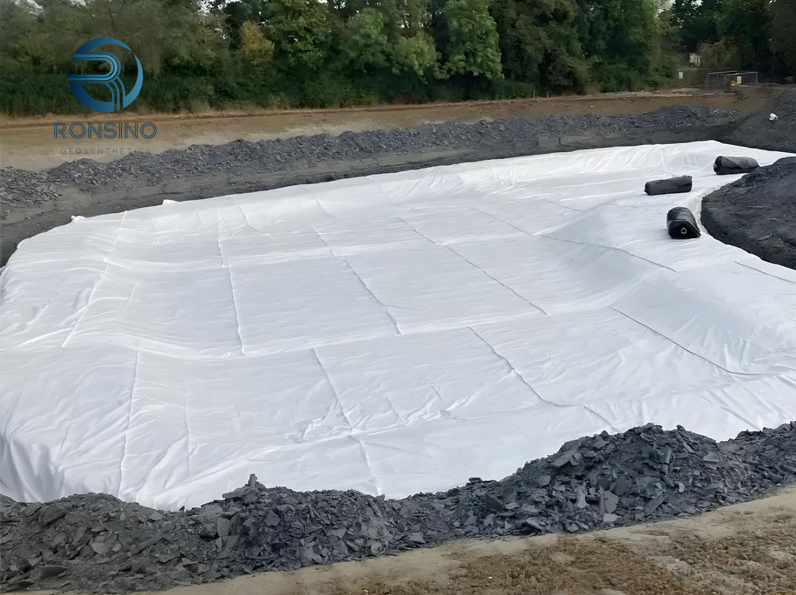
Geotextile is a porous geosynthetic material laid under gravel for use in driveways, sidewalks or road foundations. Mainly made of polypropylene (70% of the industry) or polyester, it has multiple functions such as isolating soil, reinforcing structures, draining water and supporting roadbeds. Its permeability is between 50 and 400 liters/square meter/second, which can prevent the loss of soil particles and effectively intercept particles with a particle size of 0.05-0.2 mm (in compliance with ASTM D4751 standards).
Core Functions Under Gravel Applications
In gravel systems, geotextiles perform multifaceted roles backed by engineering standards:
Separation: Prevents subgrade fines from migrating into gravel, reducing base loss by 30-50% (AASHTO M288).
Stabilization: Distributes loads evenly, minimizing rutting by 40% under 10-25 ton vehicles.
Filtration/Drainage: Allows water flow (permittivity 0.5-2 sec⁻¹ per ASTM D4491) while blocking clogging particles.
Reinforcement: Enhances tensile modulus, supporting heavy traffic with elongation <25%.
Typical rolls measure 3-6 m wide x 50-300 m long, covering 150-1,800 m², with weights of 100-800 GSM for optimal performance under 6-12 inch gravel depths.
2. Why Geotextile Fabric Under Gravel Is Essential
Geotextile materials embedded beneath gravel substrates convert precarious terrains into enduring frameworks, curbing aggregate consumption by 20-30% while augmenting serviceable lifespans beyond five decades. Unprocessed gravel pathways experience intermingling of earth and stone particles, resulting in 15-25% yearly volumetric depletion, which precipitates surface irregularities and renewal expenditures surpassing $5,000 per hectare.
2.1 Geotextile Fabric Under Gravel – Key Benefits Under Gravel
Enhanced Stability: Woven fabrics (tensile >200 lbs) prevent sinking in soft clays, improving CBR by 2-5 times.
Superior Drainage: Non-woven options (flow >100 GPM/ft²) mitigate freeze-thaw damage by 50% in cold climates.
Weed Suppression: Blocks growth 90-95%, reducing herbicide use.
Cost Savings: Lowers gravel depth requirements (8-12 inches vs. 12-18), saving 15-25% on materials.
Environmental Compliance: Permeable designs support sustainable drainage, aligning with EPA guidelines.
2.2 Geotextile Fabric Under Gravel – Gravel-Specific Applications
Driveways: Residential (light traffic, 200-400 GSM woven) to commercial (heavy, 600+ GSM).
Pathways/Patios: Non-woven for filtration under pavers/gravel.
Parking Lots/Road Bases: High-strength woven for 25+ ton loads.
Erosion Control: On slopes >1:3, reducing scour by 70%.
Case Study: A 2024 Tennessee rural driveway (clay soil) using 8 oz non-woven fabric reduced rutting 95% over 2 years, per Civil Engineering Research Institute.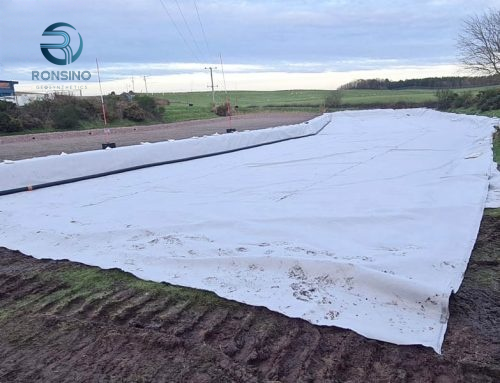
3. Types of Geotextile Fabric Under Gravel
Geotextiles under gravel fall into woven, non-woven, and composites, each optimized for specific loads and drainage needs.
Woven Geotextiles Under Gravel
Interlaced PP/PET yarns create high-tensile grids (20-200 kN/m, ASTM D4595).
Specs: 200-800 GSM; puncture 500-2,000 N; low permeability.
Best For: Stabilization in high-traffic driveways (e.g., Sandbaggy 4 oz, 200 lbs tensile).
Cost: $0.30-$0.70/ft².
Non-Woven Geotextiles Under Gravel
Non woven geotextile
Needle-punched or thermally bonded fibers for felt-like texture.
Specs: 4-20 oz/yd² (135-680 GSM); flow 100-400 L/m²/s; puncture 300-1,000 N.
Best For: Drainage/filtration in wet areas (e.g., 8 oz AASHTO standard).
Cost: $0.15-$0.50/ft².
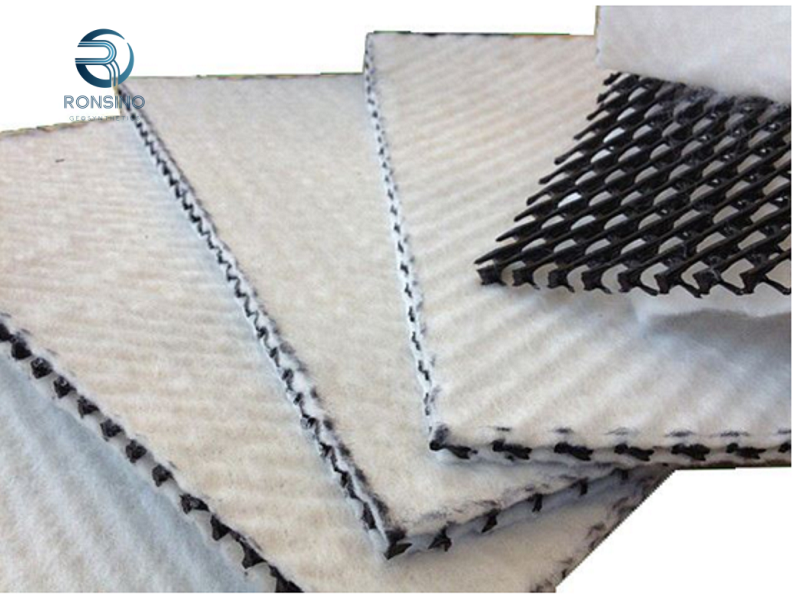
Composite/Hybrid Geotextiles
Geotextile-geogrid laminates for multi-functionality.
Specs: Tensile >50 kN/m; enhanced drainage.
Best For: Severe soft soils or slopes.
4. Comparative Table
Type | Weight (GSM/oz/yd²) | Tensile Strength (kN/m / lbs) | Puncture (N) | Permeability (L/m²/s) | Cost ($/m²) | Best Application |
Woven | 200-800 / 6-24 | 20-200 / 200-2,000 | 500-2,000 | 50-150 | 0.50-1.50 | High-traffic driveways |
Non-Woven | 135-680 / 4-20 | 10-50 / 100-450 | 300-1,000 | 200-400 | 0.20-0.80 | Drainage paths |
Composite | 300-1,000 | 50-100 | 800-1,500 | 150-300 | 1.00-3.00 | Soft soil reinforcement |
5. Key Features to Look for in Best Geotextile Fabric Under Gravel
5.1 Puncture and Tear Resistance
Critical for sharp gravel; >500 N (ASTM D4833) prevents 85% damage.
5.2 Permeability and Filtration
0.5-2 sec⁻¹ permittivity; AOS <0.2 mm for fine soils.
5.3 Tensile Strength and Elongation
200 lbs grab (ASTM D4632); <25% elongation for stability.
5.4 Chemical and UV Resistance
pH 2-13 tolerance; 70% retention after 500 hours UV (ASTM D4355).
5.5 Thickness and Weight
4-16 oz/yd²; 1-5 mm for 6-12 inch gravel overlays.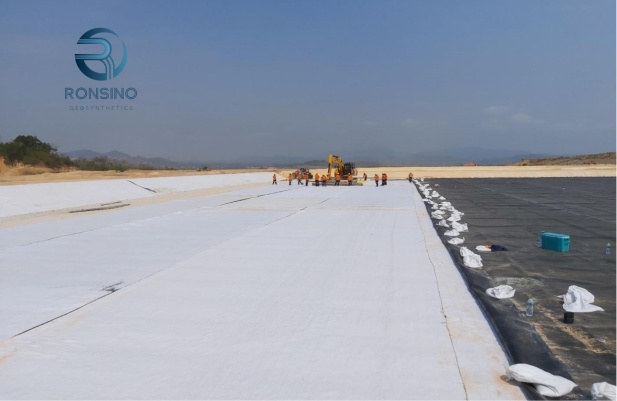
6. Factors to Consider When Choosing Geotextile Fabric Under Gravel
Soil Type/Traffic: Clay/soft soils need woven >400 GSM; sandy, non-woven 200-400 GSM.
Drainage Needs: High rainfall >300 L/m²/s non-woven.
Regulatory Standards: AASHTO M288; ASTM D4491/D4751.
Durability/Longevity: 50+ years buried; UV-stabilized for exposure.
Budget/Cost-Effectiveness: $0.20-3.00/m²; ROI via 20-30% savings.
7. How to Evaluate Geotextile Fabric Quality Under Gravel
Standards: ISO 9001; NTPEP certified.
Testing: Third-party ASTM verification (e.g., >800 N puncture).
Supplier Support: Warranties 20-50 years from RONSINO Geomebrane.
8. Common Mistakes to Avoid
Price-only selection: Cheap fabrics fail in 2-5 years.
Ignoring overlaps: <12 inches causes separation failures.
Wrong type: Non-woven in high-load vs. woven.
No compaction: Leads to 30% reduced efficacy.
9. Top Brands for Geotextile Fabric Under Gravel
RONSINO Geomebrane: ISO-certified woven/non-woven, 200-800 GSM.
Mirafi/Solmax: HP series for dual drainage.
Sandbaggy/Pro Fabric: Heavy-duty 4-20 oz options.
10. Cost Analysis of Geotextile Fabric Under Gravel
Material: $0.15-0.70/ft² woven; $0.20-0.50 non-woven.
Installation: $0.20-0.50/ft² labor.
Logistics: $0.05-0.20/ft².
Example: 1,000 ft² driveway: $500-1,500 total, saving $2,000 aggregate.
11. Conclusion
Achieving optimal performance with geotextile fabrics beneath aggregate layers—ranging from 200 to 800 grams per square meter in weight, 200 to 2,000 pounds in tensile strength, and priced between $0.20 and $3.00 per square meter—enhances driveway and pathway stability by 30 to 50% while reducing expenses by 20 to 40%. It is essential to prioritize woven varieties for structural reinforcement, non-woven options for efficient water drainage, and ASTM-certified materials to ensure a service life exceeding 50 years.
For detailed quotations, complimentary samples, or bespoke geotextile solutions, reach out to Taian RONSINO New Material Co., Ltd (RONSINO Geotextile)—pioneers in the industry since 2007, serving over 100 nations worldwide.