Warp Knitting Polyester Geogrid for Road Construction in Algeria
CASE · 2025-12-23 · 0 views
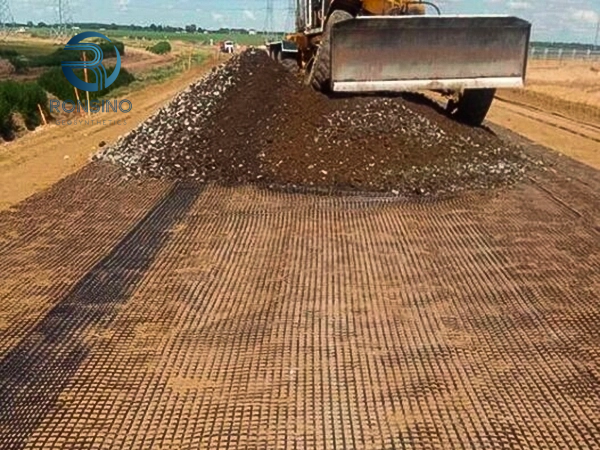
Warp Knitting Polyester Geogrid boasts prominent properties such as high tensile strength, low ductility, excellent reinforcement performance, strong tear resistance, well-balanced longitudinal and transverse strength, as well as wear resistance, corrosion resistance and light weight. These advantages enable it to effectively interlock soil or crushed stones, thereby significantly improving the shear strength and overall stability of the soil matrix. Owing to such superior characteristics, this type of geogrid is extensively applied in soft soil foundation treatment for highways, railways, municipal roads and other pavement projects, along with the reinforcement and protection of subgrades, dams and similar engineering structures.
BENEFITS
RONSINO Warp Knitting Polyester Geogrid features reliable mechanical and chemical stability, and is not biologically impacted by soil microorganisms. Suitable for the harsh environment of construction installation, it is also ideal for uniaxial-strength soil reinforcement projects, offering comprehensive protection against chemicals, mechanical damage and UV rays.
CASE STUDY
Location -Algeria
Product(s) -Warp Knitting Polyester Geogrid
Application – Slope protection and stabilization of river bank and road
ISSUE
Our Algerian client discovered us via Google and sent an inquiry regarding Warp Knitting Polyester Geogrid for road construction projects. The client also provided relevant technical specifications and product images, noting that their road construction project was launched in September 2024.
SOLUTION
We recommended the 30/30kN bidirectional warp-knitted polyester geogrid for the project. Crafted from high-strength industrial polyester filaments, this geogrid undergoes warp knitting to form oriented grid greige fabric, which is then coated with PVC for enhanced performance. Unlike conventional plastic geogrids, it follows a distinct production workflow: raw material preparation → warping → weaving → finishing → inspection, packaging and warehousing.
The PVC coating process stiffens the fabric substantially, boosts its tensile strength and node stability, and also brings about a notable improvement in tensile performance. Polyester geogrids fall into two categories: unidirectional and bidirectional types. The latter is characterized by identical breaking strength in both longitudinal and latitudinal directions, and the 30/30kN warp-knitted polyester geogrid refers specifically to the bidirectional variant with 30kN strength in each direction.
Given its cost-effectiveness for the client’s road project, we also sent product samples for evaluation. Following rounds of communication and negotiation, the client verified the quality of our polyester geogrid and subsequently signed a formal order contract with us.
Specifications of Warp Knitting Polyester Geogrid for Road Construction in Algeria
Properties – 30/30Kn
• Specification – 3.95m×100m
• Total quantity – 96400 square meters
• Delivery time – 15 days
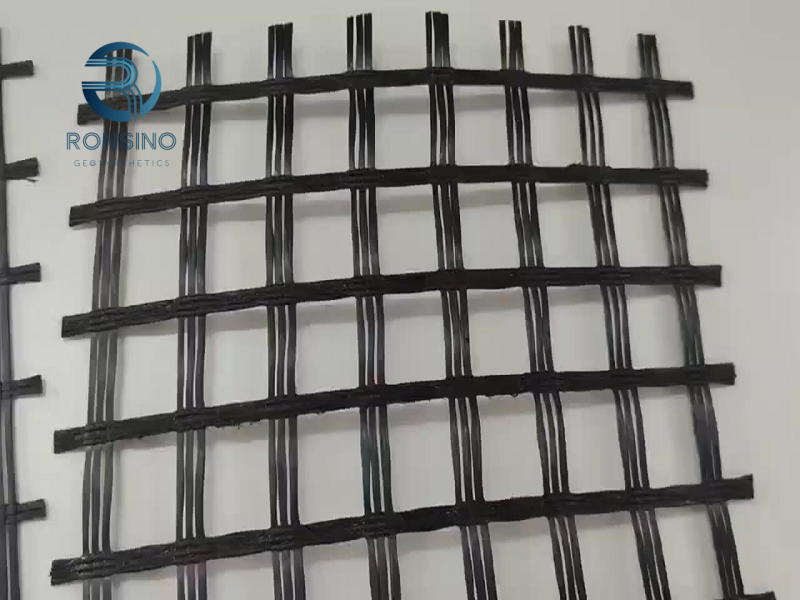
Warp Knitting Polyester Geogrid Features
Exceptional mechanical properties & long-lasting stability
High tensile strength
Impressive wear & corrosion resistance
Well-balanced vertical and horizontal strength
Strong tear resistance
Excellent adaptability to sloped or curved soil surfaces
High resistance to dynamic impact loads and vibrations
Powerful reinforcement performance
Superior anti-differential settlement capacity
Purpose of Warp Knitting Polyester Geogrid
Warp-knitted polyester geogrid is primarily adopted to reinforce soft soil subgrades of highways, railways, municipal roads and other pavement projects, which can effectively boost subgrade strength and delay the occurrence of reflective pavement cracks.
In water conservancy engineering, this geogrid provides reinforcement and isolation for dikes, dams and riverbanks. It strengthens soft soil foundations, enhances their protective performance, and elevates the overall bearing capacity and stability of the foundations.
It also serves as a reinforcement material for embankment slopes and retaining walls to improve their integral strength, and is applicable for reinforcing soft soil foundations in highway, railway and water conservancy projects.
Its applications in railway engineering include two key aspects:
Ballast protection: Railway ballast is prone to loss due to train vibrations, wind and rainfall. Wrapping ballast with this geogrid can prevent such loss and improve subgrade stability.
Retaining wall reinforcement: It is used to strengthen railway-side retaining walls (e.g., platforms and freight yards at railway stations), which helps extend service life and cut down maintenance costs.
For highway projects, laying the geogrid alongside or within vertical retaining walls can enhance the bearing capacity of the structures.
Additionally, abutment foundations are susceptible to settlement and bumping issues. Placing the geogrid beneath abutment foundations can improve their bearing capacity and maintain structural stability.
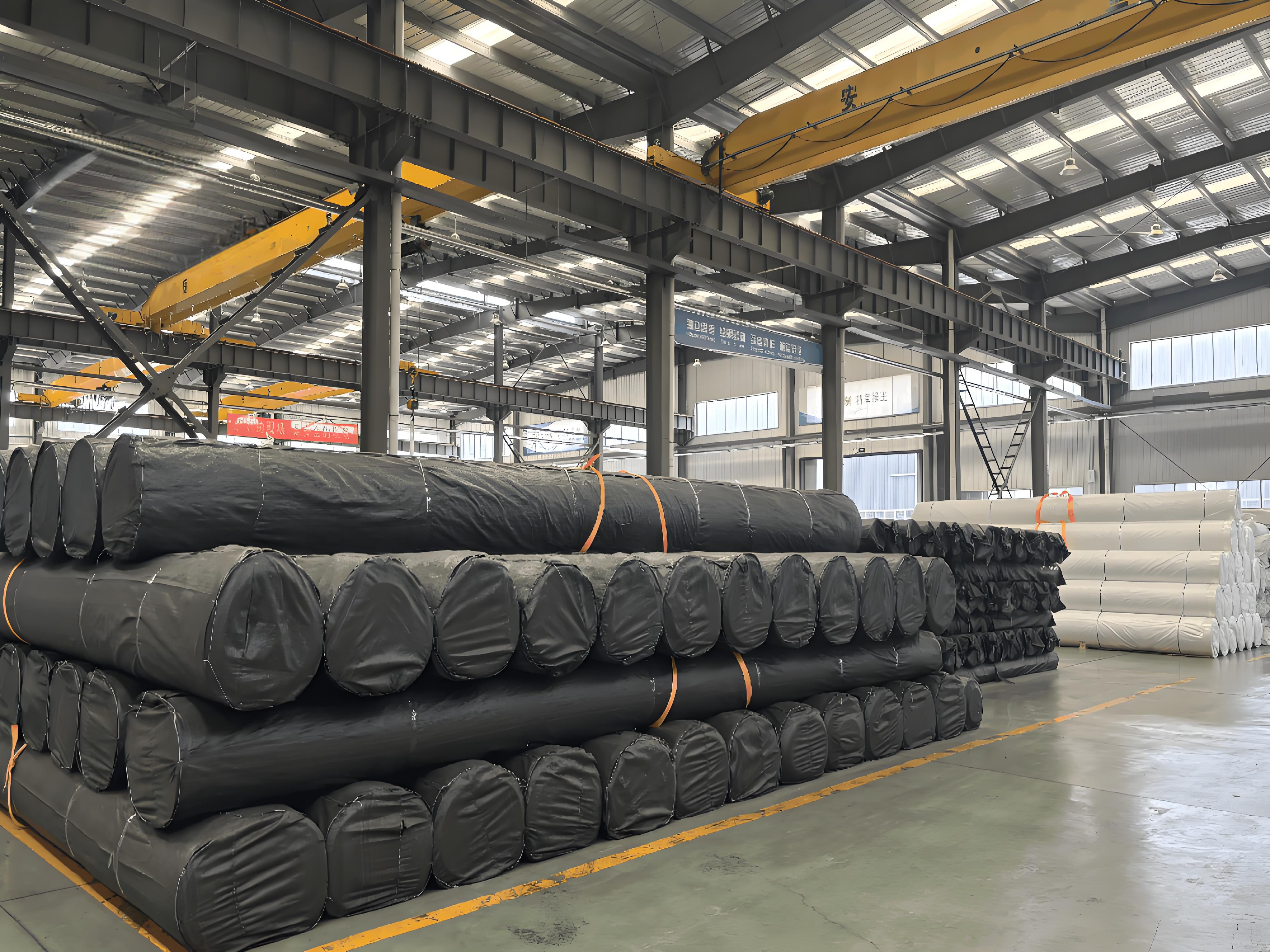
Construction method of warp knitted polyester geogrid mesh
First and foremost, the subgrade slope line must be precisely staked out. To guarantee the required subgrade width, an appropriate widening margin should be reserved on both sides. Once the base soil is air-dried and leveled, compaction operations shall be carried out in two stages: first, a 25-ton vibratory roller is applied for two passes of static compaction, followed by four passes of compaction using a 50-ton vibratory roller. Any uneven sections remaining after mechanical compaction need to be manually trimmed and leveled.
The construction process requires paving a medium (or coarse) sand layer with a designed thickness of 0.3 m. Following the completion of leveling work—conducted by both manual labor and mechanical equipment—the 25T vibratory roller is to be adopted for two passes of static rolling compaction. For geogrid laying work, the primary requirements are as follows: the base surface must be flat and well-compacted; the geogrid should be placed in a smooth, straight position overall, without any overlapping, curling or twisting phenomena. Two adjacent geogrid pieces need to be overlapped, and the overlapping area shall be bound with No. 8 iron wire at 1-meter intervals along the subgrade length. Meanwhile, the geogrid shall be fixed to the ground with U-nails at a spacing of 1 meter.
Once the end of the geogrid is secured, the material should be slowly pulled forward using either a paver or manual force. Manual straightening is required at 10-meter intervals throughout the process, until a full roll of geogrid is completely laid. The same operation is then repeated for subsequent rolls. The surface where the geogrid is laid must be kept relatively flat.
After the base paving layer has passed the acceptance inspection, white lines need to be marked or reference lines strung on the layer in accordance with the specified width to avoid longitudinal displacement. Only after this preparation can geogrid paving work begin. The end of the geogrid is to be fixed to the ground with U-nails, at a standard of 4 nails evenly spaced per meter of the grid’s width.
Lapping Construction Specification: Each geogrid paving section shall be defined by the length of one roll of the material. Upon finishing the paving of a full roll-length section, the overall laying quality needs to be verified and approved. Only after passing the inspection can the construction of the next section be carried out. For the lapping of adjacent sections, the overlapping margin between two connected geogrid sheets shall be equal to one grid width. Before laying the subsequent section forward, it must be firmly fixed in place using binding wire. The same operational criteria and procedures shall apply to all subsequent construction segments.
The construction method adopted for the second layer of warp-knitted polyester geogrid shall be consistent with that of the first layer, and the subsequent filling process of medium or coarse sand shall replicate the operation requirements of the initial sand layer. After the sand layer is statically compacted twice with a 25T vibratory roller, the reinforcement construction of the subgrade base is finished.
After the third layer of medium (coarse) sand undergoes rolling compaction, two pieces of geogrid shall be longitudinally laid along the slope on both sides of the construction line. The overlapping length and connection measures of the geogrids shall comply with the previously defined technical specifications. Then, earthwork filling construction can be launched, with geogrids installed for slope reinforcement.
For each layer of geogrid installation, the laying boundary lines must be accurately measured and positioned. Both sides of the subgrade shall be reserved with adequate width to guarantee that the geogrids are embedded into the slope after the final slope trimming work. Geogrids shall be placed every two soil-filling layers; specifically, when the filled soil thickness reaches 0.8 meters, a layer of geogrid shall be synchronously laid on both sides of the slope. This operation cycle shall be repeated continuously until the geogrid is laid under the soil layer at the shoulder elevation.
After the completion of subgrade filling works, slope trimming shall be implemented without delay, and dry rubble protection shall be arranged at the slope toe. Besides the 0.3-meter widening set on each side of the subgrade, a 1.5% settlement reserve shall be pre-allocated to accommodate post-construction deformation.
About RONSINO
RONSINO manufactures and supplies many types of effective and state of the art geogrid, geomembrane, geotextile, and geosynthetics to over 36 countries. Our main innovative, high quality geogrid products include plastic biaxial geogrid, fiberglass geogrid, plastic uniaxial geogrid, warp knitting polyester geogrid, and steel plastic georgic mesh, etc. RONSINO brand brand high quality geosynthetic products had been certificated by the ISO9001, ISO14001,OHSAS18001 Soncap, SASO and BV, SGS and Intertek, etc.
If you have any questions or inquiries, please fill in and submit the form to contact us.