
What are the Advantages of LLDPE Geomembrane?
Blog · 2026-05-15 · 0 views
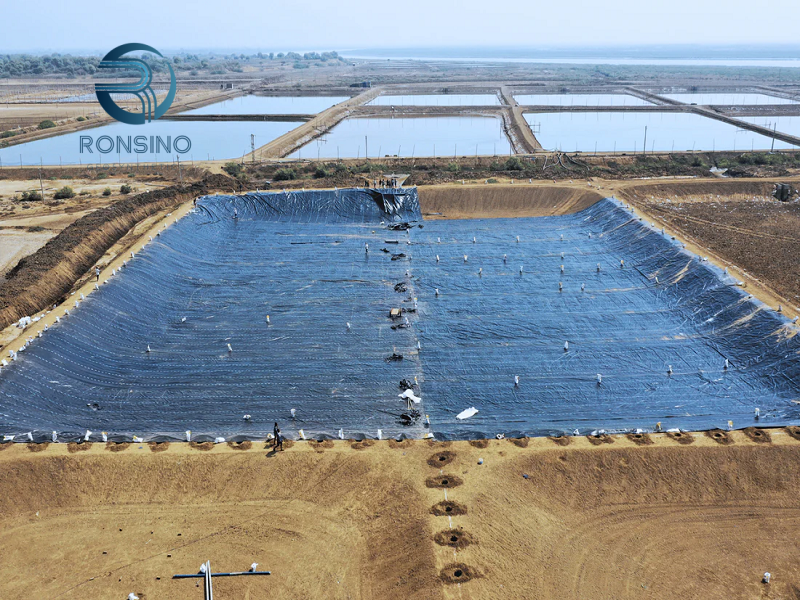
Within diverse sectors such as contemporary infrastructure construction mineral extraction operations aquatic farming facilities refuse processing systems and ecological conservation initiatives geomembranes are now recognized as indispensable materials utilized primarily for establishing effective fluid containment barriers When examining the extensive array available within this product category Linear Low Density Polyethylene or LLDPE distinguishes itself from alternatives by offering superior ductility impressive stretch capabilities alongside robust resilience against corrosive substances
As a specialized production entity and global sales force focused on this field RONSINO Geosynth etics is dedicated to providing comprehensive seepage barrier system services encompassing diverse varieties such as linear low-density high-density poly ethylene materials poly vinyl chloride products with embossed surfaces thereby precisely serving vast client groups spread across the globe who are involved in infrastructure development resource exploitation green engineering undertakings
The following guide aims to provide a thorough exploration of Linear Low-Density Polyethylene geomembranes. Readers will gain valuable insights into the material definition and production methodology alongside an examination of its unique benefits and practical uses in various industries. Furthermore, the text outlines critical installation protocols and offers essential advice on choosing the most suitable product variant tailored to specific project requirements.
1. What Is LLDPE Geomembrane?
Linear Low-Density Polyethylene Geomembrane is a flexible, stabilized liner made from premium LLDPE, acting as an impermeable barrier to block fluids, gases, and pollutants.
In contrast to the rigidness and high tensile strength inherent in High-Density Polyethylene (HDPR), Linear Low-Density Polyylene provides markedly superior ductility as well as a significantly greater capacity for stretching Such unique mechanical properties make LLDP linings exceptionally well-suited for civil engineering applications where the material must conform to rough undulating or highly inconsistent terrains
Key Physical Properties
Property | LLDPE Geomembrane |
Density | 0.915 – 0.935 g/cm³ |
Tensile Strength | Medium |
Elongation at Break | 700–1000% |
Flexibility | Excellent |
Chemical Resistance | High |
UV Resistance | Excellent (with carbon black) |
In simple terms, LLDPE geomembrane is a soft, durable, and adaptable liner used to prevent liquid leakage, protect groundwater, and contain waste or chemicals.
The Production Process of LLDPE Geomembrane
In order to create top-notch linear low-density polyethylene impermeable materials, Ronsino introduced cutting-edge multi-layer co-extrusion blown film equipment and precision slotted die calendering and extrusion systems for large-scale production. This refined manufacturing process not only effectively guarantees the absolute uniformity and stability of the thickness of the finished product, but also gives the product excellent tensile performance and a long service life in harsh environments.
2.Linear low density polyethylene geomembrane - core production process
2.1 LLDPE Geomembrane – Raw Material Selection:
In order to guarantee exceptional operational consistency and output durability carefully source premium grade linear low density polyethylene resins exclusively elite multinational corporations including Mobil PetroChina Such strategic procurement decisions remain absolutely vital given that raw material uniformity constitutes indispensable bedrock ensuring total dependability end user goods Furthermore establishing partnerships with established industrial leaders empowers implement precise oversight throughout entire fabrication workflow Ultimately resulting merchandise reliably satisfies exacting specifications regarding physical attributes upholding rigorous quality norms
2.2 LLDPE Geomembrane – Formulation:
In course complex blending operations essential ingredients comprising carbon black anti-oxidants stabilization additives are thoroughly amalgamated mixture Consequently vital processing phase dramatically augments final article's enduring resilience imparting superior defense mechanisms capability endure harsh ultraviolet radiation decelerate natural wear-tear deterioration withstand corrosive effects numerous external chemical agents
2.3 LLDPE Geomembrane – Extrusion:
The initial stage entails liquefying the polymer compound by applying heat and propelling it through an aperture mold to generate an elongated film base; tailored according to distinct functional requirements this adaptive manufacturing technique is ultimately capable of yielding both singularly structured and co-extruded multilayered geosynthetic liners.
2.4 LLDPE Geomembrane – Cooling and Shaping:
Subsequently, the molten film is guided through a series of cooling cylinders. This method concurrently solidifies the internal molecular arrangement and precisely regulates the geometric specifications, a critical step for ensuring consistent material characteristics across the entire product.
2.5 LLDPE Geomembrane – Surface Treatment (Optional):
In scenarios where exceptional frictional performance is essential, we engineer surfaces with specialized texturing. This methodical approach significantly bolsters the geomembrane’s adherence and substantially reinforces the stability of inclined surfaces.
2.6 LLDPE Geomembrane – Inspection and Packaging:
Every roll is tested for thickness, tensile strength, and appearance before being packed and labeled.
RONSINO's manufacturing process strictly follows the dual quality specifications of ISO9001 and GRI GM13, thereby fully ensuring the excellent quality and stability of various geomembrane products.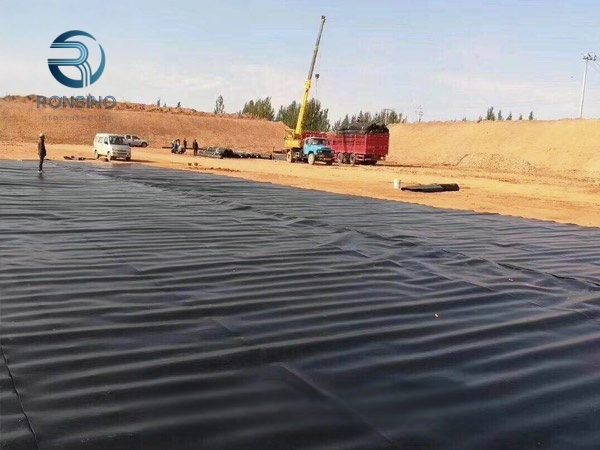
3. LLDPE Geomembrane vs. HDPE Geomembrane: What’s the Difference?
Both LLDPE and HDPE geomembranes are polyethylene liners, but their molecular structures and mechanical behaviors differ.
Feature | LLDPE Geomembrane | HDPE Geomembrane |
Flexibility | High | Low |
Tensile Strength | Moderate | High |
Elongation | 700–1000% | 300–500% |
Puncture Resistance | Excellent | Very good |
Chemical Resistance | High | Very high |
Cost | Slightly higher | Slightly lower |
Application Surface | Uneven, complex | Flat, stable |
In summary:
LLDPE is better for irregular or unstable surfaces.
HDPE is better for large, flat installations like landfills and reservoirs.
Many engineers use LLDPE for secondary containment or where flexibility and stress cracking resistance are priorities.
4. Key Advantages of LLDPE Geomembrane
Choosing LLDPE geomembrane provides several technical and economic benefits:
4.1 LLDPE Geomembrane – Excellent Flexibility
Linear low-density polyethylene geomembranes naturally conform to the undulating contours of the ground due to their exceptional flexibility. This inherent flexibility allows it to effectively adapt to future settlement or surface movement, thereby avoiding cracking.
4.2 LLDPE Geomembrane – High Elongation Rate
Attributable to its remarkable extensibility exceeding 700%, the LLDPE geomembrane demonstrates exceptional capacity to endure substantial ground displacement. Concurrently, its intrinsic pliability enables it to adapt effortlessly to irregular topographies and accommodate subsequent subsidence or shifts without fracture. This synergy of characteristics renders it a superior and dependable choice for demanding undertakings situated in seismically active or otherwise geologically unstable regions.
4.3 LLDPE Geomembrane – Strong Puncture and Tear Resistance
The distinctive molecular composition of LLDPE grants it exceptional tear strength relative to HDPE. As a result, this improved resilience markedly diminishes the likelihood of installation-related harm, especially during pivotal operations such as backfilling, thereby guaranteeing sustained liner performance over time.
4.4 LLDPE Geomembrane – Superior Chemical Resistance
Owing to its exceptional chemical resilience, LLDPE geomembrane demonstrates remarkable durability against diverse corrosive agents, such as acidic compounds, alkaline solutions, saline mixtures, and organic hydrocarbons. Consequently, it consistently maintains structural integrity under harsh operational conditions, establishing itself as a preferred material for essential chemical barrier systems and secure industrial waste management facilities.
4.5 LLDPE Geomembrane – Excellent UV and Weather Resistance
Through the incorporation of carbon black, we fortify our LLDPE geomembrane, enabling it to endure extended ultraviolet radiation for more than 15 years. This meticulous design consequently renders it an exceptionally reliable and robust option for extended, open-air applications.
4.6 LLDPE Geomembrane – Easy Installation
The remarkable flexibility and superior fusion capability of linear low-density polyethylene geomembrane significantly simplify the application of thermal wedge welding or extrusion bonding techniques. This exceptional material characteristic maintains its efficacy even in demanding subzero environments, thereby enabling the establishment of robust and high-integrity joint connections in regions with colder ambient temperatures.
4.7 LLDPE Geomembrane – Long Service Life
With correct installation, a linear low-density polyethylene (LLDPE) membrane can consistently maintain its functionality for more than three decades when exposed to typical environmental circumstances. This remarkable operational duration consequently positions it as a resilient and economically advantageous alternative for long-term confinement purposes.
5. Typical Applications of LLDPE Geomembrane
LLDPE geomembrane is used in a wide range of industries and environmental projects. Here are the main applications:
5.1 Landfill Liners and Covers
Used as a bottom liner and capping layer to prevent leachate leakage and gas migration.
5.2 Wastewater Treatment Ponds
Acts as an impermeable barrier in industrial wastewater lagoons, oxidation ponds, and sewage reservoirs.
5.3 Mining Industry
Employed within heap leach infrastructures, residual material repositories, and processing liquid reservoirs to segregate hazardous substances and avert the contamination of subsurface water resources.
5.4 Aquaculture (Fish and Shrimp Ponds)
Provides a clean and non-toxic waterproof base, reducing water seepage and improving pond hygiene.
5.5 Agriculture and Irrigation
Used in canals, reservoirs, and water storage tanks to reduce water loss and soil erosion.
5.6 Secondary Containment
Provides reliable protection for chemical storage tanks and fuel containment systems.
5.7 Tunnel and Dam Projects
Acts as a seepage control barrier for tunnels, dams, and retaining structures.
5.8 Environmental Remediation
Used in hazardous waste sites or contaminated soil remediation to isolate pollutants.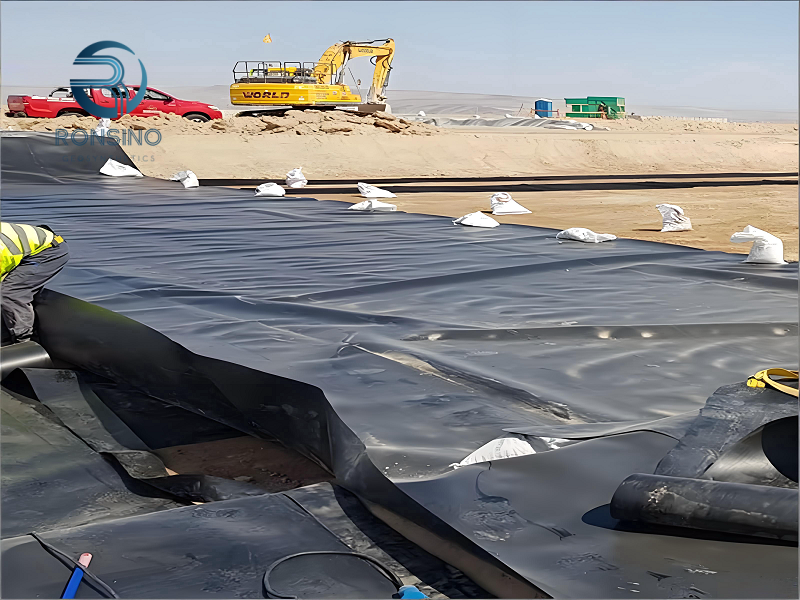
6. Installation and Welding Methods
Proper installation is critical to ensure geomembrane performance. RONSINO provides professional installation guidance and on-site technical support to clients worldwide.
6.1 Main Welding Techniques:
Hot Wedge Welding:
Common for seam joining; provides a smooth, watertight connection.
Extrusion Welding:
Used for corners, T-joints, and repairs.
Dual Track Welding:
Creates double seams with a central channel for air pressure testing.
6.2 Installation Precautions:
Ensure the base surface is smooth and free from sharp objects.
Overlap adjacent sheets by 10–15 cm.
Avoid installation during strong winds or rain.
Perform air pressure tests on all weld seams.
Protect geomembrane from mechanical damage during backfilling.
RONSINO’s installation team has completed numerous overseas projects — from landfills in Southeast Asia to aquaculture ponds in Africa — ensuring reliable and durable performance.
7. Quality Standards and Testing
RONSINO’s LLDPE geomembrane complies with the following international standards:
GRI GM17 (LLDPE Geomembrane Standard)
ASTM D5199 (Thickness)
ASTM D638 (Tensile Strength and Elongation)
ASTM D1004 (Tear Resistance)
ISO 9001:2015 Quality System
Before shipment, each batch undergoes strict laboratory testing for mechanical and hydraulic performance.
8. Factors Affecting LLDPE Geomembrane Price
The price of LLDPE geomembrane varies depending on several factors:
Thickness – Thicker membranes use more material, increasing the cost.
Raw Material – Virgin resin costs more but ensures longer life.
Surface Type – Textured surfaces cost slightly more.
Additives – UV-stabilized or special formulations affect price.
Order Quantity – Larger orders reduce cost per square meter.
Transportation – Depends on distance and packaging method.
At RONSINO, we always offer factory-direct prices and support custom production, helping clients balance cost and performance effectively.
9. How to Choose the Right LLDPE Geomembrane
When selecting LLDPE geomembrane for your project, consider the following:
Project Type
Chemical Environment
Temperature and UV Exposure
Ground Conditions
Installation Environment
RONSINO’s technical team can recommend the best geomembrane specification according to your design drawings or project requirements.
10. Why Choose RONSINO as Your Geomembrane Supplier?
As a professional manufacturer and exporter of geosynthetic materials, RONSINO Geosynthetics has built a solid reputation in over 50 countries.
Our Strengths:
Professional Production
Strict Quality Control
Global Export Experience
Technical Support
Customized Solutions
Competitive Pricing
RONSINO’s goal is to provide not just products, but integrated geomembrane solutions to help customers succeed in their projects.
11. Sustainability and Environmental Benefits
LLDPE geomembrane not only protects water and soil but also supports sustainable engineering:
Leak Prevention
Waste Reduction
Recyclable Material
Energy Efficient Production
At RONSINO, sustainability is integrated into every stage — from raw material selection to logistics.
12. Conclusion
Linear low-density polyethylene geomembrane stands out as an exceptionally dependable and adaptable solution for waterproofing and environmental protection applications. Its outstanding flexibility, elongation properties, and superior weldability make it perfectly suited for contemporary engineering endeavors. Opting for RONSINO Geosynthetics guarantees access to superior quality, extensive expertise, and enduring reliability. When seeking a dependable provider of linear low-density polyethylene geomembrane, RONSINO emerges as your most reliable collaborator.


