
What is GCL Geosynthetic Clay Liner Blanket?
Blog · 2025-08-19 · 0 views
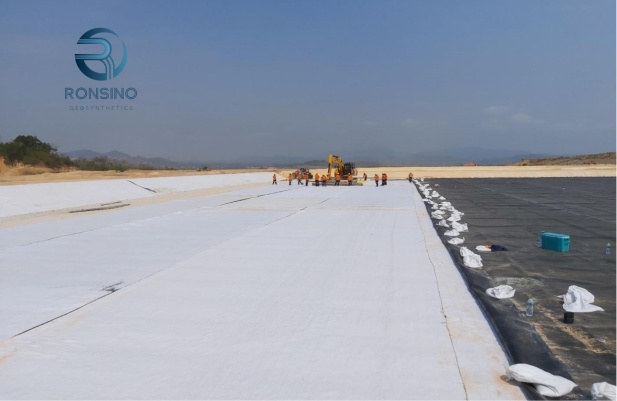
GCL liner, known as Geosynthetic Clay Liner, stands as an innovative, advanced, and environmentally sustainable reinforced composite material. It comprises two highly durable geotextile outer sheets encapsulating a uniformly distributed core of natural sodium bentonite, thereby forming a robust hydraulic barrier. These bentonite waterproofing membranes are generally fabricated utilizing mechanical techniques such as needling, stitching, or adhesive bonding. They function as a widely adopted alternative to conventional compacted clay liners. Once exposed to moisture, the bentonite within the membrane swells autonomously, producing a clay layer with minimal permeability. When subjected to compressive forces, this hydrated layer provides hydraulic resistance akin to that offered by multiple feet of densely compacted clay. The hydraulic efficacy of bentonite clay waterproofing membranes closely mirrors that of compacted clay. Exceptional tensile and peel strength attributes make GCL liner especially well-suited for composite liner systems, composite base liners in waste containment facilities, and backfill anti-seepage liners, among numerous other applications.
1.Soluton of Geosynthetic Clay Liners
GCL Liner uses special needle punching technology to form a fiber microporous network to ensure that the bentonite is evenly distributed when exposed to water and cannot migrate in one direction, thereby forming a dense and impermeable gel barrier. The material has been successfully used to line agricultural reservoirs in Argentina, significantly reducing water waste. Its excellent sealing performance meets irrigation requirements, improves water resource management efficiency and agricultural economic benefits, while ensuring stable water supply and optimizing irrigation effects.
2.Benefits of using GCL liners
2.1Prevent water leakage:
Irrigation reservoirs are commonly constructed from earthen structures utilizing natural elements like soil and stone. These foundational components often exhibit permeable characteristics, which frequently result in unintended seepage and inefficient utilization of agricultural water resources. The implementation of Geosynthetic Clay Liner technology facilitates the creation of an impermeable barrier across the dam's surface, thereby substantially mitigating water loss and conserving valuable water supplies.
2.2Prevent land desertification:
In water-scarce regions, the reservoir's irrigation supply often stands as the primary terrestrial hydration resource, rendering the local flora and substratum vulnerable to moisture depletion through vaporization and seepage, thereby accelerating arid land degradation. The application of Geosynthetic Clay Liners significantly mitigates water loss via evaporation and permeation, preserves optimal soil moisture levels, and consequently retards the advancement of desertification processes.
2.3 Improve irrigation efficiency:
Using GCL Liner can effectively prevent water waste and leakage, improve irrigation efficiency, reduce irrigation water usage, reduce irrigation costs, and improve agricultural production efficiency.
2.4 Enhance the stability of the irrigation pool:
Using GCL Liner can enhance the stability of the irrigation pool, reduce the scour and erosion of the pool bottom and pool dam, and improve the service life and safety of the irrigation pool.
3.Which Texture Conditions Should GCL Liner be Used?
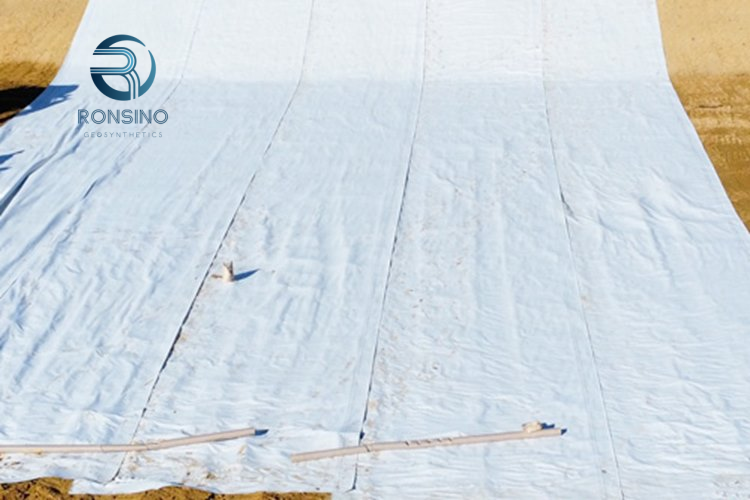
GCL Liner is suitable for a variety of texture conditions, the following are some texture conditions suitable for waterproof blankets:
3.1Areas with high groundwater table:
3.2Areas with soft soil:
In areas with soft soil, the ground is easily affected by soil erosion and settlement. Using GCL Liner can effectively prevent soil erosion and foundation settlement and protect the stability of the ground.
3.3Areas with large slopes:
In areas with large slopes, the ground is easily affected by water erosion. Using GCL Liner can effectively prevent water erosion and protect the stability of the ground.
3.4Waterproof treatment of underground buildings:
To summarize, Geosynthetic Clay Liner demonstrates remarkable adaptability across diverse geological environments, ensuring robust waterproofing capabilities and resilience against corrosive elements, while maintaining the long-term stability and security of subterranean infrastructure and above-ground structures.
4.GCL Liner Installation Method
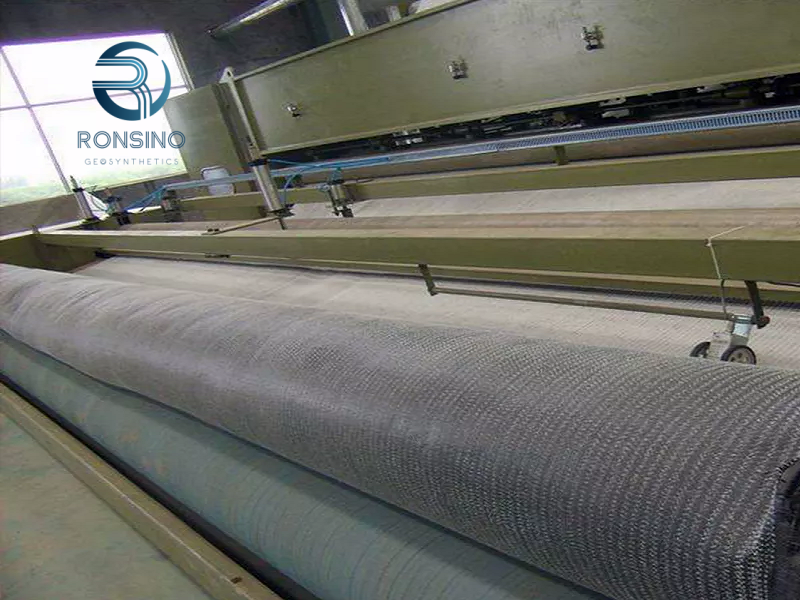
GCL Liner is a commonly used waterproof material, and its construction technology has an important impact on waterproof effect and service life. The following are common construction techniques for GCL Liner:
4.1 Preparation before laying:
Prior to the installation of Geosynthetic Clay Liner, it is imperative to meticulously prepare and refine the underlying substrate. This process involves thoroughly removing all debris and ensuring the surface is impeccably smooth, devoid of any unsecured particles or hazardous protrusions. Concurrently, a comprehensive examination of the GCL Liner must be conducted to verify that its material integrity and dimensional characteristics align precisely with the stipulated project specifications and construction standards.
4.2Laying of GCL Liner:
Lay the GCL Liner on the base layer according to the design requirements, and pay attention to ensure that the waterproof blanket is flat, tight and wrinkle-free. In the laying of the waterproof blanket, the joints of the blanket need to be processed by welding or bonding to ensure the waterproof effect of the entire waterproof system.
4.3Compaction and covering of GCL Liner:
Following the installation of the waterproof blanket, it must be thoroughly compacted to ensure it forms a seamless bond with the underlying substrate. Subsequently, a protective layer is applied to safeguard the waterproof blanket from potential harm while simultaneously enhancing the overall durability and load-bearing capacity of the waterproofing assembly.
4.4Construction quality control:
During the installation phase of Geosynthetic Clay Liner, meticulous oversight of construction standards is imperative to achieve optimal waterproofing performance and extend the service longevity. Critical considerations include ensuring the integrity of the waterproof blanket's seam welds, implementing proper joint treatment techniques, verifying adequate compaction levels, and confirming both the thickness and quality of the protective cover layer meet specified requirements.
Summary
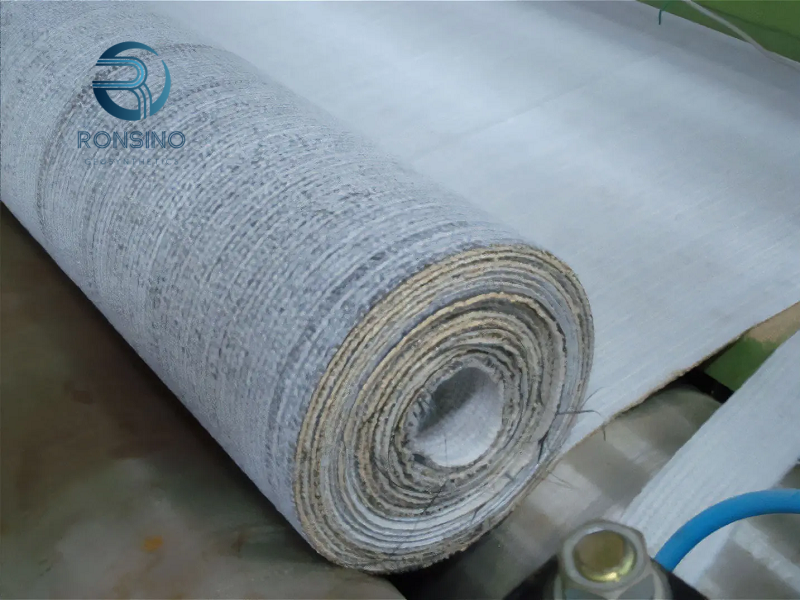
GCL Liner stands as a highly versatile waterproofing solution extensively employed across numerous engineering applications. These include hydraulic infrastructure, road construction, architectural developments, water treatment facilities, landfill containment systems, and mining operations. The material demonstrates exceptional efficacy in inhibiting water infiltration and mitigating corrosive effects, thereby safeguarding the structural integrity and long-term reliability of engineering projects.
5.Case Study of GCL Liner for Irrigation Pond Project in Chile
Product – GCL liner
Location – Chile
GCL specification- 4300g geosynthetics clay liner
GCL roll size- 5.8x30m
6.Why Chose RONSINO GCL Liner for Irrigation Pond Project
As a leading manufacturer and distributor in the field of geosynthetics, RONSINO specializes in the wholesale supply of these products and provides comprehensive installation solutions. Argentina has a huge network of irrigation reservoirs, with more than 1,700 reservoirs covering more than 600,000 hectares, providing stable water sources for agriculture. These reservoirs are mainly located in the northwest and central valleys and high plains of the country. Although these areas are dry and short of water, they receive abundant rainfall in summer. Therefore, reservoir construction must prioritize solving the problems of water resource depletion and inefficiency to achieve maximum benefits.


