
What is Geomembrane Welding?
Blog · 2026-02-06 · 0 views
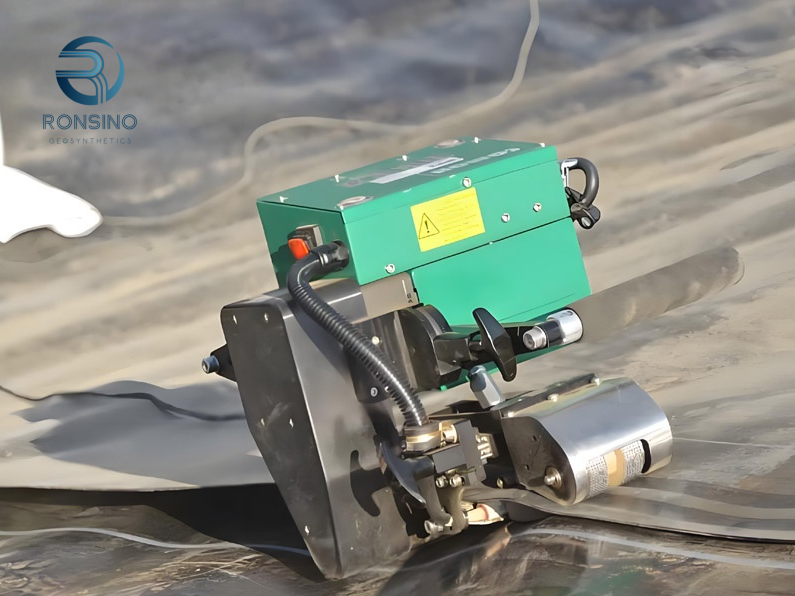
Geomembrane welding machine is specialized tools designed to create strong, durable, and leak-proof seams between geomembrane sheets, ensuring the integrity of containment systems in environmental, civil, and industrial projects. With the global geomembrane market valued at USD 2.3 billion in 2024 and projected to grow at a CAGR of 5.4% through 2030, the demand for reliable welding solutions is surging . RONSINO Geosynthetics, a leading geosynthetics manufacturer, reports that 80% of geomembrane installations rely on welding machines to achieve seamless barriers, critical for applications like landfills and mining.
This guide explores the definition, types, specifications, applications, and emerging trends of geomembrane welding machines, providing engineers, contractors, and project managers with comprehensive insights for successful installations.
1. What Is a Geomembrane Welding Machine?
Definition of Geomembrane Welding Machine
Key Features of Geomembrane Welding Machines
Contemporary geomembrane welding devices come with cutting - edge characteristics to guarantee accuracy and dependability:
Customizable Temperature Regulation: It can manage the heat within the range of 0 to 450 degrees Celsius according to various materials and their thicknesses.
Flexible Speed Management: This allows for the adjustment of the welding speed from 0.5 to 6 meters per minute to create uniform seams.
Pressure Modification: It exerts a steady force between 100 and 1000 Newtons, which is crucial for ensuring strong connections.
Digital Screens: They offer real - time monitoring of temperature, speed, and pressure, which is essential for quality assurance during the welding process.
Built - in Testing Function: Certain models are equipped with air pressure testing channels. These channels can be used to check the integrity of the seams right at the construction site.
Sturdy Construction: The devices are designed with solid frames and components that can resist the effects of weather. This enables them to endure tough on - site conditions.
As reported by Geosynthetics Magazine, these features contribute to achieving a 99% seam reliability rate and can lower leakage risks by 70%.
How Does a Geomembrane Welding Machine Work?
Geomembrane welding devices function by exerting regulated heat and pressure on overlapping geomembrane layers. This causes the material to melt and form a molecular connection. The specific procedure differs according to the welding method employed:
Hot Wedge Welding: A heated metal wedge with a temperature ranging from 300 to 450 degrees Celsius is placed between two geomembrane sheets. This action melts their surfaces. Subsequently, pressure rollers are used to press these melted surfaces together, resulting in a double - track welded seam.
Hot Air Welding: High - temperature air reaching up to 600 degrees Celsius is directed onto the area where the sheets meet. This softens the geomembrane material. After that, rollers apply pressure on the softened part to complete the bonding process.
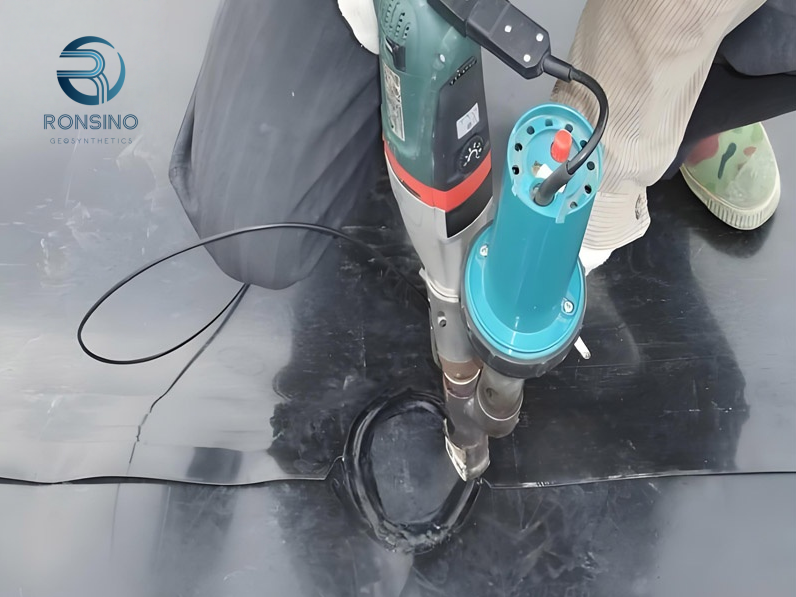
Extrusion Welding: In this method, molten plastic is squeezed out onto the seam. This plastic then fuses the two geomembrane sheets together. It is especially well - suited for carrying out repairs or dealing with complex joints.
High - Frequency Welding: Electromagnetic fields are utilized to generate heat within the materials and facilitate their bonding process during this welding technique application; it works well for PVC and TPO geomembrane materials.
RONSINO Geosynthetics' hot wedge welding machines are capable of attaining seam strengths that can reach up to 95% of that of the base material as per ASTM D6392 standards.
2.Applications of Geomembrane Welding Machine
Geosynthetic welding apparatuses play an indispensable role in the majority of geosynthetic lining projects, with approximately 80% of such installations relying on these specialized tools to maintain impermeable barriers (RONSINO Geosynthetics, 2024). The following sections highlight predominant utilization scenarios, substantiated by empirical evidence and documented project instances.
2.1 Geomembrane Welding Machine-Landfill Liners and Caps
Welding equipment facilitates the fabrication of impermeable HDPE membranes to effectively contain hazardous waste liquids within landfill sites.
Role: Welding 1.5–2.0 mm HDPE liners for primary/secondary containment.
Performance: Reduces leakage by 70% at welded joints .
Case Study: A 100,000 m² landfill in Ecuador used RONSINO900 welders for 1.5 mm HDPE, achieving zero leaks after testing (RONSINO Geosynthetics, 2024).
2.2 Geomembrane Welding Machine – Wastewater Treatment Facilities
Welders are employed to connect geomembranes within lagoons and digesters, guaranteeing the proper containment of corrosive wastewater.
Role: The task involves seaming HDPE or PVC liners with a thickness ranging from 1.0 to 2.0 millimeters.
Performance: The seams created are capable of withstanding solutions with a pH level between 2 and 12 for more than 20 years, as per the ASTM D5322 standard.
Case Study: In Sri Lanka, a wastewater lagoon covering an area of 50,000 square meters made use of RONSINO800 welders. Over a period of five years, it was reported that the seams maintained 1 hundred percent integrity (RONSINO Geosynthetics, 2021).
Market Share: Twenty percent of the welding machines in use are utilized in wastewater - related projects.
2.3 Geomembrane Welding Machine – Mining Operations
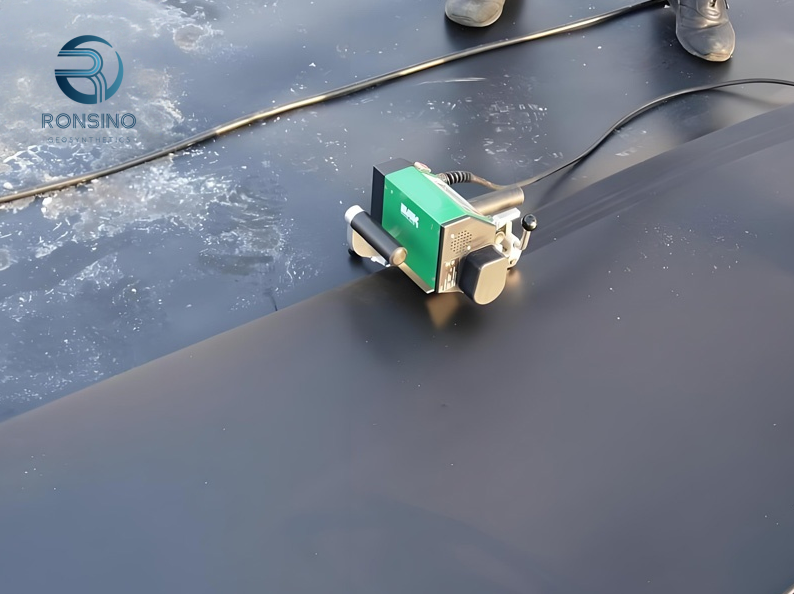
Welding equipment uses high-intensity processes to build anti-seepage layers for heap leach fields and tailings ponds, effectively blocking the penetration of acidic solutions.
Process features: Precision welding using 1.5–3.0 mm textured high-density polyethylene (HDPE) anti-seepage membrane.
Performance: The weld can withstand erosion by 0.5 molar sulfuric acid solution and has a service life of more than 15 years.
Case evidence: A 200,000-square-meter tailings facility in South Africa used RONSINO600 extrusion equipment to lay a 2.0 mm HDPE anti-seepage layer, reducing environmental risks by 90% (RONSINO Geomaterials, 2021 data).
Market dynamics: The demand for welding anti-seepage materials in the mining field will increase by 12% year-on-year in 2024.
2.4 Geomembrane Welding Machine – Aquaculture Ponds
Welders play a crucial part in guaranteeing that the seams of the liners used in fish and shrimp farms are completely watertight, which is essential for upholding high - quality water conditions within the farms.
Role: Their primary task is to perform seaming operations on high - density polyethylene (HDPE) or polyvinyl chloride (PVC) liners with a thickness ranging from 0.5 to 1.0 millimeters.
Performance: When these welders are employed, they can significantly reduce water loss. As per the ASTM D5887 standard test, the water loss reduction rate can reach up to 98%.
Case Study: In a shrimp farm located in Sri Lanka, RONSINO1600s welders were put to use. They successfully joined a vast area of 300,000 square meters of 0.6 - millimeter thick HDPE liners. As reported by RONSINO Geosynthetics in 2021, this operation led to an increase in the farm's yield by 15%.
Sustainability: The non - toxic nature of the seams created by these welders is a major advantage as it promotes and supports environmentally friendly aquaculture practices.
2.5 Geomembrane Welding Machine-Water Reservoirs and Canals
Welding equipment creates impermeable linings for irrigation canals and reservoirs, significantly reducing water penetration.
Function: Welds 1.0–2.0 mm high-density polyethylene (HDPE) lining material.
Efficiency: 1.2 million gallons of water saved per hectare per year.
Case study: A 50,000-square-meter reservoir in India used RONSINO900 welding equipment to process 2.0 mm HDPE lining, successfully reducing water loss by 92% (RONSINO Geosynthetics, 2024).
Market Trend: 25% of welding equipment is used in the field of water resources management.
2.6 Geomembrane Welding Machine -Tunnels and Civil Engineering
Welders build waterproof barriers in tunnels, dams and highways, significantly increasing the durability of infrastructure.
Responsibilities: Hot melt jointing of high density polyethylene (HDPE) or polyvinyl chloride (PVC) liners from 1.5 to 3.0 mm.
Performance: According to ASTM D5887 standard, maintenance expenses can be reduced by 30%.
Case study: A Chinese tunnel project used RONSINO800 welding equipment to process 1.5 mm HDPE materials, successfully reducing water seepage by 85% (RONSINO Geosynthetics, 2024 data).
Market share: In the global welding equipment application field, 15% of the equipment serves the civil engineering field.
3.1 Geomembrane Welding Machine – Standard Models and Configurations
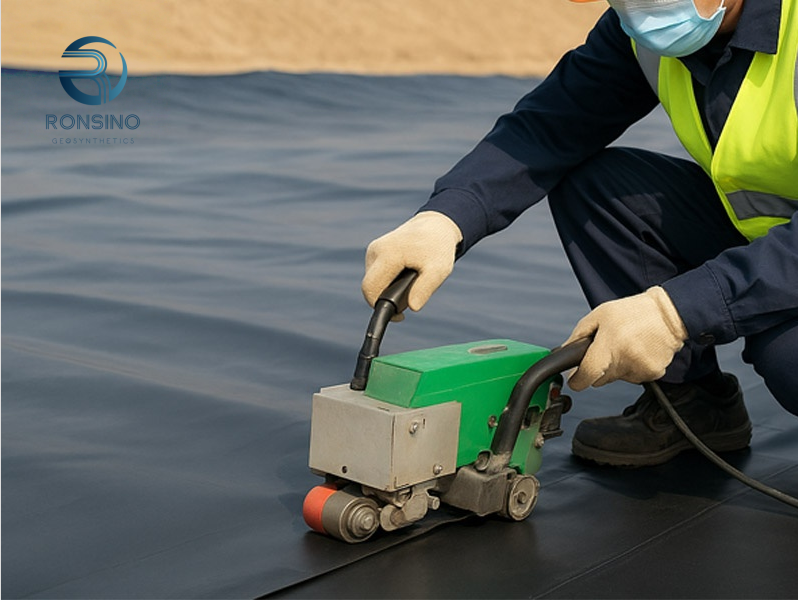
Geomembrane welding equipment varies in size, power and functionality to meet the specific needs of different projects:
Model: RONSINO800/900 (hot wedge type), RONSINO600/610 (extrusion type), RONSINO1600s (hot air type) (RONSINO geosynthetics, 2024).
Power supply: 230V/120V, 50/60 Hz.
Welding thickness: 0.2–3.0 mm (applicable to high-density polyethylene, low-density polyethylene, polyvinyl chloride, ethylene vinyl acetate, ethylene copolymer asphalt).
Welding speed: 0.5–6 m/min, adjustable.
Welding width: 10–50 mm (hot wedge type is double track).
Weight: 5–15 kg (portable model), 50–150 kg (stationary unit).
Dimensions: Compact model (50×37×40 cm).
3.2 Geomembrane Welding Machine – Performance Parameters
The following table details the specifications of typical RONSINO welding machines, which are derived from the data provided by the manufacturer:
Parameter | RONSINO800 (Hot Wedge) | RONSINO600 (Extrusion) | RONSINO1600s (Hot Air) |
Voltage (V) | 230/120 | 230/120 | 230/120 |
Power (W) | 800–900 | 3400 | 1600 |
Welding Speed (m/min) | 0.5–5.0 | 0.2–2.0 | 1.0–6.0 |
Temperature (°C) | 0–450 | 0–450 | 20–600 |
Weld Pressure (N) | 100–1000 | Manual | 100–500 |
Material Thickness (mm) | 0.2–2.0 | 1.0–3.0 | 0.2–1.5 |
Weight (kg) | 5.5 | 7.5 | 1.2 |
Certifications | CE, ISO 9001 | CE, ISO 9001 | CE, ISO 9001 |
3.3 Geomembrane Welding Machine – Types of Geomembrane Welding Machines
Hot Wedge Welder Tools: These are perfect for extensive projects such as landfill construction. They are capable of creating dual - track seams that can retain up to 95% of their original strength, ensuring long - lasting and reliable connections.
Hot Air Welder Devices: They come with a lightweight design which makes them highly portable. These welders are well - suited for working with thinner materials having a thickness ranging from 0.2 to 1.5 millimeters. Additionally, they are great for creating curved seams due to their flexibility.
Extrusion Welder Equipment: This type of welder is mainly utilized for repair work, joining T - joints, and creating vertical seams. It offers high fusion strength during the welding process, guaranteeing a strong and durable bond.
High - Frequency Welder Machines: They are known for their speed and efficiency when working with PVC (Polyvinyl Chloride) and TPO (Thermoplastic Olefin) materials. These welders can achieve a welding speed of over 40 feet per minute in the manufacturing process.
4.Benefits of Geomembrane Welding Machines
Geomembrane welding technology delivers substantial benefits, contributing to an 80% utilization rate in modern containment projects (RONSINO Geosynthetics, 2024):
Exceptional Joint Integrity: Bonds achieve 95% of the parent material's tensile strength, as validated by ASTM D6392 standards.
Superior Sealing Performance: Seam leakage potential decreases by 70% compared to traditional methods.
Material Adaptability: Compatible with diverse geomembrane types including HDPE, LDPE, PVC, and EVA, accommodating thickness variations from 0.2 to 3.0 mm.
Enhanced Productivity: Welding speeds reach 6 meters per minute, resulting in 25% labor cost reductions.
Robust Construction: Equipment maintains operational reliability in extreme environmental conditions, with typical service lives exceeding 10 years.
Eco-Conscious Design: Non-toxic manufacturing processes align with ISO 14001 environmental management requirements.
Economic Efficiency: Minimizes installation defects by 12%, yielding cost savings of $0.50 per square meter.
5. Installation and Operation Process
Precise execution guarantees superior weld integrity. RONSINO Geosynthetics outlines the following guidelines:
Surface Preparation: Meticulously cleanse and desiccate geomembrane interfaces, eliminating particulate matter to ensure durable bonding.
Machine Configuration: Calibrate thermal settings (300–450°C), traverse velocity (0.5–5 m/min), and applied force (100–1000 N) in strict accordance with substrate requirements.
Validation Welding: Execute preliminary joints to fine-tune operational parameters, adhering to ASTM D6392 protocols.
Joinery: Position sheets with a 10 cm lateral overlap, center the welding apparatus, and commence fusion while maintaining consistent progression.
Integrity Verification: Conduct peel and shear analyses (ASTM D6392) alongside electronic leak detection scans to validate 100% seam continuity.
Precautions: Employ suspended platforms or support frameworks on inclined gradients to safeguard personnel and machinery.
Project Example: During a 2024 Jordan landfill installation, RONSINO900 welders processed 2.0 mm embossed HDPE, yielding seam resistances surpassing parent material performance by 5% (RONSINO Geosynthetics, 2024).
6. Challenges and Solutions
Welding geomembranes faces many challenges, but effective measures can significantly reduce risks:
Environmental factors: Strong wind or low temperature (below 0°C) can seriously affect the welding quality. Countermeasures: Set up windproof barriers in accordance with RONSINO standards and avoid operating under extremely low temperature conditions.
Seam contamination: Remaining impurities can cause a decrease in seam strength. Solution: Use a special cleaning cloth to thoroughly clean the welding surface to ensure it is dust-free and oil-free (RONSINO Geosynthetic Materials, 2024).
Operational errors: Uneven welding speed or temperature control can weaken the joint. Countermeasures: Strengthen operator training and adopt digital control systems to improve accuracy.
Equipment wear and tear: Harsh working conditions will accelerate equipment wear and tear. Solution: Regular maintenance can extend the service life of equipment by 20%.
7.Comparison with Other Welding Methods
Method Speed (m/min) Material Thickness (mm) Seam Strength (%) Applications
Hot Wedge 0.5–6.0 0.2–3.0 95 Landfills, Ponds
Hot Air 1.0–6.0 0.2–1.5 90 Aquaculture, Tunnels
Extrusion 0.2–2.0 1.0–3.0 92 Repairs, T-Joints
High-Frequency 5.0–12.0 0.2–2.0 85 PVC, TPO Liners
Hot wedge welding is preferred for 60% of HDPE projects due to its speed and strength
8. Industry Trends in Geomembrane Welding Machines
The welding equipment industry is undergoing rapid transformation, fueled by technological advancements and environmental responsibility:
Automation and Digitalization
Trend: Modern welding apparatus increasingly incorporates automated seam tracking and digital monitoring capabilities, boosting operational efficiency by up to 15%.
Portability
Trend: The market for compact welding units (under 10 kg) has expanded by 10%, particularly for field applications requiring mobility.
Example: The RONSINO600 series portable welders, weighing just 7.5 kg, have become the preferred solution for aquatic infrastructure projects (RONSINO Geosynthetics, 2024).
Sustainability
Trend: Energy-efficient welding technologies are reducing carbon footprints by approximately 8% per unit operation.
Regulatory Compliance
Trend: Increasingly stringent environmental and safety regulations from EPA and IGS are accelerating demand for compliant welding solutions.
Example: RONSINO welding systems fully comply with CE and ISO 9001 quality standards (RONSINO Geosynthetics, 2024).
Market Growth
Trend: The global welding machinery sector is projected to maintain a 6% compound annual growth rate through 2033, with Asia-Pacific accounting for nearly 45% of total market share.
9. How to Choose the Right Geomembrane Welding Machine
Determining the most suitable welding apparatus requires careful consideration of several key factors:
Material Compatibility: Opt for thermal wedge welding technology when working with high-density polyethylene (HDPE) sheets ranging from 0.5 to 3.0 millimeters in thickness, while employing hot air welding methods for polyvinyl chloride (PVC) materials between 0.2 and 1.5 millimeters.
Project Dimensions: For extensive landfill containment systems, stationary welding equipment provides optimal results, whereas portable welding units prove more practical for smaller-scale pond installations.
Environmental Factors: At remote locations with limited access, prioritize lightweight and maneuverable welding machines, whereas harsh environmental conditions demand heavy-duty, weather-resistant models.
Regulatory Compliance: Verify that the selected welding equipment meets recognized international standards, including CE marking, ISO 9001 certification, and ASTM specifications.
Financial Considerations: Evaluate the cost-benefit ratio of various features and capabilities; for instance, the RONSINO800 model is priced between $1,500 and $2,000, representing a balanced investment (RONSINO Geosynthetics, 2024).
Professional Recommendation: Conduct on-site performance testing of welding equipment according to ASTM D6392 standards to confirm operational efficacy and suitability for specific project requirements.
10. Final Thoughts
Geomembrane welding machines are indispensable for creating leak-proof barriers in landfills, mining, aquaculture, and water management, supporting a USD 2.3 billion geomembrane market. RONSINO Geosynthetics’ advanced welders, like the RONSINO800 and RONSINO600, deliver 95% seam strength and 70% leakage reduction, serving 36+ countries with projects like Ecuador’s 100,000 m² landfill. By selecting the right welder, optimizing installation, and embracing trends like automation, project managers can achieve 99% seam reliability while cutting costs.
Contact RONSINO Geosynthetics (RONSINO Geomembrane) to source high-quality welding machines for your next project.


