
What is the Difference Between Short Filament Geotextile and Filament Geotextile?
Latest News · 2025-06-13 · 0 views
Geotextile, also known as geotextile fabric, is a permeable geosynthetic material made from synthetic fibers using either needle-punching or weaving processes. As one of the more recent advancements in geosynthetics, geotextiles typically have a fabric-like appearance and are available in standard widths of 4 to 6 meters and lengths ranging from 50 to 100 meters. These materials offer outstanding performance in filtration, drainage, separation, reinforcement, and protection. Key features of geotextiles include lightweight composition, high tensile strength, excellent permeability, and strong resistance to heat, cold, aging, and chemical corrosion. Among the various types, nonwoven short-filament and woven filament geotextiles are particularly notable for their widespread use and effectiveness.
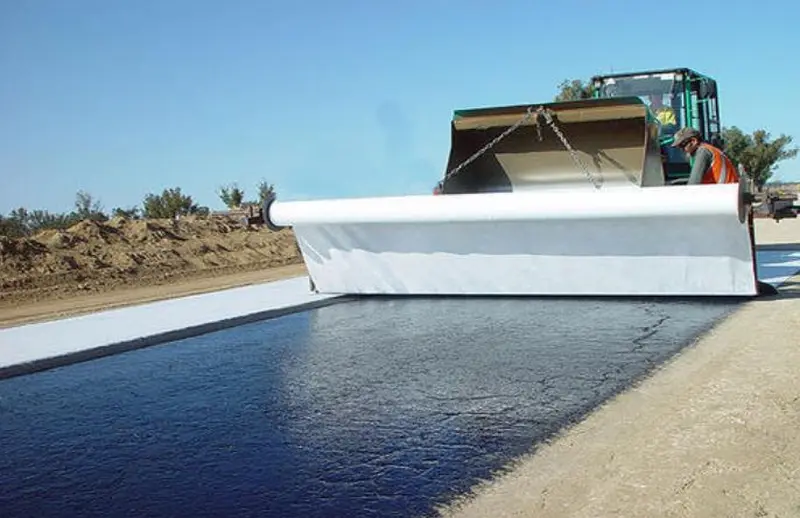
Visual Differences
Short-filament and filament geotextiles can be easily distinguished by their appearance. Filament geotextiles feature longer, smoother fibers that often appear brighter or whiter, whereas short-filament types tend to have a darker tone and a more textured surface.
Composition and Strength Properties
Filament geotextiles are generally made from continuous polyester fibers using spunbond and needle-punched techniques, resulting in superior tensile strength, elongation, and burst resistance. In contrast, short-filament geotextiles are produced from staple polyester or polypropylene fibers. While they offer reliable performance, their strength and elongation characteristics typically differ from filament versions of the same grade.
Hydraulic and Mechanical Performance
Filament geotextiles are usually thicker, enabling the formation of three-dimensional voids that enhance their drainage capacity. They also offer better resistance to puncture and exhibit excellent long-term deformation resistance (creep resistance), especially when compared with short-filament geotextiles of the same weight.
Applications of Short-Filament Geotextiles
-
Soil Reinforcement and Stabilization: Suitable for large-scale soil reinforcement in infrastructure and landscaping projects.
-
Drainage and Filtration: Replaces traditional granular layers to facilitate water flow and filtration.
-
Material Separation: Prevents mixing of different soil layers, maintaining structural integrity.
-
Protective Uses: Effective in slope protection, landscaping, and road crack mitigation.
Applications of Filament Geotextiles
-
Water Management Projects: Used for filtration, erosion control, and separation in dams, canals, and reservoirs.
-
Infrastructure and Transportation: Ideal for base reinforcement, slope stabilization, and subsurface drainage.
-
Marine and Port Engineering: Applied in soft soil treatment and structural support in port developments.
-
General Construction: Valued for its adaptability in a wide range of civil engineering applications.
Performance and Cost Comparison
Filament geotextiles generally deliver higher tensile strength and enhanced performance in critical engineering metrics. As a result, they are often priced higher than short-filament geotextiles of similar specifications.
Conclusion
Both filament and short-filament geotextiles are vital components in civil and environmental engineering. The optimal choice depends on the specific demands of each project. For personalized recommendations or to request complimentary samples, feel free to contact our team of experts.


