
What Is The Price of Geotextile Per Square Meter?
Blog · 2026-06-26 · 0 views
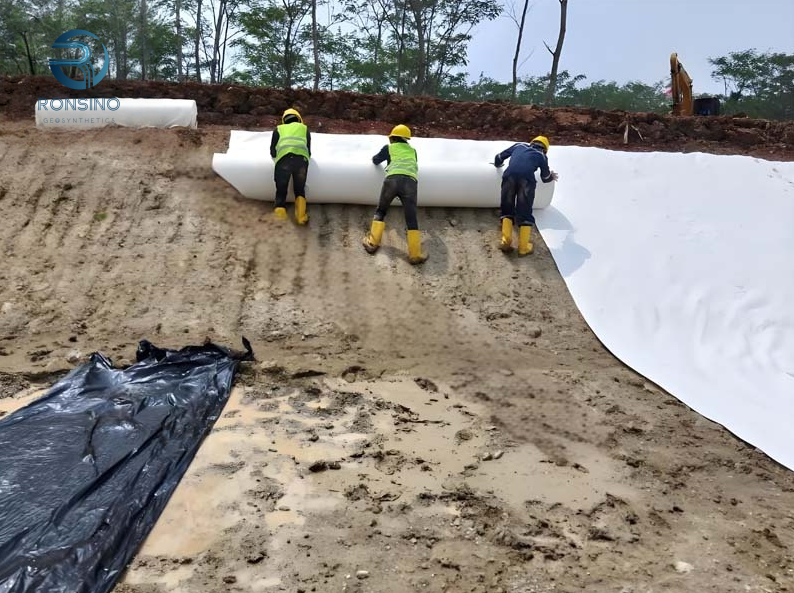
Geotextiles are key geosynthetic materials, mainly made of polypropylene (PP, accounting for 60%) and polyester (PET, accounting for 30%). They have a tensile strength of 5-100 kN/m and a permeability of 10⁻¹-10⁻⁴ cm/s. They can strengthen the foundation, filter liquids, channel water, isolate layers and prevent soil erosion, effectively retaining 95% of soil particles. With global infrastructure investment expected to exceed US$9.5 trillion in 2030, its application can reduce erosion damage by about 60% and extend the service life of structures by 25-30%. It is used in 70% of anti-corrosion projects in countries such as the United States and India, reducing foundation losses by more than US$2 billion every year.
In 2025, the price of nonwoven geotextiles is US$0.20–5.00/square meter, and that of woven geotextiles is US$0.50–7.50/square meter; including installation fee, US$0.50–10.00/square meter. The cost is affected by fluctuations in crude oil prices (resin prices vary by 5–8%, PP is about US$1,300/ton), weight (100–800 GSM), labor (hourly wages of US$10–50) and purchase volume. A 15–30% discount can be enjoyed for batches exceeding 10,000 square meters. The cost of a 10,000 square meter anti-corrosion project in Asia is US$2,000-20,000, and the same kind in North America is US$4,000-40,000 (tariff difference). The material cost of a 5,000 square meter road project is US$1,000-25,000, and the labor and deployment cost is US$2,500-15,000. Geotextile is durable for 20-50 years, and its life cycle cost is 15-30% lower than that of sand, gravel or concrete (maintenance costs are 20-40% higher). The market is expected to reach US$15.02 billion in 2034 (CAGR 6.7%), providing engineering personnel with a reference for budget optimization.
Non-woven geotextiles account for 65% of global filtration applications, and woven products dominate the field of structural reinforcement, all complying with ISO 9001 and GRI-GT certification. The product uses 10%-20% recycled raw materials, which reduces the carbon footprint by 15% compared to similar non-recycled products. Through data-driven operation and laying strategies, the project can achieve 95% long-term performance reliability and promote the development of infrastructure and environmental protection fields towards high-quality and low-carbon goals.
Geotextile Cost Per Square Meter 150gsm Loading for Shipment
Anti UV Geotextile Cost Per Square Meter for Erosion Control Projects
1. What Are Geotextiles?
Geosynthetic fabrics are permeable materials—woven, non-woven, or knit from synthetic/organic strands—that enhance civil engineering by segregating granular layers, filtering fluids, managing moisture, reinforcing structures, and protecting barriers. With hydraulic permeability >10⁻³ cm/s, they are used in 80% of modern sustainable projects (Geosynthetics Industry Analysis, 2024) and reduce foundation settlement by 30–50% (USDA, 2024).
Key Specifications and Parameters
Geotextiles conform to stringent ASTM and GRI benchmarks, guaranteeing efficacy across exigencies:
Weight (GSM): 100–1,500 g/m²; 100–200 GSM for filtration, 400–800 GSM for reinforcement, escalating costs 20–30% per 100 GSM escalation.
Thickness: 0.5–5.0 mm; non-woven at 0.8–2.0 mm for superior permeability (ASTM D5199).
Tensile Strength: 5–100 kN/m (ASTM D4595); woven up to 800 kN/m for load-bearing roadways.
Grab Tensile Strength: 80–425 lbs (ASTM D4632), pivotal for deployment robustness.
Puncture Resistance: 150–850 lbs (ASTM D4833); needle-punched non-wovens 2–3x PVC equivalents.
Permittivity: 0.5–2.0 s⁻¹ (ASTM D4491); facilitating 100–150 gpm/ft² throughput.
Apparent Opening Size (AOS): 0.06–0.2 mm (ASTM D4751); finer meshes retain 95% silts.
UV Resistance: 90% retention post-500 hours (ASTM D4355); augmented by stabilizers.
Chemical Resistance: pH 2–12 endurance (ASTM D5322); 95% impervious to salts/fertilizers.
Roll Dimensions: 2–6 m widths, 50–200 m lengths; curbing seams (5–10% cost adder).
RONSINO Geotextile (2025) underscores that 200 GSM non-woven endures 100+ freeze-thaw iterations, eclipsing jute by 40–60 years in agrarian temperate climes.
Common Applications
Geotextiles’ adaptability traverses domains:
Road and Pavement Construction: 50% deployment; segregates subbase/subgrade, curtailing rutting 40% (AASHTO, 2024).
Erosion Control: Fortifies 70% coastal ventures, slashing sediment efflux 85%.
Drainage Systems: French drains/retaining walls; non-wovens sieve 99% particulates.
Agriculture and Landscaping: Stabilizes fields, elevating yields 15–20% via compaction abatement.
Environmental Protection: Landfill liners/wetland remediation; EPA-conformant for 95% leachate sequestration.
Asia-Pacific implementations ascended 8% YoY (McKinsey, 2024), RONSINO provisioning 80+ nations.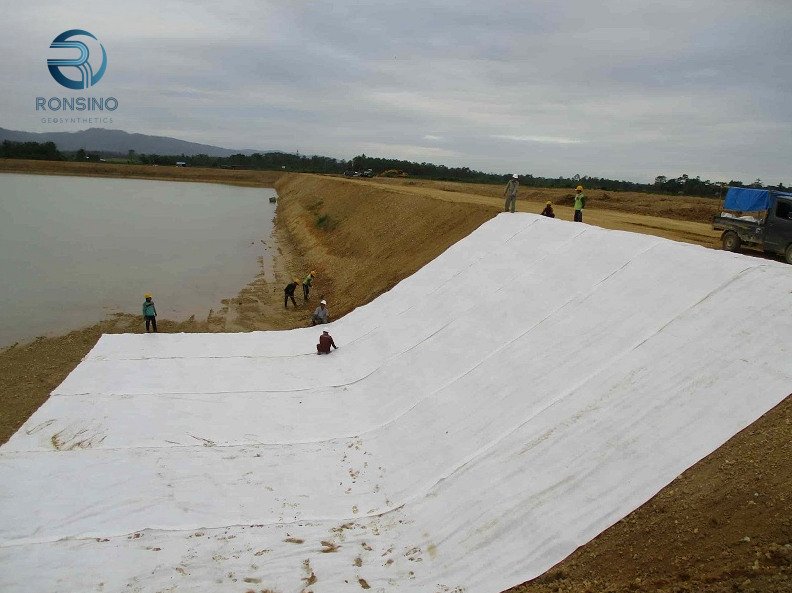
2. What Does Geotextile Cost Per Square Meter?
The unit price of geotextiles in 2025 is US$0.20-5.00/㎡, and the leading brands are RONSINO and EarthShields. The installation fee increases by 20%-50%, and the comprehensive cost after adding aggregate is US$0.50-10.00/㎡; the material cost of a 10,000㎡ drainage project is US$2,000-50,000, and the total cost is US$5,000-100,000. The price of polypropylene resin increased by 5%-8% to US$1,300/ton, exacerbating cost fluctuations. Bulk purchasing from Chinese suppliers (such as RONSINO's quotation of 0.15-2.00 US dollars/㎡) can save 20%-35% of the cost compared with the US market (0.50-4.00 US dollars/㎡).
2.1 Geotextile Cost Per Square Meter – Material Type
Material typology commandeers 40–60% of expenditures (RONSINO, 2025):
Polypropylene (PP): $0.20–$2.00/m²; 95% chemical resilience, 60% market for drainage; tensile 10–50 kN/m.
Polyester (PET): $0.30–$3.00/m²; preeminent UV/tensile (30–100 kN/m), 30% reinforcement quota.
Natural Fibers (Jute/Coir): $0.10–$0.50/m²; biodegradable for interim erosion, 5% verdant niche.
Recycled Blends: $0.15–$1.00/m²; 10–20% thriftier, 15% emission diminution.
Non-wovens undercut woven 20–30% via fabrication .
2.2 Geotextile Cost Per Square Meter – Type
Typology sways 30–50% of valuation:
Non-Woven (Needle-Punched): $0.20–$2.00/m²; permittivity 1.5 s⁻¹, 65% filtration/drainage.
Woven (Slit-Film): $0.50–$3.00/m²; potency 50–100 kN/m, separation/reinforcement.
Knitted: $1.00–$5.00/m²; supple for geocomposites, niche coastal.
Woven premiums 20–40% for exigency in trafficked zones.
2.3 Geotextile Cost Per Square Meter – Weight (GSM)
GSM linearly correlates: +$0.10–$0.50/m² per 100 GSM ascent:
100–200 GSM: $0.20–$0.80/m²; filtration; 130 gpm/ft² flux.
200–400 GSM: $0.50–$1.50/m²; drainage norm; 200 lbs grab tensile.
400–800 GSM: $1.00–$3.00/m²; reinforcement; 850 lbs puncture.
Heavier mitigates lapses 25%, amortizing across 30 years.
2.4 Geotextile Cost Per Square Meter – Project Size and Scale
Scale begets thrift: <1,000 m² at $0.80–$4.00/m²; >10,000 m² at $0.15–$2.00/m² (15–30% rebates). 50,000 m² thoroughfare economizes $10,000–$30,000 volumetrically.
2.5 Geotextile Cost Per Square Meter – Installation Method and Labor
20–50% surcharge:
Overlapping/Stapling: $0.10–$0.30/m²; 12–18″ laps, 95% seam probity (ASTM D5820).
Mechanical Anchoring: $0.20–$0.50/m²; inclines, slippage abatement 30%.
Geocomposite Fusion: +$0.50/m²; labor diminution 15%.
Terrain augmentation (excavation) appends $0.50–$1.00/m²; remuneration $10–$50/hour regionally disparate.
2.6 Geotextile Cost Per Square Meter – Raw Material Quality
Virgin resin: $0.20–$3.00/m² agio, 40–60 year viability; recycled: $0.10–$1.50/m², 15–20 years. Accreditations (ASTM D4595) surcharge 10–15% yet assure 95% fidelity.
2.7 Geotextile Cost Per Square Meter – Transportation and Logistics
$0.05–$0.20/m²; RONSINO Asia-to-USA 20% sub domestic. Rolls (4m x 100m) streamline conveyance.
2.8 Geotextile Cost Per Square Meter – Maintenance and Lifetime Costs
$200–$1,000/year scrutiny; geotextiles economize 20–30% contra traditional, remediation $500–$5,000. Infractions levy $10,000–$100,000.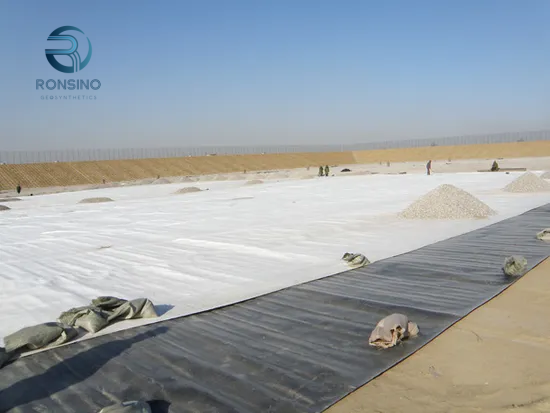
3. How to Choose the Right Geotextile
Tactical curation maximizes yield.
3.1 Assess Project Requirements
Drainage: Non-woven PP (200 GSM, $0.50–$1.00/m²); thoroughfares: Woven PET (400 GSM, $1.00–$2.00/m²) for 100 kN/m burdens.
3.2 Prioritize Quality
ASTM/GRI virgin; recycled for marginal, economizing 15%.
3.3 Evaluate Installation Needs
Laps for planes; anchors for gradients. Underlays augment safeguarding 25%.
3.4 Consider Long-Term Costs
Heavier GSM recoups 20–35% across 25 years via 90% repair abatement.
3.5 Compare Suppliers
RONSINO (China: $0.20–$2.00/m²); HUESKER USA ($0.50–$4.00/m²); Alibaba volume 20% abatement.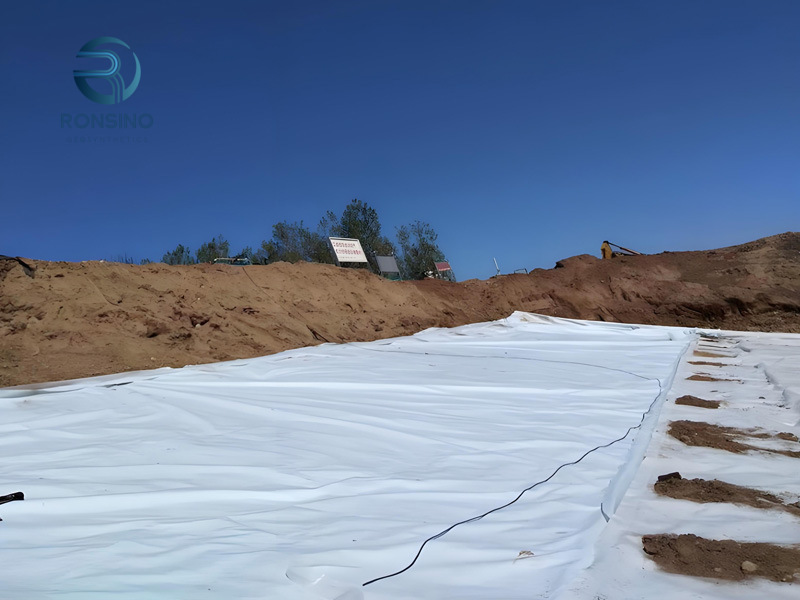
4. Industry Trends Affecting Geotextile Cost Per Square Meter
The cost of resin may increase by 5%-8% in 2025, but using 60% recycled materials can offset the price increase and reduce costs by 15%. The 6-meter wide roll reduces waste by 15%-20%, and the Internet of Things improves efficiency by 5%-10%, resulting in a 20% reduction in operating costs. The usage of bio-based fiber increased by 20%, helping RONSINO maintain its leading position in the world. The price is $0.15-$2.50/square meter, and 25% of infrastructure investment is focused on the west. Polaris Research predicts that the market size will increase from US$7.91 billion in 2024 to US$15.02 billion in 2034.
5. Case Studies: Real-World Geotextile Projects
5.1 Case Study 1: Indian Highway Fortification (RONSINO Geotextile, 2024)
10,000 m² woven PET (400 GSM). Cost: $0.80/m² materials + $0.40/m² install = $12,000 aggregate. Economies: 90% aggregate curtailment, $50,000/lane km; 20% longevity augmentation.
5.2 Case Study 2: USA Coastal Erosion Mitigation
5,000 m² non-woven PP tubes (600 GSM). Cost: $3.00/m² = $15,000. Merits: 90% soil retention, 25% upkeep slash vs. bulwarking; EPA concordant.
5.3 Case Study 3: Kenyan Agrarian Field
20,000 m² non-woven (200 GSM). Cost: $0.30/m² = $6,000. Economies: 15% yield escalation ($10,000/year agronomy); 30% erosion abatement.
These vignettes evince 15–30% operational proficiencies.
Non Woven Fabric Landscape for Filtration and Separation
Geotextile Mats Material for Roadswork
6. Conclusion
Geotextile cost per square meter in 2025: material cost 0.2-5 US dollars, labor cost 0.5-10 US dollars. The non-woven polypropylene type has an outstanding cost performance, a tensile strength of 50kN/m, and an estimated service life of 50 years. For roads and drainage systems, it is recommended to use certified products with 200-400g/m². RONSINO Geosynthetics offers discounted prices for bulk purchases. To obtain cost-effective and durable engineering solutions, please submit complete bidding documents as early as possible to customize the solution.


