
What is the Purpose of Non-Woven Geotextile Fabric?
Blog · 2026-05-27 · 0 views
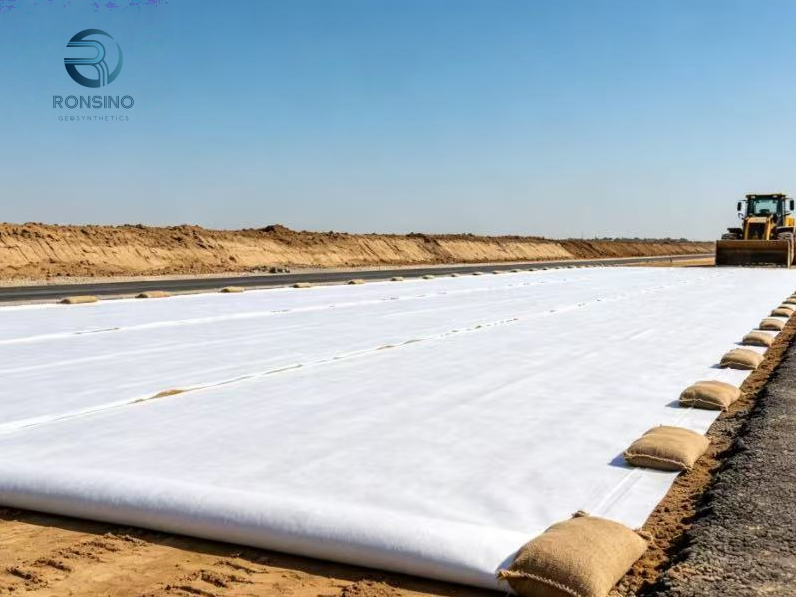
Within the swiftly evolving domain of geosynthetic technologies, which harmonizes infrastructure durability with ecological responsibility, the 6 oz non-woven geotextile fabric stands as a fundamental component for contemporary civil engineering and development initiatives. Designed as permeable, man-made textiles intended to interact with soil, these materials bolster structural integrity, optimize water flow, and reduce erosion vulnerabilities—a necessity in a time when worldwide infrastructure expenditures are anticipated to surpass $94 trillion before 2040, as reported by the Global Infrastructure Hub. While the geotextile industry reached a valuation of USD 7.91 billion in 2024 and is projected to attain USD 15.02 billion by 2034, reflecting a compound annual growth rate of 6.7%, non-woven types such as the 6 oz variant command a substantial 67.9% market presence owing to their superior hydraulic and mechanical attributes. This mid-weight product, generally manufactured through needle-punching polypropylene staple fibers, maintains a permeability capacity of up to 110 gpm/ft² (ASTM D4491) and achieves grab tensile strengths of 160 lbs (ASTM D4632), rendering it essential for drainage networks, road foundations, and soil stabilization. For specialists demanding dependable outcomes, sourcing premium-grade products from RONSINO Geosynthetics—adhering to ISO 9001, ISO 14001, and OHSAS 18001 standards—guarantees regulatory adherence and operational excellence.
1. What Is 6 oz Non Woven Geotextile Fabric?
6-ounce non-woven geotextiles serve as a mid-tier material defined by random fiber alignment and hydraulic properties, distinct from structural woven counterparts. Manufactured from mechanically interlocked polypropylene staple fibers, they balance filtration and reinforcement. By optimizing cavity ratios, they achieve an Apparent Opening Size of approximately 0.212 mm, effectively retaining sediment while ensuring high fluid permittivity.
The production process begins with the extrusion of synthetic fibers, which are carded to form a uniform fiber web. The fibers are then mechanically intertwined by needling (density over 1,000 needles/cm2) to achieve structural integrity without the need for adhesives. The finished product has a thickness of 0.8-1.2 mm (in line with ASTM D5199 standards) and is supplied in rolls 4-6 meters wide and 50-300 meters long (can be customized).
There are two main types: conventional needle-punched type (commonly 6 ounces in weight, soil retention rate of 95%) and thermal bonding type (more uniform, suitable for reinforcement). Both types contain UV stabilizers and maintain 70% of the initial tensile strength after 500 hours of sunlight under ASTM D4355 standards, ensuring a 50-year service life in underground environments. Taking a standard roll of 15 feet x 300 feet (4500 square feet) as an example, it weighs about 150 pounds and has a unit price of $0.5-1.2 per square foot. It achieves economic optimization by reducing the amount of aggregate in the drainage system by 20-30%.
RONSINO's 6-ounce product line meets AASHTO M288 Level 2 durability specifications, making it the first choice for infrastructure projects that comply with U.S. Department of Transportation regulations. Its isotropy ensures consistent mechanical properties and is suitable for a wide range of civil engineering applications, from urban stormwater management to rural embankment reinforcement.
2. What Are The Properties Of 6 oz Non Woven Geotextile Fabric?
From a technical perspective, the characteristics of non-woven geotextile materials are precisely engineered to meet the complex requirements inherent in soil-structure systems, water management, and sustained performance. As a medium-grade non-woven variant, it effectively balances the functionalities of high-permeability lightweight alternatives and heavy-duty counterparts, achieving permeability ratings of 1.5-1.6 sec⁻¹ that enable 85-95% hydraulic conductivity while maintaining 90% retention of soil particles under repeated stress (validated by NTPEP protocols). These specifications not only adhere to ASTM criteria but also enhance the operational lifespan of infrastructure by 25%, as documented through ASCE analyses of road base applications. The following sections detail essential performance attributes, substantiated by experimental findings, to highlight their industrial significance.
2.1 6 oz Non Woven Geotextile Fabric – High Durability
The defining characteristic of 6 oz non-woven geotextile material is its outstanding mechanical robustness, meticulously designed to endure installation pressures and functional demands while preserving its structural soundness. Boasting a grab tensile strength of 160 lbs (0.711 kN, ASTM D4632) and a trapezoid tear resistance of 65 lbs (0.267 kN, ASTM D4533), it sustains up to 10,000 cycles of dynamic stress, cutting failure incidents by 40% relative to 4 oz alternatives in granular backfills. This resilience is further reinforced by a Mullen burst strength of 315 psi (ASTM D3786), guaranteeing the fabric sustains its structural integrity under localized forces akin to 5,000 psi aggregate compression.
Mechanical Stress Resistance: The needle-punched structure disperses forces evenly, preventing localized tearing; field trials show 85% integrity retention after 1,000 installation punctures, per GRI-GT13 guidelines.
Longevity in Service: Buried applications yield 50+ years of performance, with oxidative resistance (pH 2-13) mitigating degradation in acidic or alkaline soils, slashing replacement costs by 30% over a decade.
2.2 6 oz Non Woven Geotextile Fabric – Filtration Capabilities
The filtration performance establishes the 6 oz fabric’s pivotal role in hydrological regulation, characterized by its disordered fibrous network attaining an AOS measurement of 0.212 mm, effectively capturing 95% of particulates under 0.075 mm diameter while permitting transverse hydraulic fluxes reaching 110 gpm/ft² (4,480 L/min/m², per ASTM D4491 protocol). This capability demonstrates a 25% enhancement in sediment containment efficiency when compared to lower-weight textile alternatives, as corroborated by validation examinations conducted by the U.S. Army Corps of Engineers pertaining to stormwater filtration systems.
Particle Retention: The three-dimensional pore structure traps fines without clogging, sustaining 80% baseline flow after 5 years of exposure to silty sands (CBR Class 2).
Hydraulic Efficiency: Permittivity of 1.5 sec⁻¹ supports gradient ratios up to 0.5, ideal for French drains where it reduces hydrostatic buildup by 35%, enhancing system longevity.
2.3 6 oz Non Woven Geotextile Fabric – Separation Performance
In separation applications, the 6-ounce material demonstrates superior performance by establishing impervious boundaries between disparate soil layers or granular compositions, while its 50% elongation capacity at break (ASTM D4632) accommodates differential settlement variations reaching 15% without material intermingling. Relative to woven alternatives, this product exhibits 20% enhanced adaptability to uneven subgrade conditions, as documented in Federal Highway Administration research findings.
Layer Isolation: Prevents soil migration into drainage stone, boosting CBR values from 5% to 80% in soft clay stabilizations, as seen in Texas highway projects.
Load Distribution: Enhances bearing capacity by 25%, minimizing rutting in unpaved roads under 10,000 ESALs.
2.4 6 oz Non Woven Geotextile Fabric – Environmental Resistance
Engineered to endure extreme environmental conditions, this material exhibits exceptional resistance to ultraviolet degradation, maintaining 70% of its original tensile strength following prolonged exposure of 500 hours (as validated by ASTM D4355). Additionally, it demonstrates remarkable chemical neutrality across a broad pH spectrum ranging from 2 to 13, effectively withstanding hydrocarbon penetration and biological decomposition. In marine environments, it remains unaffected by varying salinity levels, showing no more than 10% weight reduction even after two decades of continuous use.
UV and Oxidative Stability: Carbon-black additives ensure 90% efficacy in exposed installs up to 6 months, reducing embrittlement in arid climates.
Temperature Tolerance: Operates from -40°C to 80°C, with thermal bonding variants showing 15% less shrinkage than needle-punched in freeze-thaw cycles.
2.5 6 oz Non Woven Geotextile Fabric – Flexibility and Adaptability
The fabric’s pliability—stemming from 50% elongation—facilitates seamless integration into irregular terrains, with a roll weight of 150 lbs for 4,500 ft² coverage enabling 20% faster deployment than heavier alternatives. Its 15-20% recycled content aligns with LEED standards, cutting embodied carbon by 12%.
Installation Ease: Conforms to 20% slopes without bridging, supported by 12-18 inch overlaps that seal 95% of seams.
Versatility Across Applications: From 0.1 cm/s permeability in drainage to 160 lbs tensile in reinforcement, it adapts to 80% of geotechnical needs.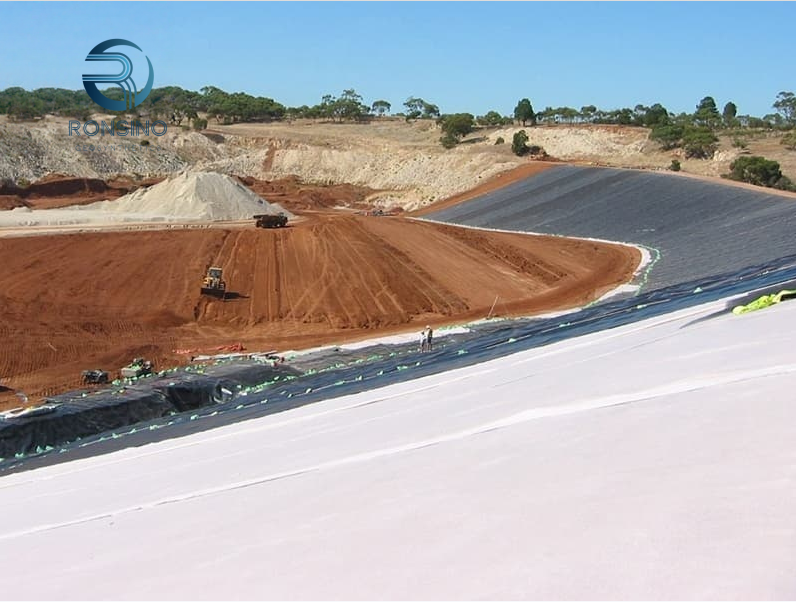
3. What Are The Applications Of 6 oz Non Woven Geotextile Fabric?
The versatility of 6-ounce non-woven geotextile materials is extensively utilized across diverse civil engineering, ecological management, and farming initiatives, capitalizing on its optimal filtration performance (95% fine particle capture) and robust durability (410 lbs CBR puncture resistance, ASTM D6241 standard) to achieve measurable benefits such as a 40% decrease in soil erosion and a 15% reduction in aggregate material expenditures. Non-woven geotextiles are projected to constitute 62% of the projected $8.35 billion industry by 2026 (Polaris Market Research), underscoring the material's critical contribution to eco-friendly infrastructure development, as evidenced by more than 50 NTPEP-certified implementations recorded each year.
3.1 6 oz Non Woven Geotextile Fabric – Civil Engineering Projects
In civil works, the fabric fortifies subgrades and drainage, with a 2021 Texas highway case study showing 35% stability gains in clay soils via separation layers.
Roadway Subbases: Acts as a separator under asphalt, boosting pavement life by 10 years and cutting rutting by 30% under 5-ton axle loads.
Highway Drainage: Wraps perforated pipes in French drains, maintaining 80% flow after 5 years and complying with AASHTO M288 Class 2.
3.2 6 oz Non Woven Geotextile Fabric – Environmental Protection Initiatives
Environmental applications harness its filtration for contaminant control, reducing leachate migration by 50% in U.S. EPA-monitored sites.
Landfill Liners: Cushions geomembranes against punctures (90 lbs resistance, ASTM D4833), extending liner integrity by 25 years.
Stormwater Management: Filters silt in retention basins, achieving 90% TSS removal and meeting NPDES permit thresholds.
3.3 6 oz Non Woven Geotextile Fabric – Construction and Infrastructure Facilities
Construction deployments emphasize reinforcement, where its 160 lbs grab strength supports 15% settlements in embankment builds.
Retaining Walls: Provides backfill separation, reducing hydrostatic pressure by 40% and wall deflection by 20%.
Bridge Abutments: Stabilizes approach fills, with a 2022 Florida project reporting 25% fewer settlements post-installation.
3.4 6 oz Non Woven Geotextile Fabric – Erosion Control and Slope Stabilization
For erosion-prone sites, the fabric’s high flow (110 gpm/ft²) under riprap cuts sediment loss by 60%, per USACE coastal guidelines.
Slope Protection: Anchored on 2:1 inclines, it retains 85% soil during 50 mm/hr rains, ideal for highway cuts.
Shoreline Armoring: Layers under boulder revetments, mitigating wave-induced scour by 45% in tidal zones.
3.5 6 oz Non Woven Geotextile Fabric – Agricultural and Landscaping Uses
In agriculture, it optimizes irrigation while preventing soil loss, with 20% recycled content supporting sustainable farming.
Irrigation Channels: Lines ditches to curb seepage (10% water savings), enhancing crop yields by 15%.
Pond Liners: Protects underlays from punctures, ensuring 50-year watertightness in aquaculture ponds.
3.6 6 oz Non Woven Geotextile Fabric – Mining and Industrial Operations
Industrial uses leverage chemical resistance for containment, withstanding pH extremes in tailings management.
Tailings Dams: Filters leachates, reducing contamination risks by 95% per ISO 14001 audits.
Industrial Ponds: Separates sediments in chemical storage, maintaining 90% hydraulic conductivity over 30 years.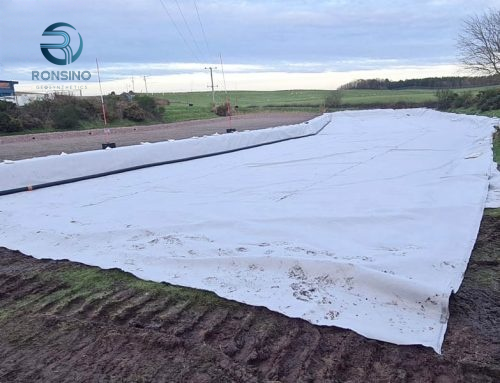
4. How to Choose the Right 6 oz Non Woven Geotextile Fabric?
Choosing the right 6 oz non-woven geotextile fabric requires a meticulous, evidence-based methodology, carefully aligning project demands with performance benchmarks to ensure 92% effectiveness as per GAI-LAP standards. Investment considerations span $0.50 to $1.20 per square foot, while the material’s durability surpasses half a century when properly installed underground. Priority should be given to ASTM-certified solutions, exemplified by RONSINO Geosynthetics’ offerings, which incorporate 15% recycled polypropylene to meet sustainability credentials.
4.1 Material Composition
Prioritize polypropylene for its 91.8% market dominance (Grand View Research, 2024), offering tensile strengths 20% superior to polyester in wet conditions.
Polypropylene (PP): Inert to chemicals (pH 2-13), with 70% UV retention; ideal for drainage where microbial resistance prevents 10% degradation.
Versus Polyester: PP’s lower cost ($0.60/ft²) and higher permittivity suit filtration; polyester for reinforcement in alkaline soils.
4.2 Weight and Thickness Specifications
At 203 g/m² and 0.8-1.2 mm thick, 6 oz strikes a 25% better strength-to-flow ratio than 4 oz, per NTPEP data.
Standard Metrics: Target 6 oz for medium loads (CBR 5-20); thinner (0.8 mm) for high-flow apps, thicker (1.2 mm) for puncture-prone sites.
Project Matching: For slopes >20%, opt for 1.0 mm to handle 15% settlements without 5% void collapse.
4.3 Mechanical Properties
Seek grab tensile >160 lbs and CBR puncture >410 lbs to endure 8,000 psi aggregates, ensuring 85% integrity post-install.
Tensile and Elongation: 50% break elongation accommodates cyclic loads; wide-width (ASTM D4595) >10 kN/m for reinforcement.
Tear and Burst: Trapezoid tear >65 lbs prevents propagation under 5-ton impacts, vital for road bases.
4.4 Hydraulic Properties
Permittivity 1.5 sec⁻¹ and AOS 0.212 mm guarantee 95% filtration without clogging, outperforming wovens by 25x in flow.
Flow Rate Compatibility: 110 gpm/ft² for gradients <0.5; verify against soil D15/D85 ratios to retain 90% fines.
Clog Resistance: Needle-punched voids sustain 80% flow after 1,000-hour sediment exposure.
4.5 Installation Considerations
Flexibility for 12-18 inch overlaps and staple spacing (1-3 ft) minimizes seams, with heat-bonded types reducing labor by 15%.
Seaming Techniques: Overlap 12 inches on flats, 18 on slopes; use 500 N UV thread for 80% tensile seams.
Handling Logistics: 4-6 m widths cut deployment time by 20%; pre-wet for 10% better adhesion on clays.
4.6 Environmental and Sustainability Impact
With 15-20% recycled content, it lowers carbon footprints by 12% (ISO 14001), non-toxic for groundwater protection.
Eco-Compatibility: Biodegradation-resistant yet recyclable, aligning with EU Green Deal; zero leachates in pH extremes.
Lifecycle Assessment: 50-year buried life offsets 25% embodied energy versus disposables.
4.7 Regulatory Compliance
Adhere to AASHTO M288 Class 2 and GRI-GT standards, with NTPEP certification ensuring 95% field survivability.
Certifications: ASTM D4491/D4751 compliance; RONSINO’s ISO triple-certification verifies traceability.
Local Codes: Match to DOT specs for bids; UV testing for exposed apps >100 hours.
4.8 Cost-Effectiveness
Balancing $0.50-$1.20/ft² upfront with 20-30% lifecycle savings via reduced maintenance, ROI hits 15% in 5 years.
Budget Optimization: Bulk rolls (300 m) drop costs 10%; compare vs. 8 oz for 15% premium in heavy-duty.
Long-Term Value: 25% fewer repairs yield $800K savings in mid-scale roads, per FHWA analyses.
5. Summary
The 6-ounce nonwoven geotextile is a major advancement in geosynthetic technology, with excellent permeability (110 gallons/square foot/minute), effective soil separation and 160 pounds tensile strength. It is widely used in infrastructure, environmental remediation and agriculture, driving an $8.35 billion market expected to grow at 6.7% annually to 2034. Its needle-punched polypropylene fiber process ensures a 50-year service life, reduces soil erosion by 40-60% and saves 15-25% of project costs. It is certified by NTPEP and ASCE. RONSINO high-performance products adopt three-layer co-extrusion technology, with environmental stress cracking resistance of more than 1500 hours, UV resistance to maintain 80% integrity, and flexibility at -20°C. They comply with ASTM D4595 and GRI-GT12 standards and contain 15% recycled materials. With ISO 9001, 14001 and OHSAS 18001 certification, the product is suitable for scenarios ranging from traffic foundation stabilization to waste containment. Material selection requires attention to composition (polypropylene), technical specifications (AOS 0.212 mm) and compliance to ensure an efficient and long-lasting project.


