What Key Benefits Does Polyethylene Geomembrane Offer?
Blog · 2026-08-21 · 0 views
1. Understanding PE Geomembrane: The Impermeable Shield
Polyethylene (PE) geomembrane is a continuous polymer sheet produced under standardized factory conditions using high-density, linear low-density and other polyethylene resins as raw materials. As a low-permeability anti-seepage barrier material, it can effectively block the migration and leakage of liquids, gases and pollutants, and is widely used in construction projects, environmental management and industrial supporting projects.
Among unique polyethylene materials, high-density polyethylene (HDPE) is the most prominent type used in geomembrane production because of its optimal combination of strength, durability and chemical resistance.
Key traits of PE geomembrane include:
1.1 PE Geomembrane Polymer Composition:
The material is produced through the controlled polymerization of ethylene monomers, resulting in a high molecular weight and density. This polymeric structure improves its sustained performance under extreme conditions.
1.2 PE Geomembrane Impermeability:
Owing to their dense molecular chain structure, high-density polyethylene geomembranes have excellent impermeability to water, industrial chemical liquids and gases, making them indispensable for domestic waste landfill linings, sewage storage ponds and mining leachate treatment pads.
1.3 PE Geomembrane Robust Mechanical Structure:
These specialized geomembranes are meticulously designed to exhibit outstanding tensile strength, exceptional tear resistance, and remarkable dimensional stability, guaranteeing their structural integrity even when subjected to uneven ground settlement, external loads, or drastic temperature changes.
1.4 PE Geomembrane Versatility and Customization:
Polyethylene geomembranes have various specifications: the thickness is generally in the range of 0.2-3.0 mm, and the surface is divided into smooth and rough surfaces. The rough surface can improve the interface friction; there are also special formulas that can enhance the resistance to chemical corrosion, ultraviolet resistance and extreme temperature resistance. Each characteristic needs to be selected based on the technical indicators and actual needs of the engineering project.
Fundamentally, polyethylene geomembranes are far more than ordinary plastic lining products. These are high-performance geosynthetic materials, elaborately developed and rigorously tested to deliver stable, reliable operation spanning multiple decades even under harsh on-site environmental conditions. Their irreplaceable role in leakage containment, ecological risk prevention and infrastructure durability improvement renders them an indispensable component of contemporary engineering construction systems.
The full-size adoption of PE geomembrane, particularly HDPE, is pushed via a compelling set of technical and overall performance benefits:
2.1 PE Geomembrane - Unmatched Impermeability & Leak Prevention
This is the core goal that must be prioritized. Polyethylene geomembrane has an extremely low hydraulic conductivity coefficient and can effectively block the penetration of moisture, waste degradation leachate, harmful pollutants and volatile gases.
Advantage: Guarantees effective moisture storage in reservoirs and aquaculture ponds, blocks landfill leachate and mineral tailings from contaminating groundwater, covers full mining industry applications, and forms an impermeable barrier separating toxic substances from the surrounding environment. These functional attributes directly translate into tangible effects on ecological protection and resource conservation.
2.2 PE Geomembrane - Superior Durability & Long Service Life
PE geomembrane, in particular HDPE geomembrane, show off top notch resistance to bodily stresses, consisting of punctures, tears, and abrasion (especially when set up over gorgeous safety geotextiles).
Advantage: Able to withstand construction stress, roadbed irregularities and long-term operating loads. Under the premise of correct material selection, laying and protection, HDPE geomembrane liner can operate stably for thirty years or more, thus significantly reducing life cycle costs and reducing the need for replacement.
2.3 PE Geomembrane - Exceptional Chemical Resistance
HDPE presents broad-spectrum resistance to a widespread array of acids, alkalis, salts, alcohols, and many natural solvents. This makes it best for harsh environments like industrial waste ponds, leachate series systems, chemical containment, and mining functions (e.g., heap leach pads, acid mine drainage containment).
Advantage: Maintains integrity and barrier homes when uncovered to aggressive supplies that would degrade many different liner materials, making sure long-term containment security.
2.4 PE Geomembrane - High UV & Environmental Stress Crack Resistance
Quality HDPE geomembranes are compounded with excessive stages of carbon black (typically 2-3%) and antioxidants, supplying superb resistance to degradation from ultraviolet (UV) radiation.
Advantage:It retains excellent flexibility, tensile strength, and impermeability even after prolonged direct sunlight exposure, outperforming common polymers that turn brittle and crack. Its strong resistance to environmental stress cracking prevents brittle fracture under sustained stress, making it ideal for underground or outdoor applications.
2.5 PE Geomembrane - Proven Flexibility & Conformability
Polyethylene geomembrane has high strength and good flexibility, and its performance is particularly outstanding at installation temperatures. It can fully fit the contour of the foundation, naturally adapt to small depressions, and span small gaps without causing excessive stress concentration.
Advantage: Effectively reduces installation damage risk on uneven terrain, adapts to minor foundation differential settlement, outperforms rigid liners in overall sealing performance, and textured models deliver higher interfacial friction on slopes.
2.6 PE Geomembrane - Cost-Effectiveness Over the Long Term
Although the initial geotextile price may be higher than some options (e.g., higher than LLDPE or PVC in some cases), HDPE geomembrane’s superior durability, extra long service life, and minimal maintenance requirements result in significantly lower lifetime costs.
Advantage: The likelihood and severity of costly occurrences such as equipment failures, leaks, and subsequent remediation are effectively mitigated. An alternative approach that is not as widely acknowledged translates into substantial long-term cost reductions throughout its entire operational life cycle for the containment system.
2.7 PE Geomembrane - Ease of Installation
Wide panels (up to 8.5 meters) are operated by professionals through hot-melt fusion technology (wedge pressing, extrusion, double hot wedge) to form uniform high-strength seams, effectively reducing seams.
Advantage:Expanded coverage across extensive territories surpasses that of more limited-sheet configurations. Proven bonding techniques are firmly embedded within the sector, ensuring consistent equipment reliability. Although professional installation remains critical, the material itself facilitates rapid and effective deployment.
2.8 PE Geomembrane - Environmental Protection & Sustainability Contribution
In preventing the escape of harmful substances into the earth's subsurface and aquifer systems, polyethylene impermeable sheets serve as indispensable tools for safeguarding ecological integrity across waste disposal, mineral extraction, and manufacturing sectors.
Advantage:Facilitates adherence to rigorous ecological standards, preserves natural habitats, and ensures the protection of aquatic supplies. Additionally, their extended operational lifespan diminishes the necessity for periodic replacements and associated resource depletion. Incorporating reclaimed substances within compositions is becoming a prevalent practice.
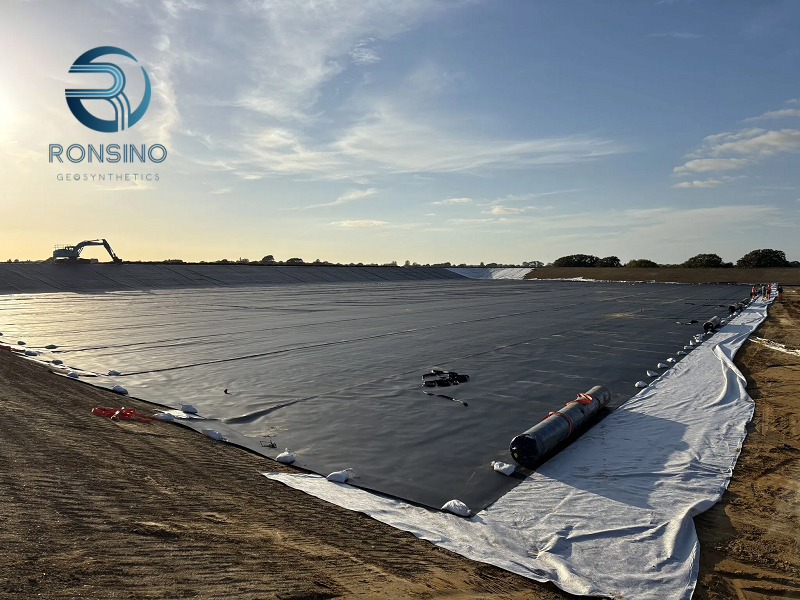
3. Where Are PE Geomembrane Commonly Used?
Owing to their exceptional resistance to permeation, robust chemical stability, and extended service life, polyethylene geomembranes have emerged as indispensable components across a diverse spectrum of engineering and environmental safeguarding initiatives.Their versatility lets in them to be efficaciously deployed in the following sectors:
3.1 PE Geomembrane for Water & Wastewater Management:
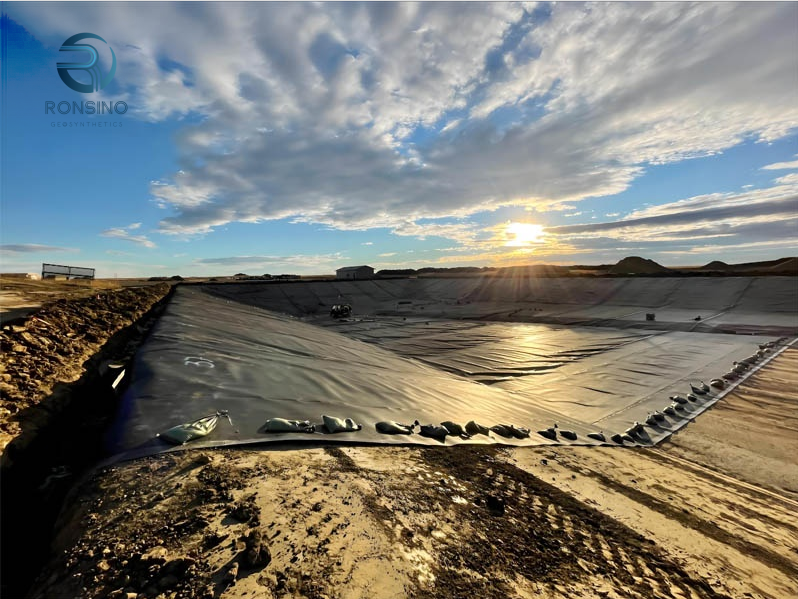
Polyethylene geomembranes are widely employed as impermeable barriers in the construction of reservoirs, potable water storage facilities, irrigation channels, and wastewater treatment lagoons. These materials also play a crucial role in anaerobic digesters and evaporation ponds, where their impermeable properties are essential for maintaining operational efficiency and ensuring environmental protection.
3.2 PE Geomembrane for Environmental Protection & Solid Waste Management:
Within the domain of landfill design, geomembrane liners serve as an essential component for base liners, cap covers, and leachate collection ponds, providing an impermeable shield that prevents hazardous materials from infiltrating the surrounding environment. These liners are also employed in the restoration of polluted sites and as part of secondary containment structures to maintain adherence to ecological regulations.
3.3 PE Geomembrane for Mining & Industrial Processes:
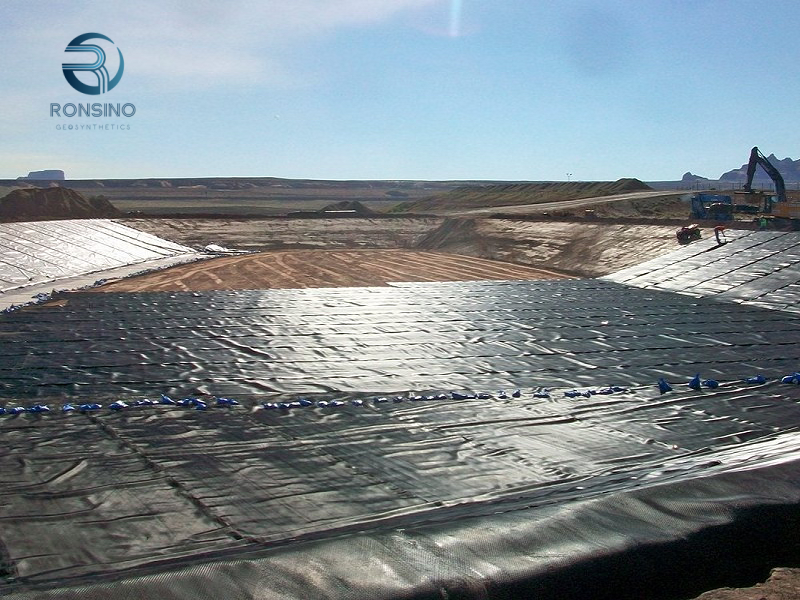
In the fields of mineral mining and industry, polyethylene geomembranes serve as key barriers and are used in heap leach fields, tailings ponds and solution collection pools to prevent the penetration of harmful substances and protect the environment. They are also used to treat acidic wastewater and secondary embankments in chemical storage areas to reduce environmental risks.
3.4 PE Geomembrane for Aquaculture & Agriculture:
High-density polyethylene lining is indispensable in aquaculture (such as fish and shrimp farming), which can effectively waterproof and significantly reduce leakage. In agriculture, it is used in irrigation reservoirs, slurry storage facilities and anaerobic digesters to ensure reliable containment in harsh chemical and organic environments.
3.5 PE Geomembrane for Energy Sector Applications:
Polyethylene geomembranes play a key role in the energy industry, both as impermeable barriers in storage facilities for coal ash, brine and chemicals, and to cover biogas produced by anaerobic digestion.
3.6 PE Geomembrane for Civil and Infrastructure Projects:
In civil engineering, geomembranes serve a variety of functions, such as tunnel waterproofing, basement protection, green roof water blocking, lining channels and beautifying decorative ponds. It has excellent mechanical strength, electrical insulation and waterproof properties, and is suitable for occasions that are both practical and beautiful.
Across diverse domains, the robust impermeability, exceptional chemical resistance, superior mechanical durability, and extended service longevity of PE geomembranes render them the foremost option for secure, eco-friendly, and norm-adherent barrier systems.
PE Membrane for Wastewater Lagoon
4. What Critical Factors Should Be Considered When Using PE Geomembrane?
High-density polyethylene geomembranes are widely recognized for their exceptional impermeability, robust chemical resistance, and long-lasting durability. Nevertheless, the successful and economical execution of such projects hinges on meticulous design and installation processes, demanding vigilant oversight of numerous pivotal elements.
4.1 Subgrade Preparation
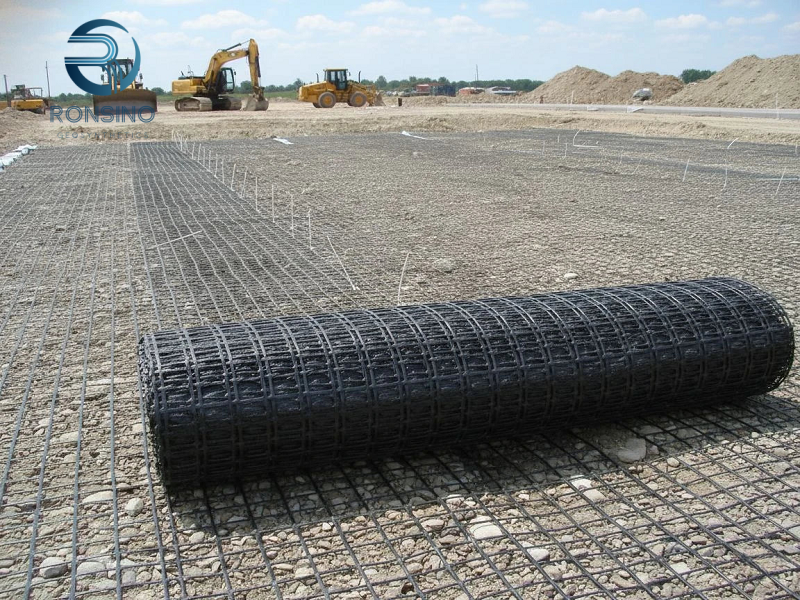
The core goal of foundation construction is to create a uniform, flat, and solid foundation to avoid punctures and localized pressure, thereby preventing damage to the anti-seepage layer. The foundation should be free of sharp gravel, foreign objects, wood blocks, or other protrusions that could damage the lining system. It is recommended to add a geotextile protective layer to enhance the puncture resistance of the membrane and extend its service life.
4.2 Professional Seaming
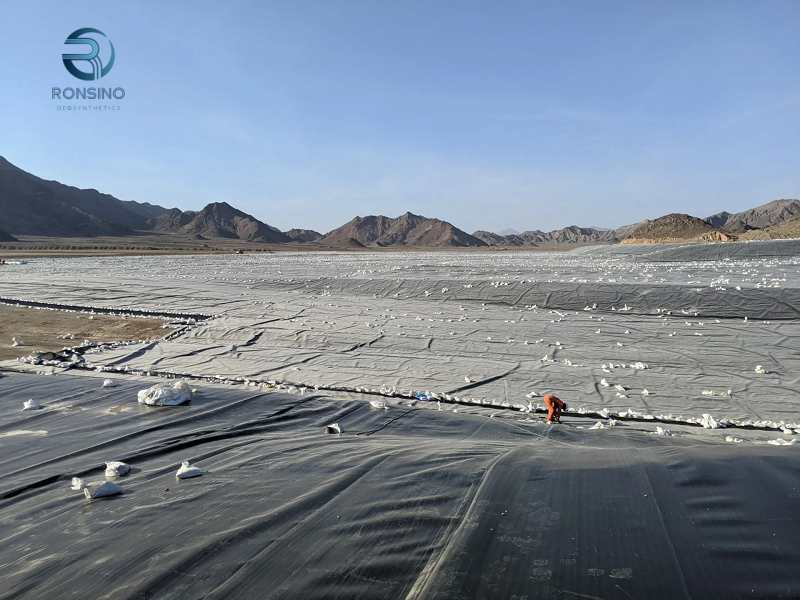
The integrity of the welded joints of a polyethylene geomembrane system is critical to its exceptional durability. Hot melt welding must be performed by a certified skilled operator using appropriate equipment and in a controlled environment. The keys to success are thorough surface preparation, precise joint alignment and strict temperature control. A comprehensive quality assurance program must be implemented to verify the impermeability and structural integrity of joints, including non-destructive testing methods such as air pressure and vacuum, as well as destructive testing procedures.
4.3 Protection Measures
To protect HDPE geomembranes exposed to harsh environments, supplementary or shielding measures must be used, such as soil covers, reinforced concrete barriers, water buffers or specialized geotextiles. These systems reduce the risk of wind uplift, UV aging (when materials are not sufficiently resistant to UV rays), and physical damage from external forces. For underground installations, the backfilling process requires careful operation to prevent membrane displacement or perforation; it is crucial to select a suitable protective substrate and standardize the construction.
4.4 Thermal Expansion and Contraction
Polyethylene geomembrane will inevitably expand and contract due to temperature changes, especially in the open air environment. Design and construction need to reserve slack, set up anchoring grooves, and optimize panel arrangement to reduce risks such as tensile stress, wrinkles or buckling caused by thermal expansion and contraction.
4.5 Material Selection
Although HDPE geomembranes are strong and chemically resistant, polyethylene variants such as LLDPE, VLDPE or fPP are more suitable when greater flexibility or resistance to certain organic solvents is required, especially in complex geometries. Therefore, it is important to consult professional manufacturers and technical experts before finalizing geomembrane materials for your project.
One should not perceive these attributes as deficiencies in polyethylene geomembranes; instead, they represent the fundamental elements essential for a comprehensive and effective system configuration and execution. When these factors are meticulously addressed, the geomembrane will operate at its peak efficiency and deliver a substantial return on your capital expenditure.
RONSINO PE Geomembrane Production Factory
5. Conclusion:Why Choose PE Geomembrane as a Containment Solution?
With its excellent impermeability, chemical resistance, durability, UV resistance and long service life, PE geomembrane has become the first choice for containment systems worldwide. Its applications range from protecting groundwater sources and storing water resources to ensuring the structural integrity of containment facilities in industrial and ecological scenarios, providing reliable and durable solutions.
Although it requires careful planning, professional processing and upfront investment, PE geomembranes (especially HDPE materials) have significant economic advantages in the long term due to their low maintenance requirements and long service life. With careful material selection, standard installation and proper maintenance, its reliable performance covers various engineering fields such as landfills, mining, aquaculture, purification systems and large-scale infrastructure.
For endeavors demanding rigorous validation and unparalleled expertise, The Premier Project Material Co., Ltd.(RONSINO Geosynthetics)emerges as a leading innovator in advanced geosynthetic liners. Boasting state-of-the-art production infrastructure, uncompromising quality assurance protocols, and an unwavering dedication to client partnership, RONSINO delivers not merely certified products, but customized engineering assistance to guarantee the optimal execution of your environmental containment initiative.