
Why HDPE is the Best Choice for Landfills?
Blog · 2026-01-15 · 0 views
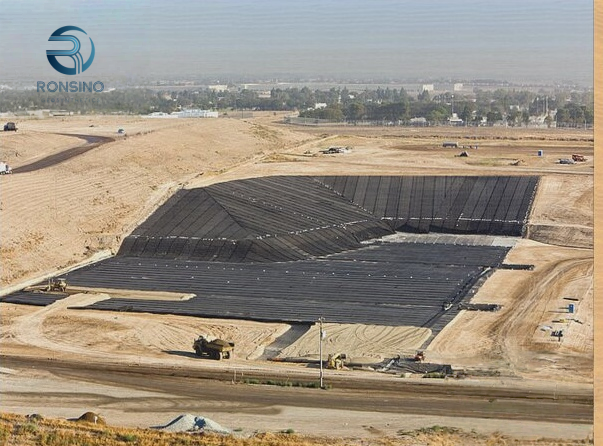
HDPE pond liners provide strength, heat resistance, and longevity, offering a cost-effective solution for harsh conditions. Their chemical and weather resistance makes them ideal for diverse containment needs.
Made from high-density polyethylene (HDPE) with virgin resin, carbon black, and UV stabilizers, these geomembranes resist sunlight degradation, ensuring long-term outdoor use.
Compliant with GRI-GM13 standards, HDPE liners are widely used in water management, pestichemical facilities, agriculture, and aquaculture due to their waterproof and aging-resistant properties.
In landfills, HDPE geomembranes stand out for their toughness, chemical inertness, and impermeability. They create a durable, eco-friendly barrier against hazardous leachate, protecting soil and groundwater while meeting regulatory requirements.
1.HDPE Pond Liner for Landfills - Excellent Impermeability (Low Permeability Coefficient)
HDPE geomembranes effectively contain waste by preventing leachate contamination, with permeability under 1×10⁻¹³ cm/s. Their chemical resistance and durability ensure reliable performance in landfills, isolating hazardous materials. Proper installation, including seam welding and quality control, creates seamless, long-lasting barriers for optimal containment.
1.1 HDPE Pond Liner for Landfills Technical Data
1.1.1 HDPE Pond Liner Permeability Performance:
1.Permeability coefficient: Exhibits an exceptionally low permeability rate of ≤1×10⁻¹³ cm/s, ranking among the most impermeable synthetic barrier materials available.
2.Performance comparison: Demonstrates a permeability reduction of up to two orders of magnitude compared to conventional compacted clay liners, which typically range between 1×10⁻⁷ and 1×10⁻⁹ cm/s.
3.Leachate retention: When properly installed with fully welded seams and subjected to rigorous integrity testing, the liner system achieves undetectable levels of leachate breakthrough.
1.1.2 HDPE Pond Liner Environmental Benefit:
1.High-Density Polyethylene (HDPE) pond liners significantly decrease the risk of groundwater pollution.
2.HDPE pond liners effectively prevent toxic substances from leaching into adjacent natural habitats.
3.HDPE pond liners comply with or surpass international landfill containment standards, including stringent regulations such as the EPA Subtitle D in the United States.
1.2 HDPE Pond Liner for Landfills - Case Study: Mining Waste Containment in Arequipa, Peru
Sustainable Mining Waste Containment in Arequipa, Peru
A copper mining project in Arequipa, Peru, faced significant environmental challenges due to toxic tailings containing heavy metals, acids, and processing chemicals. The original containment system relied on clay liners but proved vulnerable to microscopic leaks, posing risks to nearby waterways.
To address this issue in 2019, the company implemented an advanced 2mm HDPE geomembrane across the entire tailings storage facility. Critical enhancements included:
Precision welding techniques, utilizing double-seam fusion for maximum impermeability.
Rigorous quality control, employing air pressure tests and vacuum chamber inspections to verify seam integrity.
Protective geotextile underlayment, safeguarding against punctures from sharp debris or shifting substrates.
Three years of post-installation hydrogeological assessments demonstrated exceptional results:
No detectable seepage into underlying groundwater systems.
Consistent liner durability, even under prolonged exposure to highly acidic effluents.
1.3 Comparison HDPE Pond Liner with Alternative Barriers
Barrier Type | Permeability (cm/s) | Cost per m² |
HDPE | ≤1×10⁻¹³ | $5–$10 |
Compacted Clay | 1×10⁻⁷ | $3–$6 |
GCL (Bentonite) | 1×10⁻⁹ | $4–$8 |
Conclusion: HDPE Pond Liner provides the best balance of cost and impermeability for landfills.
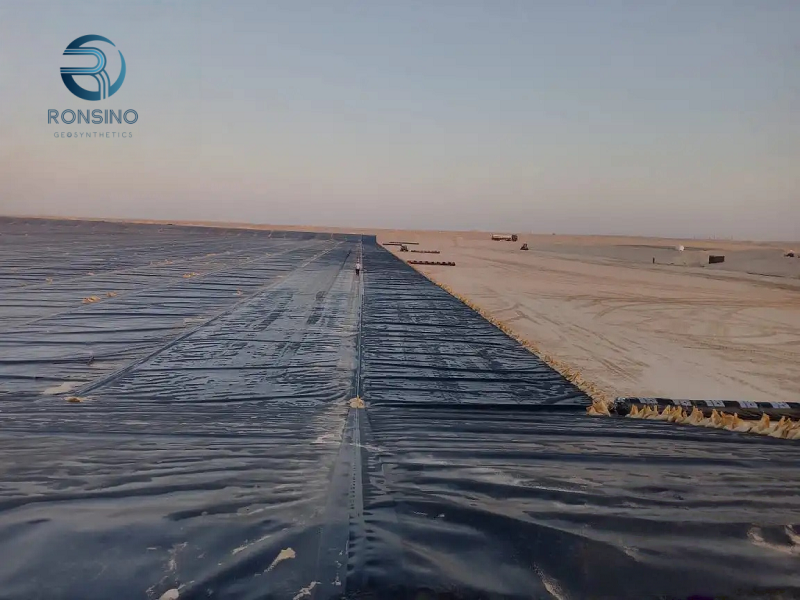
2.HDPE Pond Liner for Landfills – Superior Chemical Resistance
Landfill leachate contains acidic compounds, organic solvents, metal contaminants, salts and petroleum derivatives, which are highly corrosive and may damage inferior lining materials, causing leakage and pollution.
HDPE geomembrane has become the preferred material for anti-seepage in landfills due to its excellent chemical resistance. Compared with traditional materials such as PVC or LDPE, HDPE can still maintain good mechanical properties in corrosive environments with different pH values, ensuring long-term anti-seepage and environmental protection effects.
2.1 HDPE Pond Liner for Landfills - Technical Data
2.1.1 HDPE Pond Liner for Landfills - Chemical Resistance Profile, Resistant to:
1.Acidic & Alkaline Solutions (pH 1–14) – Engineered to withstand highly corrosive conditions, including extreme acidity and alkalinity commonly found in leachate environments.
2.Hydrocarbon Resistance – Demonstrates exceptional durability against petroleum-based substances, including benzene, diesel fuel, and gasoline.
3.Chemical Stability – Maintains structural integrity when exposed to salts, alcohols, oxidizing agents, and a broad spectrum of industrial or organic compounds.
2.1.2 HDPE Pond Liner for Landfills - Not endorsed for:
1.Highly corrosive acids – For instance, concentrated nitric acid may gradually degrade the polymer material.
2.Specific aromatic hydrocarbons – Prolonged exposure to certain volatile aromatic solvents could potentially reduce the product's lifespan.
These characteristics position HDPE pond liners as an optimal solution for landfill containment systems, protective capping layers, and leachate collection basins.
2.2 HDPE Pond Liner for Landfills Case Study: Landfill in Lima, Peru
The main landfill in Lima, Peru, experienced frequent failures due to the inability of the 1.2 mm PVC liner system to resist corrosive leachate, causing the material to embrittle and crack within 3-5 years, causing pollution leaks and high repair costs.
In 2013, the operator upgraded to use 1.5mm HDPE geomembrane as the base anti-seepage and leachate collection system. The material has excellent corrosion resistance to organic acids and petroleum-based contaminants.
Ten years of monitoring data show:
1.Tensile strength retention rate exceeds 95%
2.No environmental stress cracking or molecular degradation
3.Penetration remains stable
Practice has proven that HDPE geomembrane is a long-term and reliable anti-seepage solution for landfills in harsh environments.
2.3 Comparison of HDPE Pond Liner for Landfills with other liners
Material | Chemical Resistance | Lifespan in Landfills |
HDPE | Excellent | 50+ years |
PVC | Moderate | 10–20 years |
LLDPE | Good | 20–30 years |
EPDM | Poor (swells in oils) | 15–25 years |
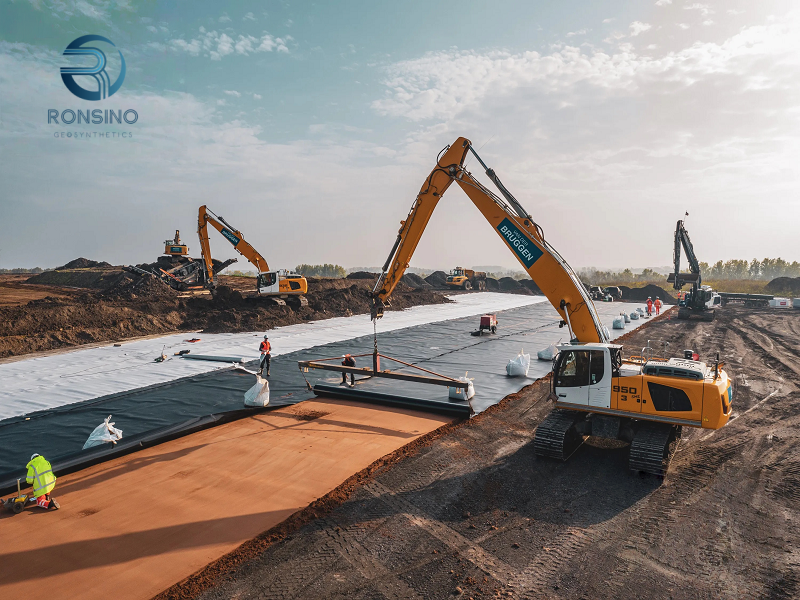
3.HDPE Pond Liner for Landfills - High Tensile Strength & Puncture Resistance
Landfill conditions subject containment liners to intense mechanical strain from waste compression, shifting refuse masses, and abrasive interactions with debris like metals, broken glass fragments, and construction materials. Compromised liners may develop ruptures or perforations that enable immediate contaminant seepage.
High-density polyethylene geomembranes demonstrate superior performance in these demanding applications owing to their exceptional tensile strength (minimum 20 MPa) and outstanding penetration resistance. These robust physical characteristics enable HDPE barriers to maintain structural stability under extreme pressure and impact forces while significantly prolonging operational durability.
3.1 HDPE Pond Liner for Landfills Technical Data
3.1.1 HDPE Pond Liner Mechanical Performance:
1.Tensile Strength: Ranging from 20 to 35 MPa (per ASTM D638 standards), this material exhibits exceptional resistance to elongation and tearing under applied stress.
2.Puncture Resistance: Capable of enduring forces exceeding 500 N, with performance varying based on material thickness and specific design requirements (as per ASTM D4833 testing protocols).
3.Elongation at Break: Demonstrating remarkable flexibility, the material elongates between 700% and 900% before failure, ensuring structural integrity during landfill settlement without rupturing.
4.Impact Resistance: When reinforced with protective geotextile layers, it effectively resists penetration from sharp falling objects, maintaining durability under demanding conditions.
3.1.2 HDPE Pond Liner Design Considerations:
1.Thicker geomembrane liners, such as those with a 2 mm thickness, offer significantly enhanced protection against punctures compared to standard options.
2.Incorporating a geotextile cushion layer beneath the liner further minimizes puncture risks caused by sharp subgrade materials like rocks or construction debris.
3.For high-stress applications, including waste tipping zones, reinforced HDPE liners provide superior tear resistance and long-term durability under heavy loads.
3.2 HDPE Pond Liner for Landfills Case Study: Landfill Expansion in Trujillo, Peru
In the city of Trujillo, the expansion of a public waste disposal site necessitated the installation of an advanced containment system capable of withstanding continuous heavy machinery operations for refuse compression and distribution. Project specialists implemented a reinforced dual-millimeter high-density polyethylene membrane, complemented by protective geosynthetic fabric underlays for enhanced durability.
3.2.1 HDPE Pond Liner for Landfills Key Installation Measures:
1.Dual-layer welded seams subjected to rigorous non-destructive testing to ensure optimal seam strength and durability.
2.Reinforced liners strategically positioned in high-impact zones to withstand frequent dumping and heavy loads.
3.Protective geotextile underlayment installed beneath the liner system to mitigate puncture risks from sharp objects and abrasive materials.
3.2.2 HDPE Pond Liner for Landfills Performance Results after 5 Years:
1.No instances of punctures or tears were observed during comprehensive activity inspections.
2.The landfill liner maintained complete impermeability despite undergoing multiple compaction cycles with 30-ton heavy machinery.
3.Settlement areas exhibited no signs of mechanical energy dissipation or stress-induced cracking.
This project demonstrated that properly installed and high-quality HDPE landfill liners can endure prolonged exposure to intense mechanical strain, making them an optimal choice for demanding landfill applications.
3.3 HDPE Pond Liner for Landfills Puncture Test Comparison
Material | |
HDPE (1.5mm) | 300 N |
PVC (1.5mm) | 200 N |
LLDPE (1.5mm) | 250 N |
Key Takeaway: Thicker HDPE (≥2.0mm) is best for high-stress landfills.
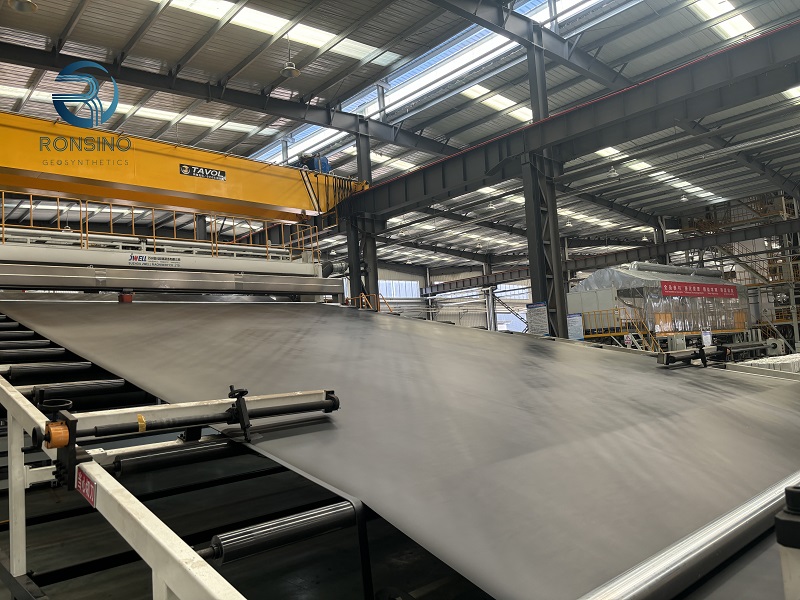
4.HDPE Pond Liner for Landfills - UV & Weather Resistance
In landfill projects, lining equipment often faces prolonged exposure to sunlight, rain, and temperature extremes before final cover installation. Without UV protection, synthetic membranes can degrade, leading to cracking, reduced elasticity, and weakened structure.
HDPE geosynthetic barriers contain 2-3% carbon particles that block UV radiation, preventing molecular damage and ensuring durability in harsh weather. HDPE also maintains performance from -60°C to +60°C, making it suitable for diverse climates, from deserts to polar regions.
4.1 HDPE Pond Liner for Landfills Technical Data
4.1.1 HDPE Pond Liner UV Resistance Features:
Optimized Carbon Black (2-3%, ASTM D4218): Ensures superior UV absorption.
UV Resistance (8,000 hrs, ASTM G154): Retains >90% tensile strength after prolonged exposure.
Thermal Resilience: Stable flexibility and strength under extreme temperature fluctuations.
Oxidation Resistance (OIT 100-150 min, ASTM D3895): High resistance to thermal/UV degradation.
4.1.2 HDPE Pond Liner Weathering Advantages:
1.Exhibits exceptional resistance to thermal stress caused by alternating hot days and freezing nights.
2.Maintains structural integrity when exposed to acid rain and airborne contaminants.
3.Ideal for long-term outdoor applications, including stormwater retention ponds and evaporation lagoons.
4.2 HDPE Pond Liner for Landfills - Case Study: Open Landfill in Piura, Peru
4.2.1 HDPE Pond Liner for Landfills Project Background:
Peru's Piura has intense UV radiation and predictable rainfall. A local landfill required a long-term exposed geomembrane liner due to incremental waste deposition.
4.2.2 HDPE Pond Liner for Landfills Solution:
A UV-resistant 1.5 mm thick high-density polyethylene (HDPE) geomembrane containing 2.5% carbon black additive was successfully implemented in the project installation. The comprehensive system design incorporated several key protective measures:
1.Secured perimeter anchoring to mitigate potential wind displacement risks
2.Biannual structural integrity assessments to monitor surface degradation patterns
3.Application of specialized protective soil layers across operational areas
Long-Term Performance Evaluation (8-Year Service Period):
Preserved more than 90% of initial mechanical strength and elasticity properties
4.3 HDPE Pond Liner for Landfills UV Degradation Comparison
Material | Lifespan (Exposed) |
HDPE (UV-stabilized) | 30+ years |
PVC | 10–15 years |
LLDPE (non-stabilized) | 5–8 years |
Recommendation: Always use carbon-black HDPE for exposed landfill applications.
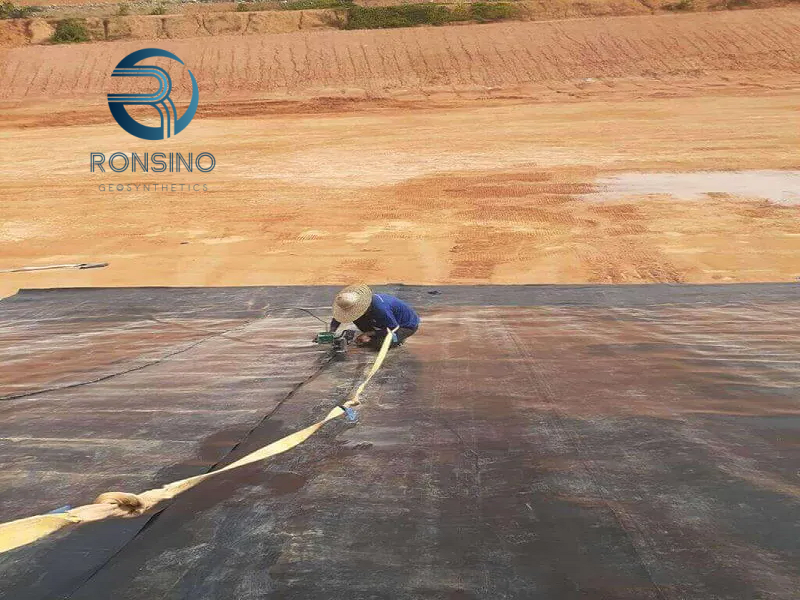
HDPE geomembranes are widely regarded as the optimal solution for landfill containment systems owing to their exceptional properties:
1.Superior chemical resistance (effectively contains hazardous leachates)
2.Complete fluid barrier properties (safeguards underground water sources)
3.Enhanced tear strength (supports substantial overburden pressures)


