
HDPE Geocell Ground Grid for Soil Erosion in Indonesia
CASE · 2025-08-26 · 0 views
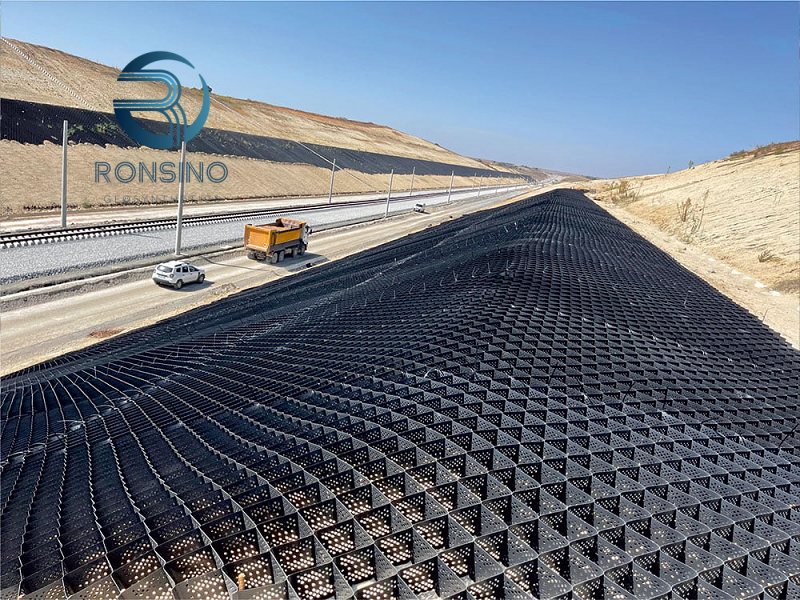
High-density polyethylene geocells are made of HDPE or polypropylene copolymer strips welded into a honeycomb structure, which can be folded during transportation and expanded to form a high-stiffness reinforced cushion after being filled with sand and gravel. This material has good stretchability and lateral restraint effect, and is widely used in roads, railways, and construction projects. Its functions include drainage, anti-seepage, reinforcement, isolation, restraint, and load reduction.
1.Why Chose HDPE Geocell Ground Grid Material Indonesia for Soil Erosion
In Indonesia, a 15,000-square-meter abandoned mining area is located on the edge of the city, causing serious environmental hazards: wind erosion and dust pollute the air, and there are safety hazards such as landslides and ground subsidence, which destroy the surrounding landscape and hinder the development of tourism. To this end, the Indonesian customer purchased a 15,500-square-meter reinforced cell system to conduct comprehensive restoration and ecological reconstruction of the site.
2.Advantages of HDPE Geocell Ground Grid for Soil Erosion
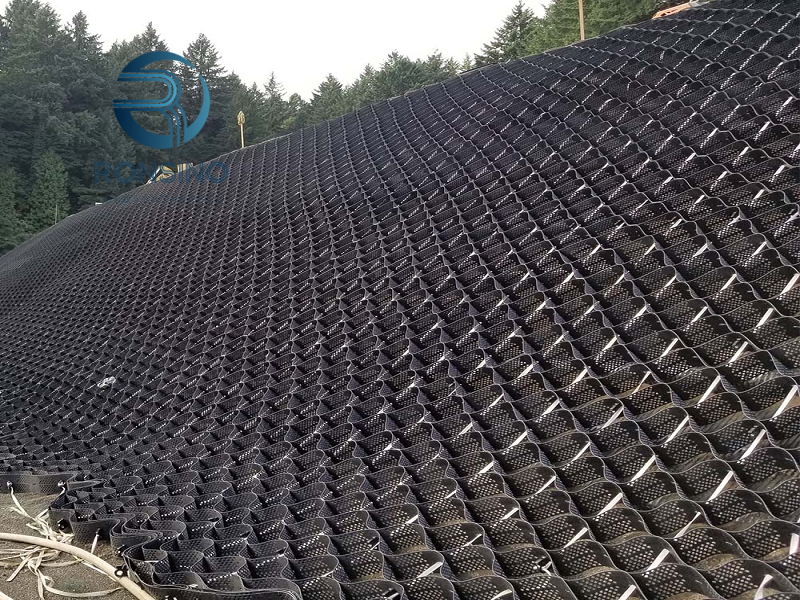
The geocell exhibits outstanding resistance to deformation and erosion, demonstrating remarkable capabilities in soil and water conservation.
Within the geotechnical cell, optimal soil conditions are meticulously maintained to facilitate robust plant growth, resulting in a significant reduction in soil erosion.
It serves as an effective barrier against soil erosion on highly weathered fossilized slopes and soil-rock mixed slopes, ensuring comprehensive erosion control.
3.HDPE Geocell Ground Grid slope Soil Erosion technology
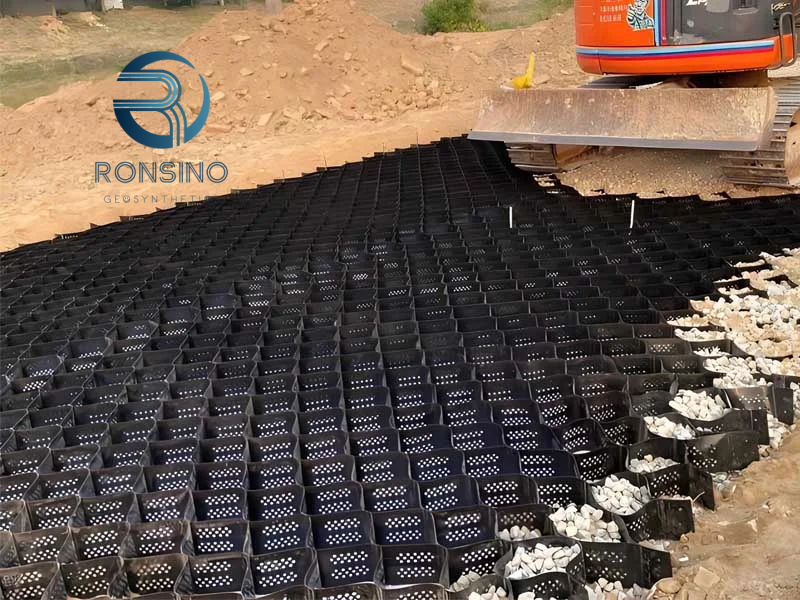
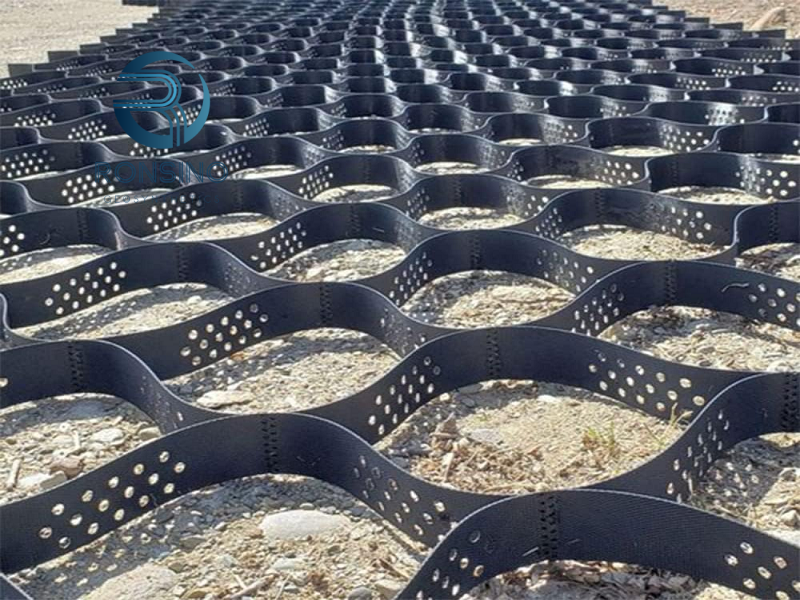
Geocell represents a three-dimensional lattice structure crafted from robust high-density polyethylene (HDPE) bands interconnected through advanced welding techniques. Upon deployment, it is expanded and subsequently filled with soil, gravel, or concrete, resulting in a system that exhibits exceptional lateral confinement and superior structural rigidity. The product is available in a diverse range of configurations tailored to specific project requirements. Based on the topographical analysis of the slope, the RONSINO specialists proposed a 4m × 5m panel dimension to the client, featuring a cell depth of 15cm and a strip width measuring 6cm.
4.What are The Characteristics of Geocells
This material has excellent lateral restraint, anti-slip and anti-deformation properties, strengthens the bearing capacity of the roadbed and effectively diffuses stress. Its excellent ductility facilitates transportation and shrinkage, and it can be filled with loose materials after construction to form a high-strength, high-stiffness composite structure. The material is lightweight and wear-resistant, has stable chemical properties, is anti-aging and corrosion-resistant, and is suitable for all types of soil. By adjusting geometric parameters, it can meet diverse engineering needs, flexibly expand and contract to reduce transportation volume, and simple joints speed up construction progress.
5.The main Purpose of the Geocell Soil Erosion
Composite retaining walls have the dual functions of preventing landslides and carrying gravity.
When faced with weak foundations, the use of geogrids can significantly reduce construction labor intensity, reduce roadbed thickness, speed up construction progress, improve engineering performance, and significantly reduce project costs.
High-density polyethylene (HDPE) geocell grid technology is widely used in stabilization projects for highway and railway subgrades.
Geocells are suitable for load-bearing embankments and shallow water channel management projects.
For highways and first-class highways that pass through collapsible loess and highly compressible loess sections, the roadbed must be treated to meet the design load-bearing capacity requirements.
Reinforcement measures are required for highways, first-class highways and their shoulders and slopes built in saline soil and expansive soil areas.
6.Specifications of HDPE Geocell Ground Grid Material for Soil Erosion in Indonesia
welding Distance : 340mm Thickness :1.4mm Height:150mm
Total Quantity – 15,500 Square meters
Standard – ASTM standard
7.About RONSINO
Since its establishment in 2007, RONSINO has always focused on producing and developing various geomembrane and geosynthetic materials products and solutions for global customers. Our core products include innovative, high-quality geotextiles, geomembranes, geogrids, geocells, bentonite waterproof blankets and drainage boards. RONSINO not only provides high-quality geosynthetic materials products, but also has professional design and construction service capabilities. We support OEM, ODM customized development and professional processing and manufacturing services. If you have any consultation needs, please feel free to contact us and we will reply as soon as possible.


