
HDPE Honeycomb Geocell for Slope Protection in Brazil
CASE · 2025-09-18 · 0 views
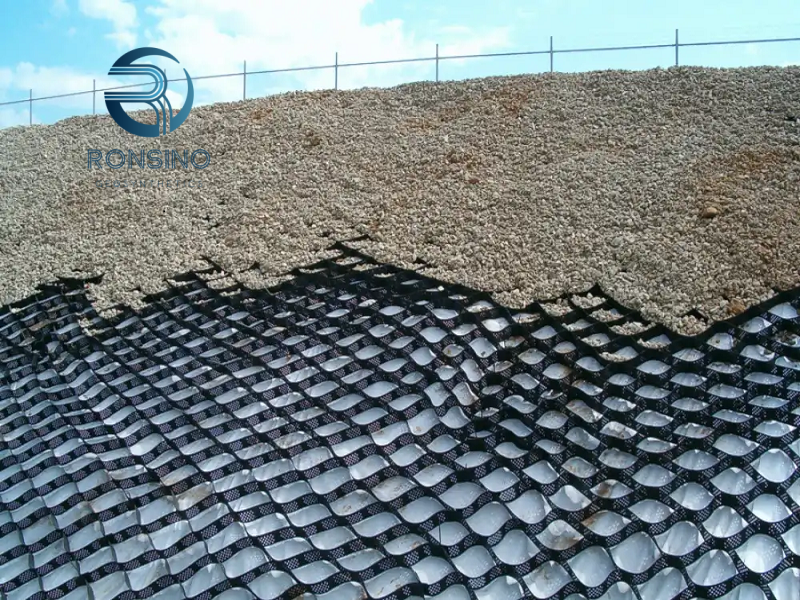
HDPE Honeycomb Geocell are made of high-density polyethylene sheets that are ultrasonically welded into a three-dimensional honeycomb structure. They can be stretched and expanded during construction for easy transportation. After filling with soil and other materials, it forms a composite structure with strong lateral restraint and high stiffness, which is cost-effective and provides excellent anti-slip anchorage for slopes. The system can be quickly installed in complex areas with small equipment, reducing material consumption and waste.
Case Study
Location: Brazil
Product: HDPE Honeycomb Geocell
Application: Slope protection
1.Benefits
In slope stabilization endeavors, the robustness and gravitational anchoring attributes of cementitious panels are frequently incorporated into diverse design schemes, with certain instances also employing hexagonal cellular configurations within their frameworks. Nevertheless, from a functional standpoint, these methodologies may converge in their fundamental objectives. The rationale for such implementation stems from the inherent vulnerability of cementitious structures to expansive voids and their susceptibility to degradation through prolonged exposure to atmospheric elements. The employment of honeycomb-like surface treatments effectively mitigates soil displacement and erosion challenges.
The high-density polyethylene hexagonal cellular geocell slope stabilization system enhances the visual appeal and orderliness of roadside areas, drawing significant tourist interest. By facilitating vegetation growth on embankments, it contributes to environmental aesthetics while simultaneously reducing urban carbon dioxide levels and improving air quality through natural filtration processes.
The unique, lightweight, flexible material conforms to surface variations to improve ease of installation while resisting impact damage.
2.Issue
While soils remain stable in much of the world, sites such as steep slopes, transportation corridors and artificial slopes are highly susceptible to degradation. It is crucial to prevent soil erosion, which not only leads to infertility of the land, but also pollutes water quality and harms the ecology. Restoration of topsoil can take decades, highlighting the need to protect its integrity. HDPE honeycomb geocells are a cost-effective solution for stabilizing steep slopes and artificial slopes.Our Brazilian client's infrastructure project faced this problem: there are steep slopes on both sides of the road, which are prone to rain erosion, causing landslides and severe soil erosion. In order to meet this challenge, based on professional evaluation, we recommend the use of HDPE honeycomb geocell system for slope reinforcement.
3.Solution
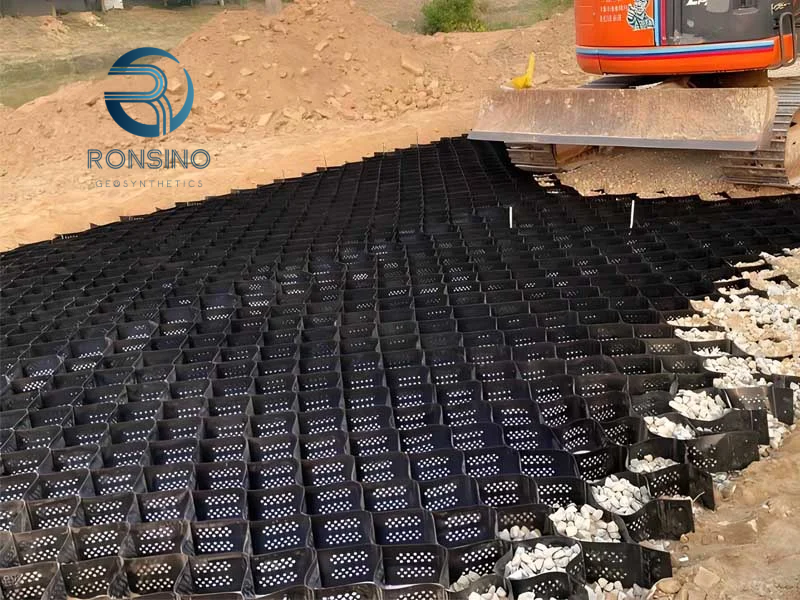
Based on the characteristics of HDPE honeycomb geocells, this technology is suitable for steep and stable slopes or landslides. Differentiated solutions should be adopted for slopes with different degrees of stability: when the front edge of the slope is unstable, mortar stone grids and anchor rods can be used for protection; for slopes with poor stability, cast-in-place reinforced concrete mesh and anchor rods (cables) should be used; for landslides with poor stability and large sliding forces, prefabricated prestressed concrete mesh and prestressed anchor rods (cables) are needed. During construction, first level the foundation and lay a geomembrane (the anti-seepage geotextiles at both ends are buried in a corrugated shape), and then cover it with 10 cm thick fine sand or clay.
To address this issue, the unusable mulch film is compacted into a roll measuring between 1 and 1.5 meters in width. Subsequently, a layer of fine sand, at least 0.5 meters thick, is spread over the rolled film, and clear markings are applied to identify the section. When incorporating this section into the construction process, manual splicing of the cover is required. Position the welding apparatus between the upper and lower layers of the film, ensuring reverse welding is performed. Concurrently, the welded area is compressed using rollers, and the welding operation is conducted at a controlled speed of 0.8 to 1.0 meters per minute.
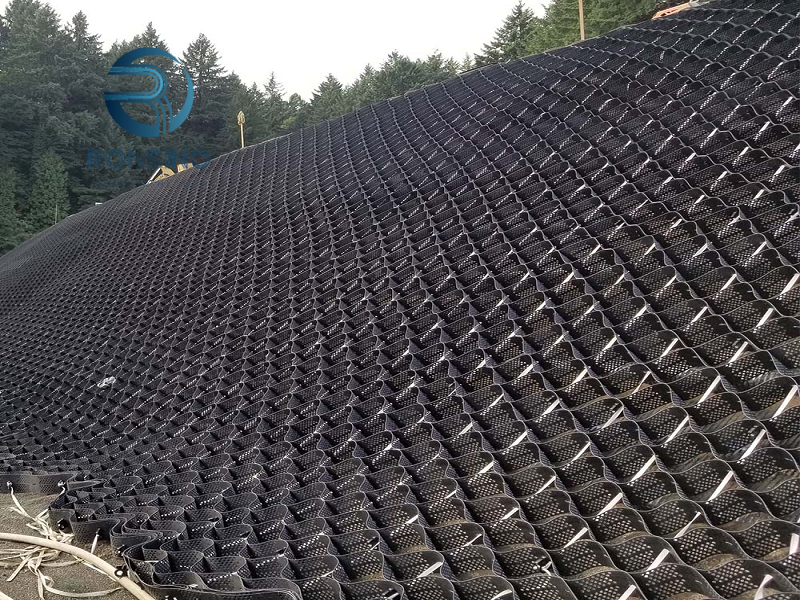
And in the process of laying, control the slope, about 35 degrees to 45 degrees, to ensure the beauty of the slope and good drainage performance.
Grasses, vegetables and shrubs play a key role in mitigating soil degradation. Its effectiveness stems from its extensive root network, which anchors soil particles, thereby increasing resistance to displacement. The leaves of these plants intercept and cushion the impact of raindrops, reducing their ability to wash away topsoil. In the HDPE honeycomb geogrid slope protection system, these cell structures can be filled with gravel, cement mixture or soil suitable for vegetation. The confinement effect of geocells ensures that the fill is stable and forms a resilient barrier against erosive forces. The system's inherent flexibility can reinforce or protect underlying slopes and simplify site preparation. When soil or rock fill is used, the system allows water to infiltrate, thereby reducing surface runoff.
4.Summary
Specifications of HDPE Honeycomb Geocell Slope Protection in Brazil
Geogrid indoor purchase quantity – 46936 square meters
Type-Textured surface perforated
Cell depth – 100mm
Welding distance – 416mm
Seam peel strength – 1420N
Expanded cell size – 416*374mm
Expanded panel size – 4*12m
5.About RONSINO
As a leading producer and distributor specializing in geotextiles and geosynthetics, RONSINO consistently dedicates itself to the research, development, fabrication, and implementation of advanced geotextile solutions. We offer our clients an extensive selection of geotextiles and geomembranes tailored for diverse projects in civil engineering, mining operations, environmental conservation, and aquaculture industries. RONSINO continuously advances its technological capabilities, enhances production infrastructure, and expands comprehensive engineering solutions. Our comprehensive range of geosynthetic products is renowned for their exceptional quality, superior performance, remarkable longevity, and optimal cost efficiency. RONSINO’s portfolio of geotextiles and other geosynthetic offerings is designed to exceed expectations through robust technological foundations, pioneering engineering approaches, and unparalleled client support. Eager to collaborate with you as your trusted partner.
Our premier cutting-edge, superior-grade offerings encompass geotextiles, geomembranes, geogrids, geocells, geosynthetic clay liners, and drainage composites, among others. RONSINO serves a global clientele across more than 100 nations, such as the United States, Australia, France, Sweden, the United Kingdom, Turkey, Hong Kong, Hungary, New Zealand, Poland, Mexico, Ecuador, Brazil, Pakistan, Bangladesh, Thailand, Vietnam, Malaysia, Singapore, the Philippines, Sri Lanka, India, the UAE, Saudi Arabia, Qatar, Kenya, Ghana, Ethiopia, Somalia, Nigeria, South Africa, Eswatini, and Mongolia.
RONSINO offers both high quality geosynthetic products but also professional design and installation service. OEM, ODM, custom development and fabrication are also available. If you have any questions or inquiries, please fill and submit the following form, we will reply as soon as possible.


