What is PVC Geomembrane Liner?
Blog · 2025-08-23 · 0 views
The PVC geomembrane liner represents a versatile thermoplastic waterproofing membrane, skillfully formulated from vinyl monomers, plasticizing agents, and stabilizing compounds. Utilizing advanced calendaring or extrusion techniques, it is crafted into a pliable yet economical non-reinforced solution. This material stands as the superior choice for diverse applications.
1.Characteristics and Applications of PVC Geomembrane
Polyvinyl chloride geomembrane is an impermeable sheet made of polyvinyl chloride (PVC), a synthetic plastic polymer. It is widely used in the fields of environmental engineering and civil engineering, mainly for regulating fluid dynamics, avoiding leakage risks and achieving effective isolation. PVC geomembrane has a number of core properties and has shown practical value in many industry scenarios:
1.1 Material Composition
Polyethylene geomembranes exhibit excellent flexibility and long-lasting durability. At the same time, they offer excellent chemical resistance. They are also effective against UV aging and environmental stress cracking. These comprehensive features make it a trustworthy solution. Therefore, polyethylene geomembranes are widely used in harsh working conditions.
1.2 Waterproofing
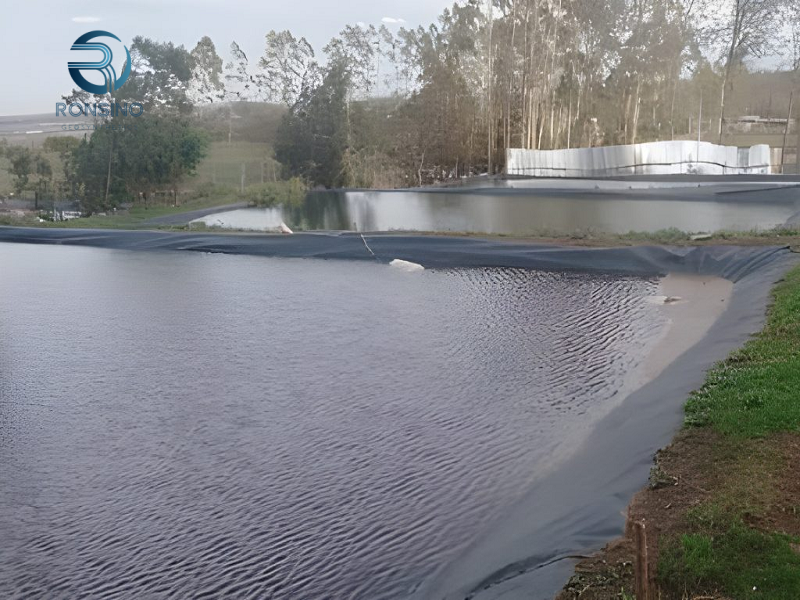
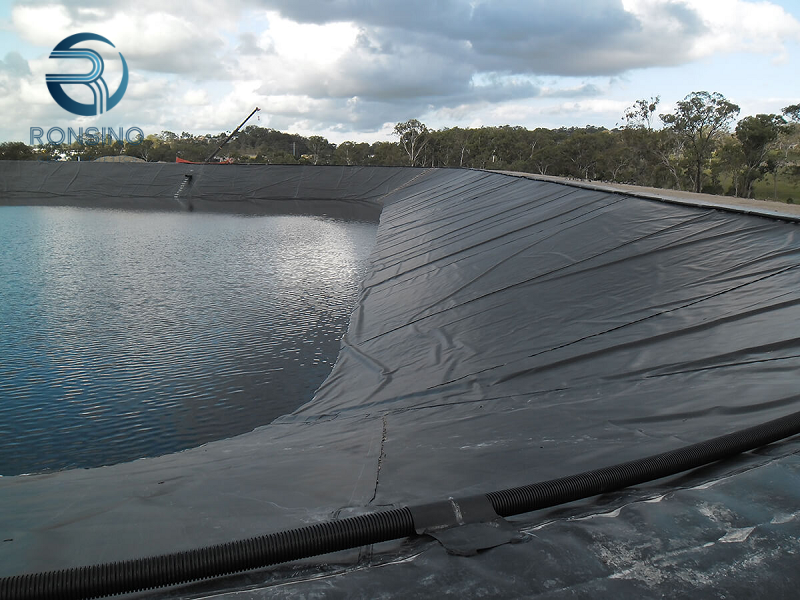
PVC geomembranes are extensively employed as impermeable barriers in reservoirs, ponds, and canals. Additionally, they efficiently hinder the infiltration of water. Moreover, they safeguard the adjacent ecosystem from potential pollutants. Furthermore, their robust construction guarantees enduring functionality. Therefore, they stand as a dependable choice for aquatic containment initiatives.
1.3 Waste Containment
PVC geomembranes are widely employed in landfill systems and waste management facilities. In addition, they serve as a barrier to inhibit the seepage of leachate into surrounding soil layers. Moreover, they play a crucial role in safeguarding groundwater resources from potential contamination. Furthermore, their exceptional resistance to chemical substances ensures long-term and reliable containment performance. Therefore, they are indispensable components in environmental preservation efforts.
1.4 Mining Applications
PVC geomembranes are utilized to line tailings ponds and storage facilities within mining operations. They effectively impede the migration of hazardous substances into the surrounding environment. These barriers also block the escape of contaminants, thereby minimizing ecological risks. Furthermore, their robust construction guarantees sustained integrity over extended periods. Consequently, they play an indispensable role in safeguarding environmental stability during mining activities.
1.5 Aquaculture
Polyvinyl chloride geomembranes establish an impermeable shield within aquatic farming reservoirs and containers. Concurrently, they facilitate optimized liquid resource control. Additionally, they inhibit the degradation of aquatic environments. Moreover, their resilient and adaptive nature elevates operational effectiveness. Thus, they represent a superior solution for environmentally responsible aquaculture systems.
1.6 Decorative Ponds and Lakes
PVC geomembranes find extensive application within landscaping initiatives. Concurrently, they facilitate the creation of long-lasting ornamental ponds and reservoirs. Moreover, they guarantee impermeable barriers to prevent leakage. Furthermore, their pliable nature accommodates diverse design specifications. Consequently, they augment both operational efficiency and visual appeal.
1.7 Secondary Containment
Polyvinyl chloride (PVC) geomembranes serve as a critical secondary barrier within industrial environments. These specialized liners effectively contain and mitigate the risks associated with accidental leaks or spills of hazardous substances. By forming an impermeable layer, they play a pivotal role in safeguarding ecological systems from contamination. The exceptional chemical stability of PVC further bolsters their dependability in harsh operational conditions. Consequently, these membranes are indispensable components in maintaining industrial safety and regulatory compliance.
2.What Are Advantages of PVC Geomembrane Liner?
PVC geomembrane is a waterproof material with excellent flexibility and extremely low permeability coefficient, which can effectively block moisture penetration.
PVC geomembrane exhibits excellent chemical stability, can resist the erosion of various chemical media, and maintains stable performance for a long time.
The material has extremely high tensile strength, which is enough to meet the stringent requirements of high-standard engineering projects and ensure the safety and reliability of the structure.
PVC geomembrane has excellent heat and cold resistance and can operate stably in extreme temperature environments. The applicable temperature range is from -70°C to 110°C.
Its strong tensile elongation at break enables PVC geomembrane to adapt to various harsh geological and climatic conditions, and effectively cope with the stress concentration caused by uneven settlement of the formation.
PVC geomembrane has excellent anti-aging properties and can resist ultraviolet rays, oxidation and other erosion in the natural environment for a long time, extending its service life.
During the production process, quality inspection personnel will conduct timely sampling inspections of PVC geomembranes based on batches. The inspection content covers the following three key aspects:
Mechanical performance tests include wide strip tensile test, trapezoidal tear strength test, CBR bursting strength test, drop cone test and many other indicators to comprehensively evaluate the mechanical properties of the material.
Appearance and physical parameter testing includes unit area mass measurement, width measurement, thickness measurement, etc. to ensure that the product meets the specifications.
Hydraulic performance tests include vertical penetration tests, hydrostatic pressure tests, etc. to verify the material’s anti-seepage effect and pressure resistance.
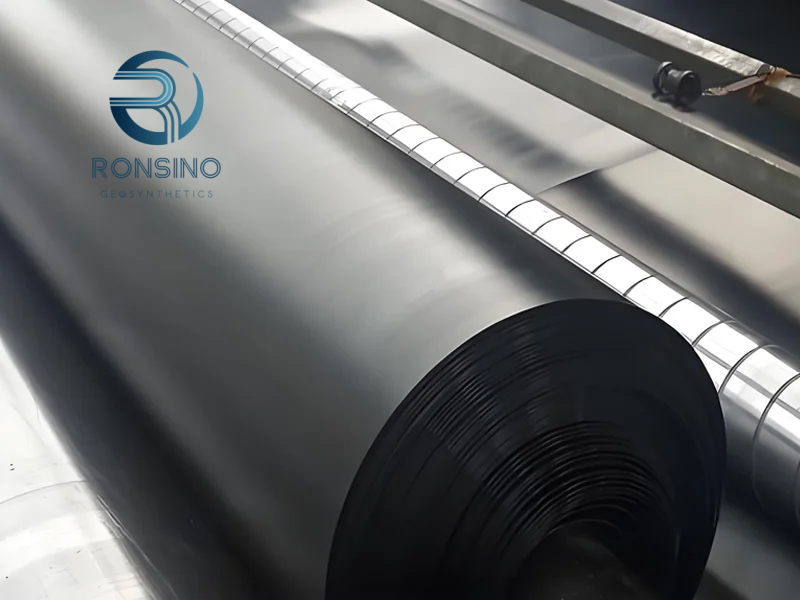
3.What Is The Solution of PVC Geomembrane for Tailings Seepage Project
We chose polyvinyl chloride geomembrane for the Nicaragua tailings management project. Its excellent chemical corrosion resistance is the key. It can effectively prevent the penetration of harmful substances and protect the surrounding ecological environment and water resources. The material has excellent tensile strength and puncture resistance, ensuring long-term use under harsh working conditions. Its high strength can withstand the huge pressure of accumulated materials, and it is easy to install and has good flexibility, making it suitable for large-scale tailings containment projects. We provided customers with 2 mm thick PVC geomembrane samples and a full set of quality inspection reports to confirm its high quality. With a very competitive quotation, we successfully obtained an initial order of 150,000 square meters. The comprehensive characteristics of PVC geomembrane such as chemical inertness, structural strength and ease of installation are decisive advantages. We met the project requirements with comprehensive customer support and services, and finally successfully completed the cooperation.
4.How Are PVC Geomembrane Installation Process for Tailings Pond?
4.1 PVC Geomembrane preparation before Installtion
(1) Level the site of the ground, make its surface smooth, compact, no bump on the surface of the ground, no big stones, iron wire steel wire and other hard things, to prevent punctured impermeable film;
(2) A 40*40 anchorage ditch is dug around the landfill to prepare for the anchorage of the impermeable film on both sides of the landfill.
4.2 PVC geomembrane Installtion process
(1) The PVC geomembrane coil to be laid is flattened in the open space and cut into the required shape according to the predetermined scheme;
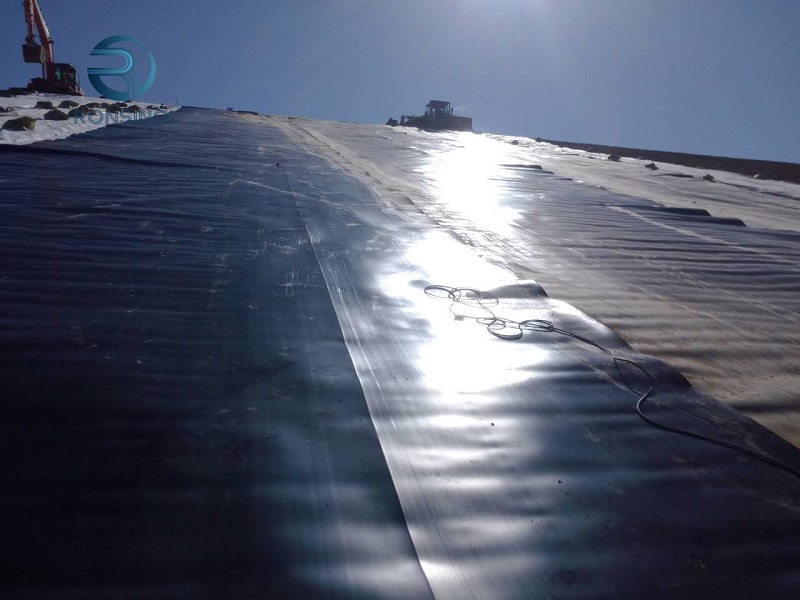
(2) In the process of film laying to avoid artificial damage, should be smooth, solid, reduce wrinkles as far as possible, reasonable choice of laying direction, as far as possible to reduce joint force, reasonable layout of each piece of material position, strive to joint as little as possible;
(3) When laying synthetic geomembranes, precise calculation methods must be used. Choosing polyvinyl chloride (PVC) geomembrane can reduce welding seams, which saves materials and complies with regulations. Human damage is strictly prohibited during installation. Adjacent welds should be staggered and arranged in a "T" shape to enhance structural stability. Allowance should be made to account for dimensional changes, typically a 1% to 4% increase in length is recommended, depending on project site characteristics. Its core goal is to prevent tensile failure of the anti-seepage layer under the stress caused by foundation deformation.
(4) All exposed PVC geomembrane must be immediately compressed with sandbags or other heavy weights to prevent the pvc geomembranes from being blown up by the wind or pulled out of the surrounding anchorage ditch.
4.3 Welding of Geomembrane PVC liner
Successful PVC Geomembrane welding and suturing depend on maintaining environmental parameters within specific ranges: ambient temperatures must consistently range from 4 to 40 degrees Celsius; operations must proceed under arid circumstances, with particular emphasis on eliminating precipitation, fog, or any form of surface moisture; additionally, wind velocity should not exceed level 4 on the Beaufort scale throughout the entire work period.
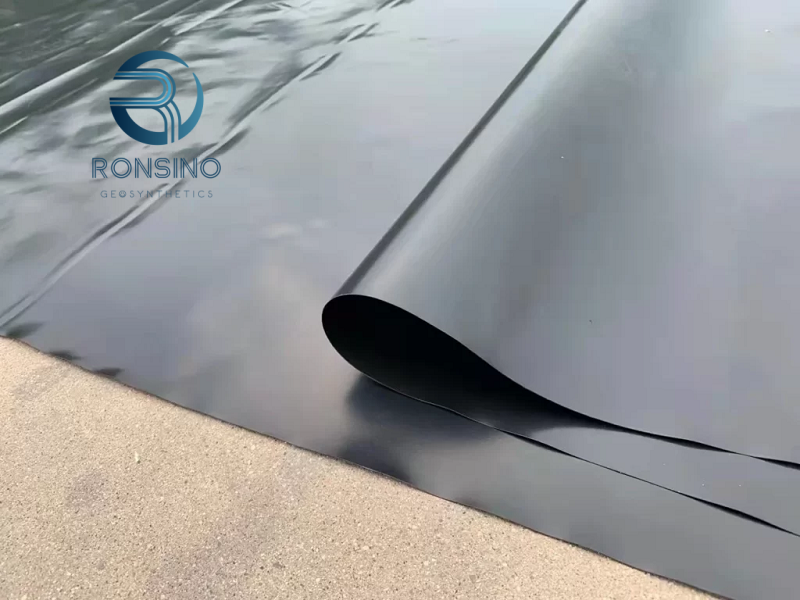
5.Attention for Geomembrane PVC Liner Construction Matters for Tailings Ponds
5.1 Matters needing attention of pvc liner construction personnel
(1) before laying PVC geomembrane, the laying surface should meet the design requirements and meet the quality and safety requirements;
(2) the material and quality of geomemetic electrode should meet the design requirements and relevant standards;
(3) Personnel unrelated to the construction shall not enter the construction site;
(4) All personnel entering the geomembrane installation site shall wear an entry card, wear shoes without damage to the pvc Geomembrane, and no one shall smoke when entering the site;
(5) In handling PVC geomembrane, all tools must be handled gently, not thrown or replay, hot tools and pvc Geomembrane contact is strictly prohibited.
5.2 Precautions for welding PVC geomembrane
In order to reduce the risk of wind deflection, sequential laying and welding compression technology must be used in the production of PVC geomembrane joints. Before welding, the designated overlap area needs to be thoroughly cleaned to ensure optimal bonding conditions, and the welding equipment rollers must be carefully prepared and trial welding calibration performed if necessary. During welding, constant movement must be maintained to ensure the integrity of the joint. After cooling, the welds are subjected to rigorous quality inspections to verify that they meet all required performance standards.
5.3 Repair defects and damage
During the installation of PVC geomembrane, any sections exhibiting flaws or breaches must undergo thorough assessment and subsequent remediation, ensuring the integrity of the waterproofing system remains uncompromised.
(1) Minor perforations shall be addressed through extrusion welding techniques. For apertures exceeding 6 millimeters in diameter, supplementary reinforcement patches must be applied.
(2) Delaminated areas require patching. Should the separation feature an irregular edge on inclined surfaces, it must be trimmed to a uniform circular configuration prior to treatment.
(3) The targeted PVC geomembrane surface designated for patching must be meticulously prepared, involving smoothing, refining, and sanitization to guarantee optimal adhesion conditions.
(4) Overlapping geomembrane sections should be repositioned and aligned correctly, with the welding seam oriented parallel to the slope gradient to prevent intersecting joints.
(5) All patches must be fabricated from identical PVC geomembrane material, fashioned into circular or oval shapes, and extend no less than 15 centimeters beyond the periphery of the imperfection to ensure comprehensive coverage.
5.4 PVC geomembrane fixation and protection
In the process of implementing PVC geomembrane lining for tailings storage facilities, it is imperative to secure the perimeter utilizing anchoring techniques, with specialized trenches employed to ensure edge integrity. Concurrently, to enhance the durability and extend the operational lifespan of the PVC geomembrane, the following protective measures are typically implemented:
(1) A geotextile layer is applied over the installed membrane to provide primary shielding, followed by a secondary layer of sand or soil to reinforce protection. Alternatively, a thin soil cover may be placed above the membrane, or a reinforced concrete layer with decorative finish may be constructed for both safeguarding and aesthetic purposes.
(2) Although PVC geomembrane installation can proceed in damp conditions, direct immersion in water must be avoided to maintain material integrity.
(3) When subgrade conditions involve moisture content, comprehensive drainage systems must be established post-installation to prevent water accumulation that could impede welding operations due to membrane adhesion.
(4) Material handling must adhere to stringent protocols emphasizing gentle placement, with any form of throwing, dragging, or rolling that might cause damage strictly prohibited.
(5) Unused PVC liner sections should be stored in climate-controlled environments with stable temperature and humidity levels, while exposure to ultraviolet radiation and precipitation must be prevented through appropriate protective measures.
6.Background of PVC Geomembrane Liner for Tailings Seepage in Nicaragua
The tailings pond is used to contain mineral processing residues, and its sulfide will leach heavy metals in an acidic environment. Therefore, PVC geomembrane is used to prevent seepage to protect the environment. PVC membrane has low permeability, high strength, tear and puncture resistance, chemical inertness, wide temperature range adaptability and long-term structural stability, and can adapt to foundation deformation. It is resistant to extreme temperatures, chemicals and ultraviolet rays, has a lifespan of 50-70 years, and is suitable for a variety of scenarios.
7.About RONSINO
RONSINO has been dedicated to manufacturing geomembrane and geosynthetics products and solutions to worldwide customers since its foundation in 2007. Our main innovative, high quality products include geotextiles, geomembranes, geogrids, geocells, geosynthetic clay liners, and drainage boards, etc al.
RONSINO offers both high quality geosynthetic products but also professional design and installation service. OEM, ODM, custom development and fabrication are also available. If you have any questions or inquiries, please contact us.