Comprehensive Analysis of Expenses for Geomembrane Deployment
Blog · 2026-08-27 · 0 views
Introduction
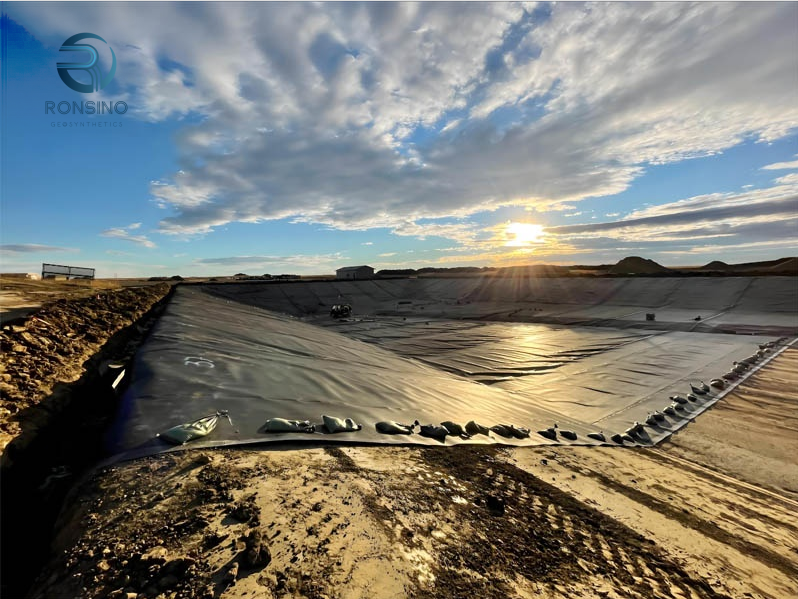
Geomembranes function as critical waterproof and containment barriers across landfills, reservoirs, mining operations, and agricultural developments. For project managers, contractors, and international purchasers, gaining a clear understanding of the expenses associated with geomembrane installation enables the formulation of precise budgets, prevents unforeseen financial overruns, and facilitates the selection of economically efficient options.
Many purchasers often focus only on raw material quotes and ignore significant installation costs, leading to actual budgets exceeding initial estimates by 10-30%. This authoritative, comprehensive guide explains key cost factors, 2026's latest pricing standards, and practical cost-cutting tips in simple terms. It provides clear, actionable cost references for your upcoming geomembrane construction projects.
1. Key Geomembrane Installation Cost Factors
The cost of geomembrane laying works does not adhere to a uniform pricing benchmark. Five core influencing factors directly determine the overall expenditure of your entire project. Each of these factors will exert an impact on the input of working hours, the usage of materials, and the complexity of on-site construction operations.
1.1 Material & Thickness
Material type is the largest variable in cost. There are significant differences in installation requirements and prices between HDPE, LLDPE, PVC and EPDM geomembranes. Among them, HDPE geomembrane has become the most widely used choice in industrial and environmental projects due to its excellent durability and stable performance.
Geomembrane thickness significantly increases installation costs. Thicker membranes require more labor for transport and handling, longer hot wedge welding time, and stricter seam quality testing. Thin geomembranes suit simple water storage projects, while thicker ones are better for demanding conditions like mining and landfills, with higher construction costs.
1.2 Site Conditions
A flat, tidy and easily accessible site can significantly shorten installation time and reduce labor costs. On the contrary, sloping terrain, uneven roadbed, remote location and harsh weather conditions will greatly increase the difficulty of construction.
For construction teams on complex sites, extra hours are needed for ground grading, on-site barrier clearance and standardized safety protection arrangement. For remote projects, additional costs from long-distance personnel transfer and on-site staff accommodation will push the total installation cost 30% or more higher than that of ordinary projects.
1.3 Installation Methods
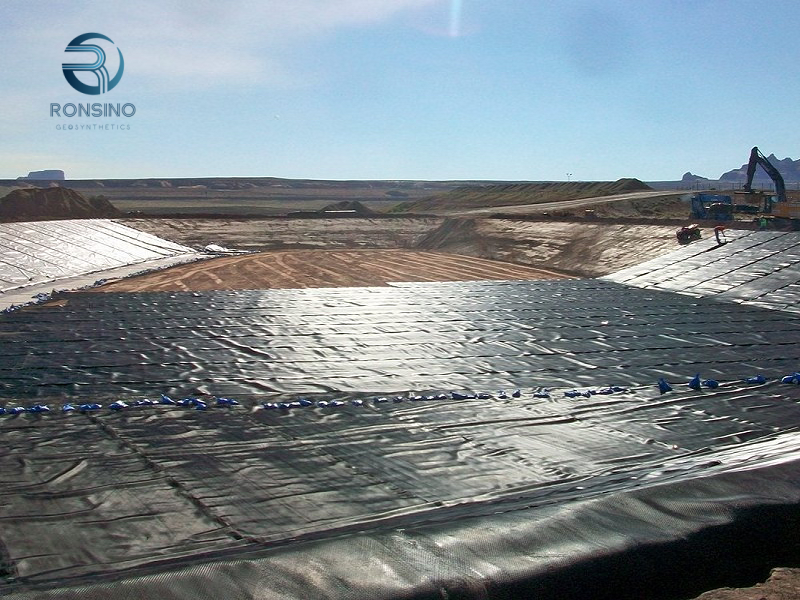
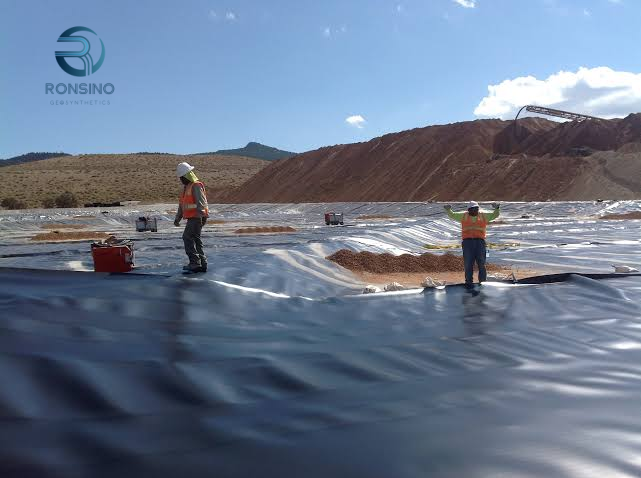
Two leading installation approaches in the current market fit distinct cost brackets. Hot wedge welding, the most widely used core technique for HDPE geomembrane construction, forms high-strength fully watertight seams, adapts to large industrial project construction needs, and delivers highly stable and reliable long-term performance.
In small buildings, adhesive can be used to install lightweight PVC and EPDM roofing membranes, which can reduce labor costs, but the joint stability is significantly lower than other connection methods. If you only focus on short-term costs and ignore long-term performance, subsequent maintenance costs will be higher.
1.4 Regional Labor Costs
Regional labor shortages are causing huge differences in geomembrane installation prices around the world. Hourly wages for skilled workers vary significantly between continents.
Labor costs in North America and Europe remain at US$30 to US$50 per hour, while Asian markets offer services at more competitive prices of US$10 to US$20 per hour. Professional construction teams can ensure standardized weld quality, thereby effectively reducing subsequent maintenance expenses. Therefore, cheap and unskilled labor often creates potential risks for the project.
1.5 Project Scale & Complexity
Large engineering projects often gain significant cost advantages from large-scale procurement. The construction team can improve work efficiency during continuous and large-area paving operations, and thus significantly reduce unit labor expenses.
Complex projects including multi-layer lining systems, fine corner processing, professional pipe wall sealing and multi-dimensional quality inspection require additional special processes. Such customized non-standard requirements will incur additional installation service fees compared to conventional single-layer laying projects that follow unified standards.
2. 2026 Geomembrane Installation Cost Price Benchmarks
2.1 Industry-Verified Geomembrane Installation Cost Ranges
We systematically compile industry-validated pricing intervals to help you make quick, accurate budget assessments. The data covers core material costs and standard installation fees, excluding taxes and long-haul transport surcharges. These benchmarks, based on project types, site conditions, technical requirements, and quality standards, offer practical reference for project budgeting and cost estimation.
2.2 Basic Flat-Site HDPE Geomembrane Installation Cost
The high-density polyethylene anti-seepage membrane project using a flat base construction plan has an all-inclusive installation price of 4-12 US dollars per square meter. It is suitable for projects such as ordinary reservoirs and agricultural water storage facilities. This type of project has a short construction period and low risk of leakage and damage. Because the site is flat, personnel and equipment are easy to access, there is little early earthwork modification, and standard hot-melt welding is used, which effectively reduces labor and equipment costs.
2.3 Standard Landfill and Industrial Containment Installation Cost
Conventional landfills and industrial anti-seepage enclosure projects using a single-layer composite liner cost US$20-40 per square meter. The site pretreatment standards are strict and require professional joint quality inspection; additional expenses arise from foundation treatment, protective layer laying, drainage system construction, and higher installation accuracy requirements to ensure long-term anti-seepage and environmental safety.
2.4 High-Standard Hazardous Waste and Double-Layer Lining Cost
High-end hazardous waste containment projects use a double-layer lining system at a cost of US$60 to US$90 per square meter. During the construction period, full quality control, professional anti-corrosion treatment and strict verification testing are required. These complex barrier solutions utilize multi-layer composite linings, sophisticated leak detection, stringent welding quality assurance and thorough documentation to comply with strict environmental regulations.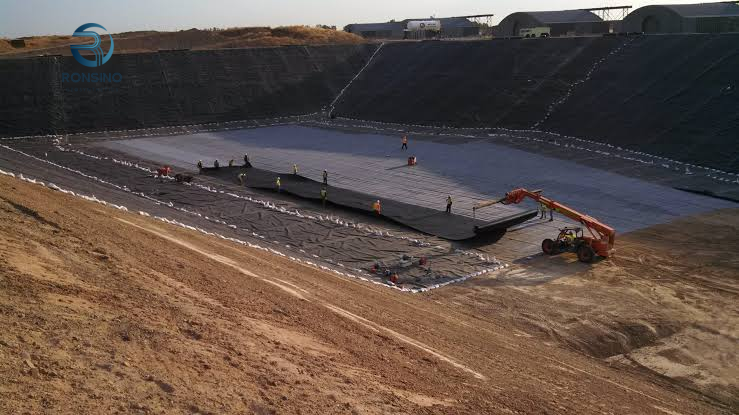
3. Overlooked Hidden Geomembrane Installation Cost
A significant portion of financial inaccuracies in project planning stems from overlooked supplementary charges. These incremental expenses accumulate progressively and can rapidly undermine the entire financial framework of your initiative.
3.1 Site preparation is a typical hidden cost
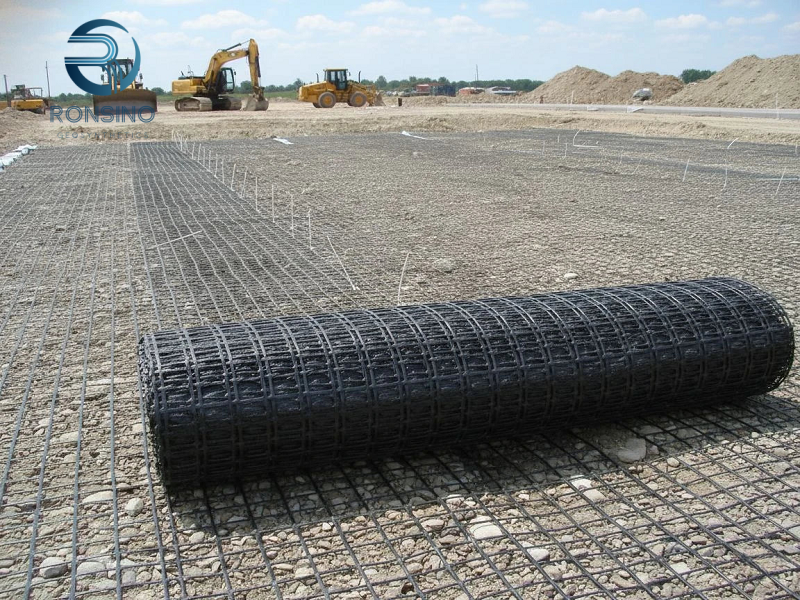
Personnel must prepare the site by grading the terrain, eliminating all pointed debris, and installing a protective geotextile fabric prior to geomembrane installation. Inadequate surface preparation results in membrane perforation and subsequent seepage, necessitating costly remedial actions.
3.2 Seam testing and quality inspection fees also count
Comprehensive air pressure examinations and controlled destructive sampling guarantee absolute impermeability in all systems. Rigorous inspections prevent substantial financial liabilities resulting from post-construction leaks.
3.3 Auxiliary material costs include welding strips, fixing accessories, and edge sealing materials.
Many buyers only focus on the cost of membrane modules and ignore supporting materials, resulting in incomplete project budget planning.
4. Practical Cost-Saving Tips
You can effectively control total spending without sacrificing project quality with these actionable tips.
4.1 First, match membrane specifications with project demands.
Avoid specifying excessively thick membranes for straightforward pond installations, and refrain from employing thin liners for industrial containment applications. Prudent material selection harmonizes cost-effectiveness with optimal performance.
4.2 Second, complete site cleaning and leveling in advance.
A qualified construction foundation shortens installation time, reduces welding errors, and cuts rework costs greatly.
4.3 Third, cooperate with integrated suppliers.
Companies that specialize in manufacturing geomembranes and also provide comprehensive installation solutions typically present more economical total costs compared to procuring materials separately and engaging independent installation crews.
4.4 Fourth, arrange construction in suitable weather.
Intense heat, persistent downpours, and powerful gusts impede construction advancement and compromise welding integrity. Strategic temporal planning prevents productivity decline and eliminates the need for rework.
4.5 Fifth, sign standardized construction contracts.
Clear construction standards, testing scope, and warranty terms avoid temporary price increases and hidden charges during project execution.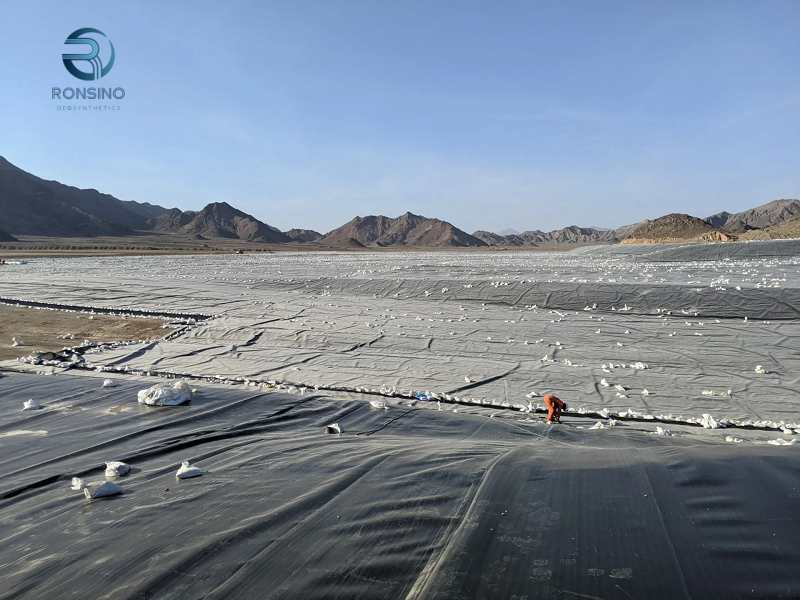
5. Costly Installation Mistakes That Increase Geomembrane Installation Cost
Numerous contractors encounter unanticipated budget increases not due to conventional building charges, but from preventable setup errors. These prevalent issues result in corrective actions, premature liner deterioration, and heightened upkeep costs, significantly compromising your extended financial plan. We outline the most common oversights and their effective remedies to assist you in minimizing avoidable expenditures.
5.1 Wrong Installation Methods
Unifying the welding process and ignoring material differences will lead to insufficient joint strength or damage to the membrane material, causing leakage and requiring rework, resulting in double cost waste.
Customized installation methods based on specific geomembrane composition: High-density polyethylene (HDPE) and linear low-density polyethylene (LLDPE) sheets must be strictly heat-melt welded, with professional adhesive lamination only used for lightweight, flexible membrane variants. This basic principle ensures project compliance and avoids costly remediation costs.
5.2 Poor Site Protection
Construction personnel frequently disregard minor sharp debris, uneven terrain, or leftover gravel prior to installing high-density polyethylene geomembrane. The slightest perforations or abrasions on the membrane's exterior may propagate under hydraulic pressure and soil stress following project completion. Minor defects progressively develop into extensive seepage, necessitating costly remediation and selective section replacement.
Before installation, the site should be thoroughly inspected and the ground carefully prepared. Laying geotextile as a buffer layer on uneven base layers is a low-cost approach that can effectively protect the waterproofing membrane from damage, thereby avoiding expensive later repair costs.
5.3 Inadequate Seam Testing
The welded joint is the weakest link in the high-density polyethylene geomembrane anti-seepage structure. Many construction teams conduct only surface visual inspections to expedite progress, skipping rigorous air pressure verification and material sampling procedures. Defective fusion zones with micro-gaps or insufficient bonding will inevitably lead to long-term leakage problems that will be difficult to detect and repair once the facility is commissioned.
Conduct comprehensive seam examinations for all structural segments. Thorough quality verification demands minimal additional effort yet guarantees flawless joint integrity. This approach eradicates concealed seepage dangers and prevents substantial financial penalties from remedial work and ecological remediation expenses.
5.4 Improper Scheduling
Ignoring adverse weather conditions when moving forward with construction is another costly mistake. Laying or welding geomembranes in heavy rain, strong winds or extreme low temperature environments will directly affect the stability of the joints and the fit of the membrane. Low-quality construction will lead to unstable project quality and force repeated rework of the project.
Construction plans should be meticulously tailored to prevailing meteorological conditions, with strict adherence to established procedural frameworks. Consistent and systematic execution guarantees first-time compliance with project specifications and significantly optimizes financial efficiency.
Conclusion
The expense associated with the deployment of geomembrane is influenced by the material specifications, environmental characteristics of the site, construction methodologies, prevailing labor charges, and the intricacy of the project. A comprehensive grasp of these variables enables stakeholders to mitigate financial uncertainties, circumvent potential pitfalls, and identify the most economically viable approach for the execution of the project.
Cost remains a key factor, yet durable structural integrity and enduring project security offer far more significant benefits. Should you require tailored installation pricing estimates, expert engineering solutions, or dependable geosynthetic material assistance, our dedicated specialists are ready to assist. Taian RONSINO New Material Co., Ltd. (RONSINO Geosynthetics) delivers comprehensive end-to-end solutions for geomembrane initiatives of any magnitude across international markets.