A Comprehensive Guide to Selecting Geosynthetic Liner Material
Blog · 2026-10-31 · 0 views
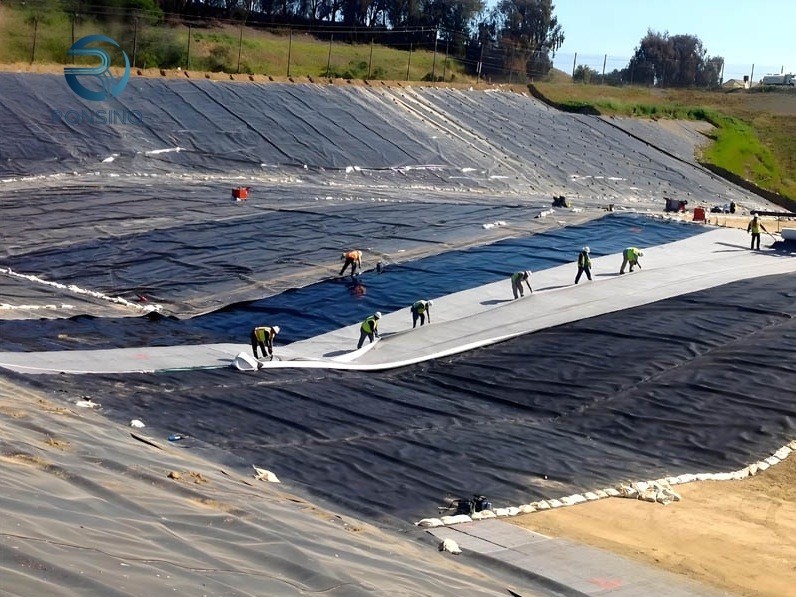
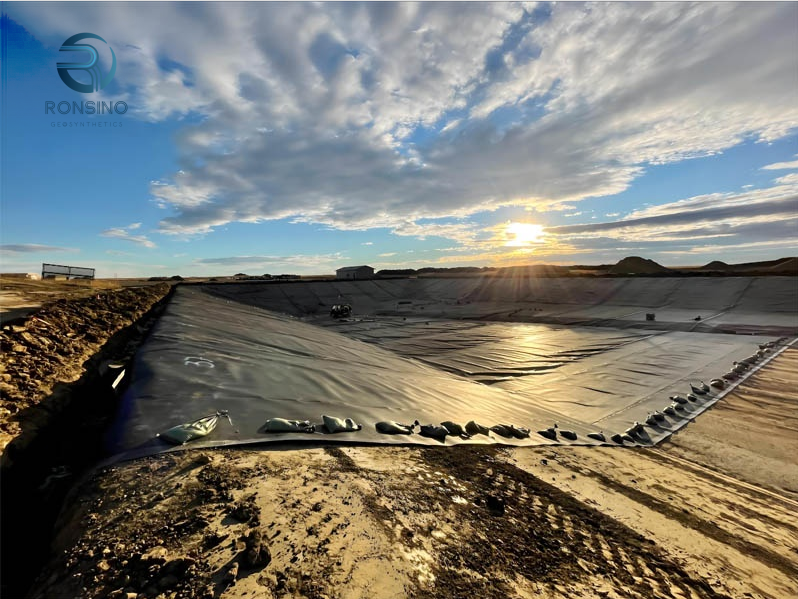
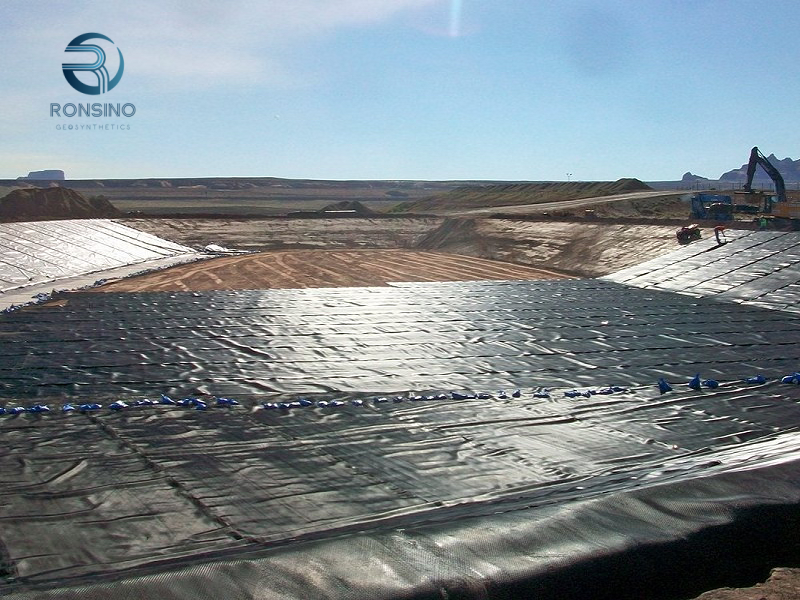
A geomembrane liner is a critical component of a containment system; its quality directly determines the barrier's ability to withstand stress, loads, and environmental exposure. Improper selection can lead to punctures, stretching, and premature failure, resulting in costly repairs.
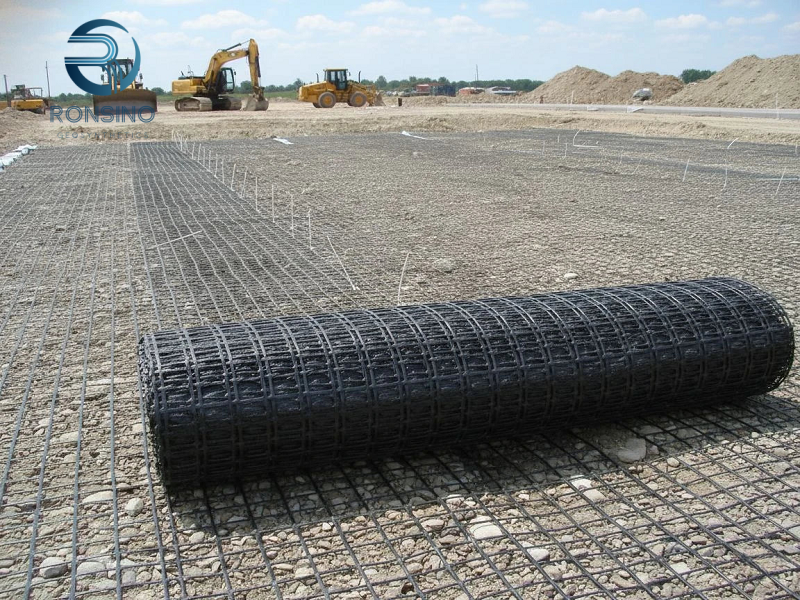
Geomembrane underlayment signifies a safeguarding stratum positioned immediately below a geomembrane barrier. Commonly, it comprises a nonwoven, needle-punched geotextile fabric; however, specific project requirements might mandate the use of engineered sand strata, densely compacted fine-grained substrates, or bespoke cushioning compounds. The designation "underlayment" serves to differentiate this foundational element from the overlying soil mantle or the drainage geocomposite system installed atop the geomembrane.
The core principle involves a multi-barrier safeguarding approach. A geomembrane assembly typically comprises multiple stacked components, each serving a specialized role. The foundational layer functions as a defensive substrate, delivering structural reinforcement and optimizing load dispersion beneath, thereby enhancing the overall system's operational effectiveness. In the absence of sufficient underlying support, even a premium-quality geomembrane barrier remains susceptible to the underlying base material.
The substrate fulfills multiple interrelated functions, all focused on safeguarding the structural soundness of the impermeable layers.
2.1 Puncture Protection.
Subgrades are constructed from in-situ soil or compacted fill, and there are bound to be irregularities within them—such as small rocks, plant roots, or dense clods of soil. When the HDPE geomembrane is loaded, these bumps concentrate stress at specific points. Underlayment can redistribute these stresses and prevent localized punctures. In-depth research into the heap leach process revealed that the properties of the liner layer have a decisive influence on the short-term puncture resistance of the geomembrane and its strain development.
2.2 Cushioning and Stress Distribution.
Underlayment not only prevents puncture but also absorbs and compensates for the HDPE sheet's elastic displacement under pressure. This is vital for heavy loads or frequent machinery movement. A more compressible base exacerbates surface depressions and internal stresses within the geosynthetic membrane.
2.3 Stabilization and Separation.
The roadbed reinforcement layer strengthens the foundation, fixes the anti-seepage membrane and prevents it from sinking. It acts as an isolation layer between the HDPE anti-seepage layer and the original soil, preventing particles from moving upward, thus protecting the integrity of the entire structure.
When selecting an underlayment, several performance characteristics warrant careful evaluation.
This is the most frequently referenced parameter, typically measured in grams per square meter (g/m²) or ounces per square yard. Extensive studies have identified baseline requirements for diverse uses. For a 1.5 mm thick HDPE geomembrane placed beneath AASHTO #8 aggregate (with a maximum particle size of 12 mm), a minimum of 270 g/m² nonwoven needle-punched geotextile is advised. When utilizing larger AASHTO #57 aggregate (up to 38 mm in diameter), the suggested value increases to a minimum of 405 g/m².
3.2 Puncture Resistance.
The characteristic is intrinsically linked to the underlayment’s capacity to safeguard the HDPE geo membrane. Performance assessment generally employs established testing protocols designed to replicate puncture or cone penetration scenarios. Enhanced resistance to puncture permits the adoption of reduced underlayment thickness or delivers an elevated margin of safety when addressing subgrade inconsistencies.
3.3 Permeability.
Auxiliary materials are designed to aid drainage of HDPE geomembrane liner systems to maintain a stable water table and reduce the risk of excessive hydrostatic pressure. Engineers need to weigh the relationship between protective lining and efficient drainage to make the optimal choice based on the specific requirements of the project.
3.4 Tensile Strength and Elongation.
The substrate material must endure installation pressures without rupturing or significant warping. Such characteristics also determine the extent to which the product adapts to the underlying terrain's irregularities.
Choosing the appropriate underlayment requires a systematic assessment of project conditions.
The designer must determine maximum particle size, assess gravel roughness, and identify natural obstructions like roots. Surface specifications require the base layer to lack hazardous, sharp fragments or oversized elements that could compromise lining integrity. If the subgrade is corrosive, a protective intermediate layer of local or additional materials may be needed.
4.2 The second consideration is the overlying load.
The scope encompasses the burden of the overlying earth, dynamic forces generated by machinery, and the cumulative mass of any retained substances. The requisite depth of earthen shielding atop a watertight synthetic lining fluctuates in accordance with the surface exertion imposed by operational apparatus—specifically, for compressive forces under seventy kilopascals, a thirty-centimeter stratum is advised; whereas for loads surpassing one hundred forty kilopascals, a ninety-centimeter barrier could be indispensable. The supporting substrate must be engineered to withstand these imposed stress scenarios.
4.3 Third, the designer must consider the geomembrane material and thickness.
High-density polyethylene geomembrane is resistant to chemical corrosion but has high rigidity and is prone to stress cracking due to lack of support; linear low-density polyethylene is more flexible but has no significant improvement in performance. Therefore, in most applications, the quality of the cushion is more important than the flexibility of the lining material.
4.4 Finally, installation practicalities should be weighed.
Substrate materials are generally simple to position and trim to fit specific dimensions, streamlining the setup process. Nevertheless, motorized vehicles must be prohibited from traversing over a fully deployed high-density polyethylene geomembrane layer, and personnel with footwear featuring pointed soles should avoid direct contact with the surface—measures designed to safeguard the underlying protective layer.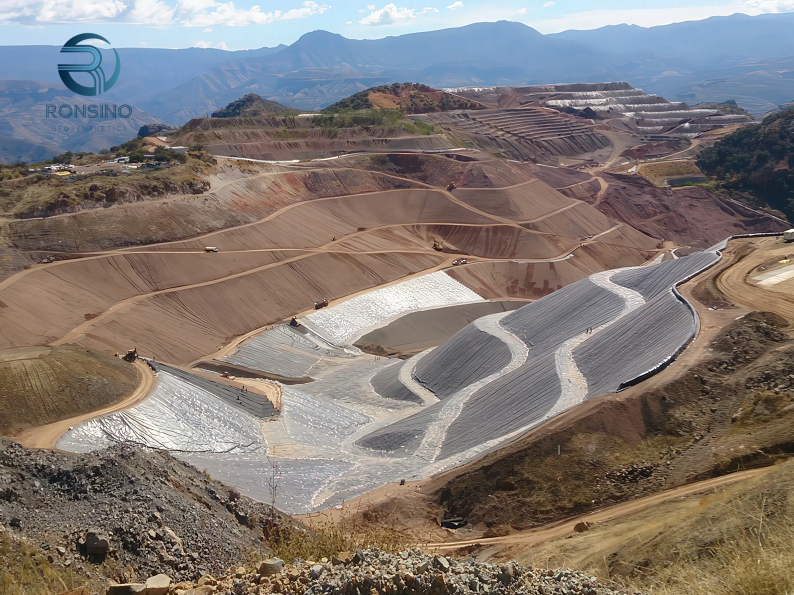
RONSINO Geosynthetics has solidified its reputation as a premier provider of advanced geomembrane solutions and complementary geosynthetic materials, distributing its offerings to more than 100 nations worldwide. The firm’s methodology for underlayment design emphasizes a holistic, system-oriented approach, rather than prioritizing individual components in isolation.
RONSINO Geosynthetics delivers geocomposite liners engineered to seamlessly integrate drainage and containment capabilities into a unified system. These specialized designs prove invaluable in scenarios where traditional drainage installations are impractical or when spatial limitations necessitate compact, multifunctional solutions. The firm tailors geocomposite liners to precise project specifications, offering geotextile weight variations spanning from 100 g/m² to 800 g/m² to accommodate diverse environmental and operational demands.
RONSINO Geosynthetics provides geomembrane solutions that work synergistically with the protective layer. Its HDPE geomembrane has passed ISO9001, ISO14001 certification and the stringent testing standards of SGS and Intertek laboratories. The company provides comprehensive installation guidance and expert support to ensure that the geomembrane and underlying layer are seamlessly integrated into a high-performance unit rather than separate components.
RONSINO Geosynthetics' product range covers smooth and textured geomembrane surfaces. The textured design significantly improves the friction resistance and enhances the stability of the slope and embankment structures. It also indirectly optimizes the laying requirements of the underlying material by reducing potential shear stress, thus avoiding the need for additional protective measures.
The cost of geomembrane underlayment is influenced by the material category, its weight per unit area, and the overall magnitude of the project. Nonwoven needle-punched geotextiles, serving as the predominant underlayment material, are generally evaluated based on a per-square-meter or per-roll pricing structure.
The price of geomembrane has reference value: 0.5 mm thick HDPE film 5.8-6.5 yuan/square meter, 1.0 mm virgin material membrane 10.2-12.4 yuan/square meter. The cushion cost accounts for a small proportion. In a 5,000-square-meter landscape project, the cost difference between 0.75 mm and 1.0 mm membranes is about 14,000 yuan. Therefore, it is necessary to evaluate the cushion specifications based on the project budget and the risk of membrane failure.
It is crucial to underscore that the selection of underlayment should never be driven by cost alone. An underlayment that is only slightly more affordable but fails to resist punctures will ultimately result in significantly higher costs for repairs and compromised containment.
Geomembrane cushion is the key foundation of the anti-seepage system and directly affects its long-term reliability. The selection requires a comprehensive assessment of the mechanical properties of the foundation, upper load and material weaknesses, and precise definition of key parameters such as mass density, damage resistance strength and permeability coefficient, so that they meet empirical benchmarks and project-specific requirements.
RONSINO Geosynthetics delivers a comprehensive strategy, integrating geomembranes, geocomposites, and expert guidance to treat underlayment as an essential component of a holistic system. For project designers and specifiers, the fundamental principle remains clear: the investment in proper underlayment invariably outweighs the financial consequences of a compromised liner.